What is E403?
Ammonium alginate — a thickener made from the same brown seaweed extract behind alginic acid, used to stabilise ice cream and sauces.
E403 (ammonium alginate) is made by neutralising alginic acid, a natural polysaccharide extracted from brown seaweed, with ammonia. It works as a thickener and stabiliser in a similar way to alginic acid itself and its other salts, like sodium alginate and calcium alginate. Goodnessly rates it Safe.
Download our app to check additives in everyday foods
Read the FAQ →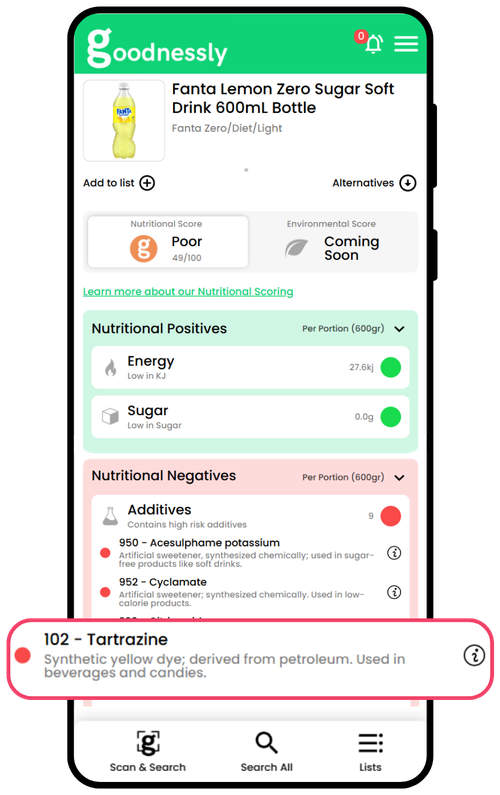
What is ammonium alginate?
Ammonium alginate is made by neutralising alginic acid — extracted from the cell walls of brown seaweed — with ammonia. It's part of the same small alginate family covered on our alginic acid page, which also includes sodium alginate, potassium alginate and calcium alginate. Like its relatives, it forms a viscous gel when mixed with water, and passes through the digestive tract largely undigested, similar to dietary fibre.
What's it used for?
- Thickening and stabilising ice cream
- Preventing separation in sauces and dressings
- Improving texture in low-fat dairy products
Where you'll find 403 on the shelf
Anywhere a product needs a smooth, stable texture.
Is ammonium alginate safe? What the research says
Ammonium alginate belongs to the same well-reviewed alginate family as alginic acid, with a similarly clean safety record.
| Region | Status | What this means |
|---|---|---|
| AU/NZ Australia & New Zealand (FSANZ) | Permitted | Permitted as a thickener and stabiliser with no specific quantity restriction in most categories. |
| EU European Union (EFSA) | Permitted, no ADI | Listed as E403. EFSA's 2017 re-evaluation of the whole alginate family (E400–E404) confirmed no safety concern at typical use levels, with no numerical Acceptable Daily Intake needed. |
| US United States (FDA) | GRAS | Holds Generally Recognized As Safe status for general food use. |
Like alginic acid itself, ammonium alginate isn't absorbed in the digestive tract and is excreted largely unchanged, similar to dietary fibre.
- No significant regulatory changes since 2017: EFSA's group re-evaluation of the alginate family remains the most recent comprehensive review, and no restrictions have followed.
This section is checked periodically rather than continuously — if you're reading this well after the date above, it's worth confirming nothing has changed before citing it.
Who this matters to
- People with a known seaweed or seafood allergy, though genuine allergic reactions to alginates are rarely documented
- Otherwise, no population group has a specific safety-based reason to limit E403
Goodnessly rates E403 Safe. It's part of the well-reviewed alginate family, treated by the body much like dietary fibre.
How to spot it on a label
E403 is usually declared clearly. Look out for:
- Ammonium alginate
- 403 or E403
- "Thickener (403)" in the ingredients list
Ice cream and dressings are the most common places to find it.
Related additives
Frequently asked questions
Is ammonium alginate the same as alginic acid?
Closely related but not identical. Ammonium alginate is made by neutralising alginic acid with ammonia, producing a salt with the same thickening properties.
Does Goodnessly rate E403 as safe, caution, or avoid?
Goodnessly rates E403 (Ammonium Alginate) as Safe. It's part of the well-reviewed alginate family, and EFSA's 2017 re-evaluation found no safety concern and no need for a formal daily intake limit.
Is E403 vegan?
Yes. Ammonium alginate is extracted from brown seaweed, with no animal-derived ingredients involved.
Don't decode labels by hand
Scan any product with the Goodnessly app to instantly see its full additive breakdown, kept current as new research like this comes to light.
Download our app to check additives in everyday foods