What is 465?
A modified cellulose used as a thickener, emulsifier and foaming agent.
Methyl ethyl cellulose (465) is made by chemically modifying cellulose from plant fibre. It is used to thicken, emulsify and stabilise foams in foods. It is permitted in Australia, New Zealand, the EU and the US. EFSA re-evaluated the modified celluloses (E460–E466) in 2018 and found no need for a numerical Acceptable Daily Intake. Goodnessly rates it Limited Risk.
Download our app to check additives in everyday foods
Read the FAQ →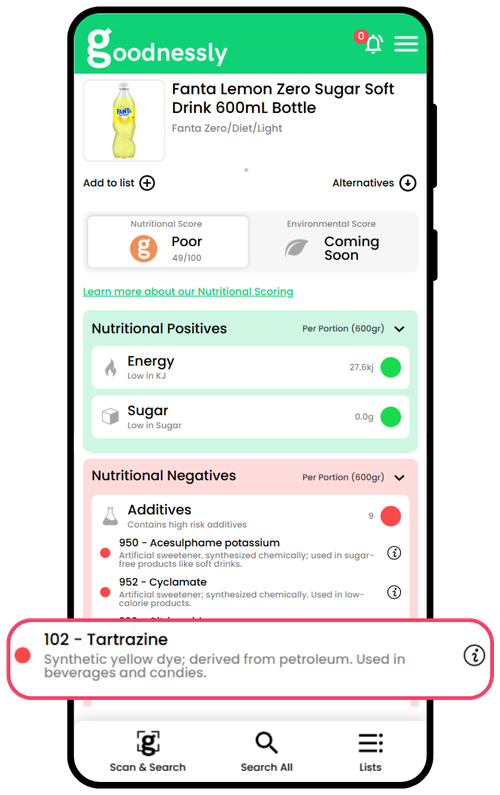
What is methyl ethyl cellulose?
Cellulose is the main structural fibre in plants. To make methyl ethyl cellulose, cellulose (usually from wood pulp or cotton) is treated so some of its groups are replaced with methyl and ethyl groups. This makes it dissolve in cold water and form stable foams and gels.
What's it used for?
- Foaming agent in whipped toppings and mousses
- Thickener and emulsifier in sauces
- Stabiliser in some desserts and fillings
- Also used in some medicines
Where you'll find 465 on the shelf
It is less common than other modified celluloses but appears in some whipped and aerated products.
Is methyl ethyl cellulose safe? What the research says
Modified celluloses are not absorbed and pass through the gut largely unchanged, acting like fibre. EFSA's 2018 review found no safety concern at reported uses. Large amounts may have a laxative effect, as with other fibres.
| Region | Status | What this means |
|---|---|---|
| AU/NZ Australia & New Zealand (FSANZ) | Permitted | Listed in the Food Standards Code as a thickener, emulsifier and foaming agent. |
| EU European Union (EFSA) | Permitted | Authorised as E465. EFSA's 2018 re-evaluation of E460–E466 found no need for a numerical Acceptable Daily Intake. |
| US United States (FDA) | Permitted | Permitted as a direct food additive under 21 CFR 172.872. |
JECFA and the EU's former Scientific Committee for Food allocated the celluloses an Acceptable Daily Intake "not specified". EFSA considered an indicative total exposure of around 660–900 milligrams per kilogram of body weight per day.
- EFSA 2018 re-evaluation: EFSA assessed the modified celluloses as a group and found no safety concern at reported uses.
- Read-across: EFSA assessed E465 using read-across from the other celluloses, because specific data were not available for every cellulose and endpoint.
- Labelling in AU/NZ: FSANZ requires the class name plus name or number, such as "thickener (465)".
This section is checked periodically rather than continuously — if you're reading this well after the date above, it's worth confirming nothing has changed before citing it.
Who might want to limit or avoid it
- People with sensitive digestion who notice effects from added fibres
- People who prefer to limit chemically modified ingredients
- Anyone who eats a lot of whipped or aerated processed desserts
Goodnessly rates 465 Limited Risk. It is permitted everywhere and passes through the gut like fibre, but it is a chemically modified ingredient, which puts it in our Limited Risk category.
How to spot it on a label
Look out for:
- Methyl ethyl cellulose
- Methylethylcellulose
- 465 or E465
- Thickener (465) or emulsifier (465)
Look on whipped toppings and aerated desserts.
Related additives
Frequently asked questions
What is methyl ethyl cellulose made from?
It is made from plant cellulose, usually wood pulp or cotton, which is chemically modified with methyl and ethyl groups.
Is methyl ethyl cellulose vegan?
Yes. It is made from plant cellulose and does not use animal ingredients.
Is methyl ethyl cellulose digested?
No. It passes through the gut largely unchanged, similar to dietary fibre.
How does Goodnessly rate 465?
Goodnessly rates 465 (methyl ethyl cellulose) as Limited Risk. It is permitted everywhere and passes through the gut like fibre, but it is a chemically modified ingredient, which puts it in this category.
Don't decode labels by hand
Scan any product with the Goodnessly app to instantly see its full additive breakdown, kept current as new research like this comes to light.
Download our app to check additives in everyday foods