What is 481?
An emulsifier made from lactic acid and fatty acids, mainly used to soften bread and improve dough.
Sodium lactylate (481), usually sodium stearoyl-2-lactylate (SSL), is an emulsifier made by combining lactic acid with fatty acids. It strengthens dough and keeps bread soft. It is permitted in Australia, New Zealand, the EU and the US. EFSA re-evaluated it in 2013 and set a group Acceptable Daily Intake of 22 milligrams per kilogram of body weight per day with calcium lactylate (482). Goodnessly rates it Moderate Risk.
Download our app to check additives in everyday foods
Read the FAQ →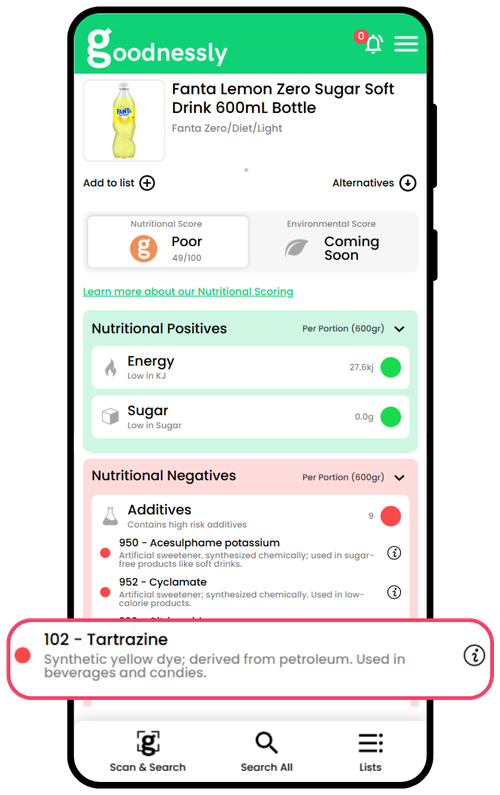
What is sodium lactylate (sodium stearoyl lactylate)?
Sodium lactylates are made by reacting lactic acid with fatty acids (most often stearic acid) and neutralising with sodium. Despite the "lact" in the name, they are not made from milk and contain no lactose. The fatty acids can come from plant or animal fats.
What's it used for?
- Dough strengthener and softener in bread, buns and wraps
- Emulsifier in cakes, muffins and baking mixes
- Creamers and whipped toppings
- Some sauces, desserts and processed foods
Where you'll find 481 on the shelf
It is very common in supermarket bread and baked goods.
Is sodium lactylate safe? What the research says
Regulators consider sodium lactylate safe at permitted levels, and it breaks down in the gut into lactic acid and fatty acids. The main discussion points are that it is a marker of highly processed baked goods, and that some animal studies indicate certain dietary emulsifiers may be associated with changes to gut bacteria. Those studies mostly looked at other emulsifiers, and evidence in people is limited.
| Region | Status | What this means |
|---|---|---|
| AU/NZ Australia & New Zealand (FSANZ) | Permitted | Listed as an emulsifier in the Food Standards Code. Declared as "emulsifier (481)" or by name. |
| EU European Union (EFSA) | Permitted | Authorised as E481. EFSA's 2013 re-evaluation set a group Acceptable Daily Intake of 22 milligrams per kilogram of body weight per day for E481 and E482. |
| US United States (FDA) | Permitted | Sodium stearoyl lactylate is permitted as a direct food additive under 21 CFR 172.846. |
EFSA's 2013 opinion found exposure was below the group Acceptable Daily Intake for adults, but above it for children and other younger groups at average intakes, and for all groups at high intakes, mainly through flavoured fermented milk products, bread and fine bakery wares. JECFA set an Acceptable Daily Intake of 20 milligrams per kilogram of body weight per day in 1974.
- EFSA 2013 re-evaluation: EFSA set a group Acceptable Daily Intake of 22 milligrams per kilogram of body weight per day for sodium and calcium stearoyl lactylates.
- Emulsifier research: Interest in how dietary emulsifiers interact with gut bacteria continues, with most published work so far in animal and lab models.
- Labelling in AU/NZ: FSANZ requires emulsifiers to be declared by class name plus name or number.
This section is checked periodically rather than continuously — if you're reading this well after the date above, it's worth confirming nothing has changed before citing it.
Who might want to limit or avoid it
- People who eat a lot of packaged bread and baked goods, where intake can add up
- Vegans and vegetarians, since the fatty acids may come from animal fats (check with the manufacturer)
- People who prefer to limit emulsifiers while gut research continues
Goodnessly rates 481 Moderate Risk. It is permitted everywhere, but its prevalence in highly processed foods and EFSA's finding that intakes in children can exceed the safe limit put it in our Moderate Risk category.
How to spot it on a label
Look out for:
- Sodium stearoyl lactylate
- Sodium lactylate
- SSL
- 481 or E481
- Emulsifier (481)
It often appears near the end of bread ingredient lists, sometimes alongside 471 or 472e.
Related additives
Frequently asked questions
Does sodium lactylate contain dairy?
No. The name comes from lactic acid, which is usually made by fermentation. Sodium lactylate does not contain milk protein or lactose.
Is sodium stearoyl lactylate vegan?
Not always. The stearic acid can come from plant or animal fats, and labels usually do not say which. Check with the manufacturer if this matters to you.
Why is 481 in bread?
It strengthens the gluten network so dough handles well in machines, and it helps bread stay soft for longer on the shelf.
How does Goodnessly rate 481?
Goodnessly rates 481 (sodium lactylate) as Moderate Risk. It is permitted everywhere, but its prevalence in highly processed foods and EFSA's finding that intakes in children can exceed the safe limit put it in this category.
Don't decode labels by hand
Scan any product with the Goodnessly app to instantly see its full additive breakdown, kept current as new research like this comes to light.
Download our app to check additives in everyday foods