What is E920?
L-Cysteine monohydrochloride — a sulphur-containing amino-acid additive used as a dough conditioner / flour treatment agent and, in Australia/NZ, on some cut produce to limit browning.
L-Cysteine monohydrochloride (E920) is the hydrochloride salt of the amino acid L-cysteine. In baking it is used as a dough strengthener / flour treatment agent so dough is easier to machine. In Australia/NZ it is also permitted at GMP on peeled or cut root and tuber vegetables and on avocados and bananas (FSANZ Application A1117 extended produce uses). It is authorised in the EU as E920 (flour treatment / specified uses); EFSA's 2010 re-evaluation did not set a numerical ADI because cysteine is a normal dietary amino acid at the levels used. In the US, L-cysteine monohydrochloride is affirmed GRAS under 21 CFR 184.1272 as a dough strengthener in yeast-leavened baked goods (up to 0.009 part per 100 parts flour). Consumer questions often focus on manufacturing origin (fermentation vs animal by-products such as feathers) rather than a regulatory ban. Goodnessly rates it Avoid.
Download our app to check additives in everyday foods
Read the FAQ →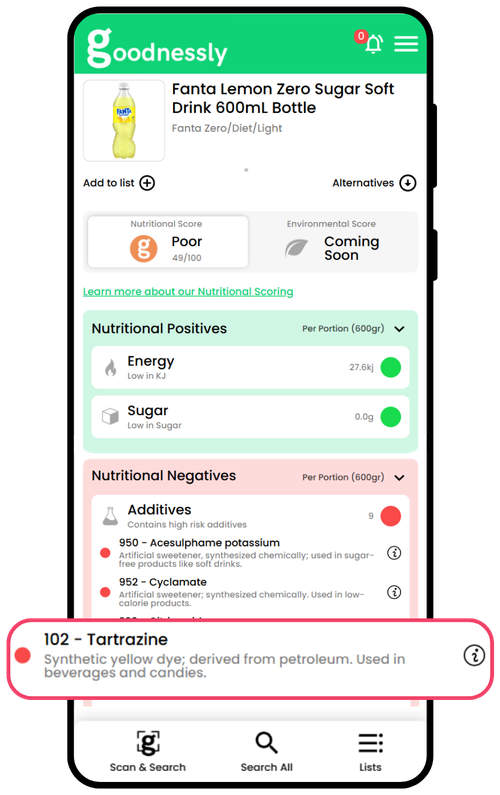
What is L-cysteine monohydrochloride?
L-Cysteine is a sulphur-containing amino acid. The food-additive form commonly declared is the monohydrochloride salt (INS/E 920). As a dough conditioner it partly reduces gluten disulfide bonds, which can shorten mixing time in industrial bread. On labels you may see "L-cysteine", "L-cysteine hydrochloride", "L-cysteine monohydrochloride", "920", "E920", or "flour treatment agent (920)".
What's it used for?
- Dough conditioner / flour treatment agent in yeast-leavened bakery and baking mixes
- Improving machinability of industrial bread and related doughs
- In Australia/NZ, limiting browning on peeled or cut root/tuber vegetables and on avocados and bananas (GMP)
- Also appears in some processing-aid / nutrient contexts outside the additive directory scope
Where you'll find E920 on the shelf
Most often in packaged bread and bakery mixes; in AU/NZ also possible on some cut fresh produce packs.
Is L-cysteine monohydrochloride safe? What the research says
Regulators treat food-use L-cysteine as an amino acid already present in the diet. EFSA did not set a numerical ADI for E920 at flour-treatment levels. FDA affirms a narrow GRAS dough-strengthener use. FSANZ separately assessed produce uses under Application A1117. Avoid on this page is not a claim that authorised doses are "toxic" — it reflects Goodnessly's preference to skip non-essential dough conditioners and the unresolved consumer preference about animal-derived manufacturing routes when labels do not state the source.
| Region | Status | What this means |
|---|---|---|
| AU/NZ Australia & New Zealand (FSANZ) | Permitted (GMP; produce + bakery contexts) | Listed as L-cysteine monohydrochloride (920) in Schedule 8 / Schedule 15. Permitted at GMP for peeled/cut root and tuber vegetables (4.1.3.2) and avocados and bananas (4.1.3.3), alongside dough-conditioner / processing-aid style uses described in FSANZ materials. Must be declared by name or number when used as a food additive. |
| EU European Union (EFSA) | Authorised; no numerical ADI (EFSA 2010) | Authorised as E920 under Regulation (EC) No 1333/2008 for flour treatment and specified uses (quantum satis / category limits as listed). EFSA's 2010 re-evaluation (EFSA Journal 2010;8(12):1862) concluded permitted uses raise no safety concern and did not establish a numerical ADI. EU rules prohibit using human hair as a starting material for cysteine production. |
| US United States (FDA) | GRAS dough strengthener (21 CFR 184.1272) | L-Cysteine monohydrochloride is affirmed GRAS under 21 CFR 184.1272 as a dough strengthener in yeast-leavened baked goods and baking mixes, supplying up to 0.009 part total L-cysteine per 100 parts flour. Related free acid listing: 21 CFR 184.1271. Federal GRAS remains in force as of this draft (September 2026). |
Origin of commercial L-cysteine (fermentation vs feathers or other animal materials) is a labelling transparency issue — EU/UK rules prohibit human-hair routes, but labels usually do not name the feedstock. That is not evidence that food-use cysteine "causes" disease at dough-conditioner levels. People avoiding animal-derived processing aids for religious or vegan reasons may prefer products that state a fermentation source.
- EFSA 2010 (E920): re-evaluation as food additive; no numerical ADI; permitted flour-treatment uses considered of no safety concern at the levels assessed.
- FSANZ A1117: extended AU/NZ food-additive permission for L-cysteine monohydrochloride at GMP to avocados and bananas (cut/peeled produce browning control), alongside existing root/tuber uses.
- FDA 21 CFR 184.1272: continues to affirm L-cysteine monohydrochloride as GRAS dough strengthener at the flour-based limit above.
This section is checked periodically rather than continuously — if you're reading this well after the date above, it's worth confirming nothing has changed before citing it.
Who might want to limit or avoid it
- People who prefer bakery without added dough conditioners
- Shoppers avoiding additives that may be animal-derived when the label does not state a fermentation source
- Anyone reducing ultra-processed bread and mixes as a household rule
Goodnessly rates E920 Avoid. L-cysteine monohydrochloride remains permitted in Australia/NZ, the EU and the US for specified technological uses, but it is a non-essential dough / produce additive for most home cooking, and manufacturing-origin questions sit poorly with a Clear rating.
How to spot it on a label
Check bread, mixes and some cut-produce packs for:
- L-cysteine / L-cysteine hydrochloride / L-cysteine monohydrochloride
- 920 or E920
- Flour treatment agent (920)
- Dough conditioner (cysteine)
Often present at low levels in industrial bread — check the full ingredient list, not only the front of pack.
Related additives
Frequently asked questions
What is L-Cysteine monohydrochloride (E920) made from?
It is the hydrochloride salt of the amino acid L-cysteine, manufactured for food use. Commercial routes include fermentation and animal by-product feedstocks (for example feathers); EU rules prohibit human hair as a starting material. Labels rarely name the route.
Is E920 only used in bread?
Bread and baking mixes are the classic use. In Australia/NZ it is also permitted at GMP on some peeled or cut produce (root/tuber vegetables, avocados and bananas) to help limit browning.
Did EFSA set an ADI for E920?
No numerical ADI was set in EFSA's 2010 re-evaluation. The Panel treated permitted flour-treatment uses as of no safety concern because cysteine is a normal dietary amino acid at those levels.
Does Goodnessly rate E920 as safe, caution or avoid?
Goodnessly rates E920 (L-Cysteine monohydrochloride) as Avoid.
Don't decode labels by hand
Scan any product with the Goodnessly app to instantly see its full additive breakdown, kept current as new research like this comes to light.
Download our app to check additives in everyday foods