What is 968?
A sugar alcohol sweetener with almost no kilojoules, common in "no sugar" and keto products.
Erythritol (968) is a sugar alcohol (polyol) used as a low-kilojoule sweetener. It is permitted in Australia, New Zealand, the EU and the US. In 2023 EFSA re-evaluated it and set an Acceptable Daily Intake of 0.5 grams per kilogram of body weight per day, based on its laxative effect. A 2023 study in Nature Medicine reported an association between blood erythritol levels and cardiovascular events, which is still being investigated. Goodnessly rates it Moderate Risk.
Download our app to check additives in everyday foods
Read the FAQ →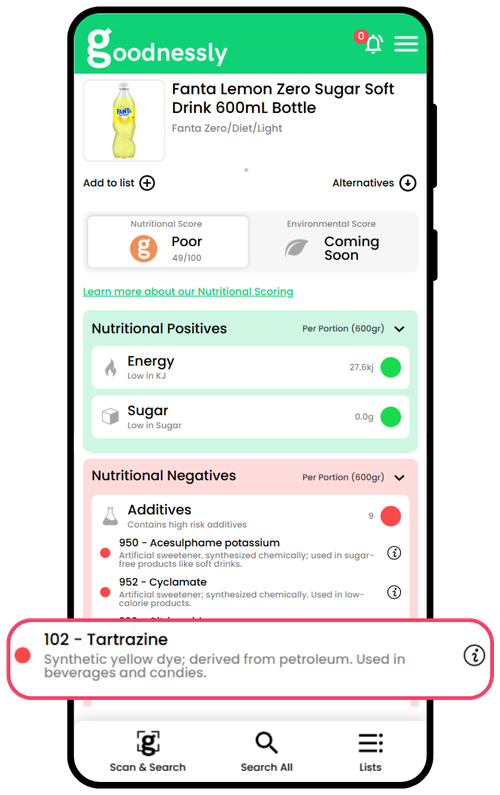
What is erythritol?
Erythritol occurs naturally in small amounts in some fruits and fermented foods. Commercially it is made by fermenting glucose. It is about 60–70% as sweet as sugar, has a cooling taste and is mostly absorbed and passed out in urine rather than metabolised, which is why it provides very little energy.
What's it used for?
- Sweetener in sugar-free drinks and "keto" products
- Tabletop sweetener blends (often with stevia or monk fruit)
- Sugar-free chocolate, lollies and chewing gum
- Reduced-sugar baked goods and ice cream
Where you'll find 968 on the shelf
It is one of the most common sweeteners in "no added sugar" and low-carb products.
Is erythritol safe? What the research says
Erythritol is generally better tolerated by the gut than other sugar alcohols, but large amounts can still cause digestive upset. In 2023 a study published in Nature Medicine (Witkowski et al.) reported that higher blood erythritol levels were associated with a greater risk of major cardiovascular events and that erythritol enhanced platelet reactivity in laboratory tests. The study shows an association, not cause and effect, and further research is under way.
| Region | Status | What this means |
|---|---|---|
| AU/NZ Australia & New Zealand (FSANZ) | Permitted | Listed as a sweetener and humectant in the Food Standards Code. Declared as "sweetener (968)" or by name. |
| EU European Union (EFSA) | Permitted with limit | Authorised as E968. EFSA's 2023 re-evaluation set an Acceptable Daily Intake of 0.5 grams per kilogram of body weight per day. Foods with more than 10% added polyols must state "excessive consumption may produce laxative effects". |
| US United States (FDA) | Permitted | The FDA has raised no questions on multiple Generally Recognised as Safe (GRAS) notices for erythritol. |
EFSA based its 2023 Acceptable Daily Intake on the highest dose that did not cause diarrhoea in human studies, and found that high consumers in all population groups could exceed it. JECFA had earlier (1999) allocated an Acceptable Daily Intake "not specified".
- EFSA 2023 re-evaluation: EFSA set a numerical Acceptable Daily Intake of 0.5 grams per kilogram of body weight per day for erythritol for the first time.
- 2023 cardiovascular study: A Nature Medicine study reported an association between blood erythritol levels and cardiovascular events; regulators have not changed its approval status as a result.
- EFSA on the heart study: EFSA's 2023 opinion said current evidence does not show cause and effect between erythritol in foods and cardiovascular disease, but further research could help clarify associations seen in some observational studies.
This section is checked periodically rather than continuously — if you're reading this well after the date above, it's worth confirming nothing has changed before citing it.
Who might want to limit or avoid it
- People who eat a lot of sugar-free or keto products, where intake can add up
- People with sensitive digestion, as large amounts may cause bloating or a laxative effect
- People with existing cardiovascular risk who want to be cautious while research continues (talk to your doctor)
Goodnessly rates 968 Moderate Risk. It is permitted everywhere, but the new EFSA intake limit and an emerging cardiovascular association put it in our Moderate Risk category.
How to spot it on a label
Look out for:
- Erythritol
- 968 or E968
- Sweetener (968)
- Polyol or sugar alcohol (sometimes in nutrition panels)
It is often blended with stevia (960) or monk fruit, so the front of pack may only mention those.
Related additives
Frequently asked questions
Is erythritol natural?
It occurs naturally in small amounts in some fruits and fermented foods, but the erythritol in packaged foods is produced commercially by fermenting glucose.
Does erythritol raise blood sugar?
Erythritol is mostly absorbed and excreted unchanged, so it has very little effect on blood glucose. People managing diabetes should still check the whole product and talk to their health professional.
What did the 2023 erythritol heart study find?
A 2023 Nature Medicine study reported that people with higher blood erythritol levels had a higher rate of major cardiovascular events, and that erythritol increased platelet reactivity in lab tests. It shows an association rather than proof of cause, and more research is under way.
How does Goodnessly rate 968?
Goodnessly rates 968 (erythritol) as Moderate Risk. It is permitted everywhere, but the new EFSA intake limit and an emerging cardiovascular association put it in this category.
Don't decode labels by hand
Scan any product with the Goodnessly app to instantly see its full additive breakdown, kept current as new research like this comes to light.
Download our app to check additives in everyday foods