What is E218?
Methylparaben (methyl p-hydroxybenzoate) — a paraben preservative still authorised for limited food uses, unlike propylparaben which was removed from EU food use.
Methylparaben (E218), also called methyl p-hydroxybenzoate, is a preservative in the p-hydroxybenzoate (paraben) family. It remains authorised for specified food uses in Australia/NZ and the EU, and is GRAS in the US as an antimicrobial under 21 CFR 184.1490 (generally up to 0.1%). EFSA established a group ADI of 0–10 mg/kg body weight per day for methyl and ethyl parabens and their sodium salts; propylparaben was excluded from that ADI after reproductive-toxicity findings and is not authorised as an EU food additive. Parabens are also widely discussed in cosmetics for endocrine-activity questions — food exposures and cosmetic exposures are different contexts. Goodnessly rates food-use methylparaben Avoid.
Download our app to check additives in everyday foods
Read the FAQ →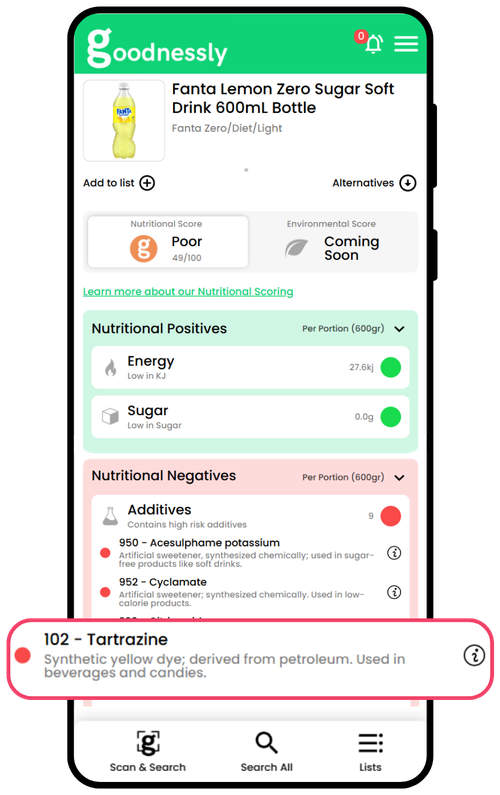
What is methylparaben?
Methylparaben (E218) is the methyl ester of p-hydroxybenzoic acid. It inhibits moulds and yeasts and is used as a preservative in some foods, medicines and personal-care products. On food labels in Australia/NZ you may see "methylparaben", "methyl p-hydroxybenzoate", "218" or "preservative (218)". Related food codes historically include ethylparaben (214) and, where still permitted outside the EU, propylparaben (216).
What's it used for?
- Preserving certain confectionery, coatings and fillings where parabens are permitted
- Surface treatment or coatings on some meat products in markets that still allow it
- Used in some potato-, cereal- or starch-based snacks and coated nuts under EU category rules
- Also common in non-food products (cosmetics, medicines) — those uses are outside this food-additive page
Where you'll find E218 on the shelf
Less ubiquitous in everyday AU supermarket food than sorbates or benzoates, but still worth checking on coated confectionery, some snacks and specialty preserved foods.
Is methylparaben safe? What the research says
Methylparaben remains in the authorised food-additive lists in the EU and AU/NZ for limited categories, with a numerical EFSA group ADI shared with ethylparaben. Propylparaben was treated differently after reproductive findings and is not on the EU food Union list — that split is important when people talk about "parabens" as a single block. Broader endocrine-disruption discussions often mix cosmetic and food data; this page sticks to food-additive assessments.
| Region | Status | What this means |
|---|---|---|
| AU/NZ Australia & New Zealand (FSANZ) | Permitted (Schedule 15) | Methyl p-hydroxybenzoate (218) is listed in the Australia New Zealand Food Standards Code Schedule 15 for specified foods with maximum levels (commonly cited at up to 2,500 mg/kg in permitted categories — always check the live schedule for the food you care about). It must be declared when used as a food additive. |
| EU European Union (EFSA) | Authorised (limited categories); group ADI 0–10 | Authorised as E218 (methyl p-hydroxybenzoate) under Regulation (EC) No 1333/2008 for specified categories, often with group limits for E214–E219 expressed as free acid. EFSA's AFC Panel set a group ADI of 0–10 mg/kg bw/day for methyl and ethyl parabens and their sodium salts, and excluded propylparaben from that ADI. Propylparaben (E216) is not authorised as an EU food additive. |
| US United States (FDA) | GRAS (21 CFR 184.1490) | Methylparaben is affirmed as GRAS as an antimicrobial preservative under 21 CFR 184.1490 when used in accordance with good manufacturing practice; current use typically results in a maximum level of 0.1%. Federal listing remains in force as of the latest eCFR check for this draft (September 2026). |
Paraben debates often blend cosmetics toxicology with food-additive permissions. Food-use methylparaben still has an EFSA group ADI and remaining authorisations; that is not the same as saying every paraben in every product is equivalent. Hypersensitivity to parabens is reported in a minority of people — association language only.
- EFSA paraben ADI split: group ADI 0–10 mg/kg bw/day for methyl/ethyl parabens; propylparaben excluded and not authorised for EU food use — still the key regulatory distinction for E218 vs E216.
- EU Union list: E218 remains listed among authorised p-hydroxybenzoates for specified categories under Regulation (EC) No 1333/2008 (consolidated list checked for this draft).
- US GRAS affirmation: 21 CFR 184.1490 remains the federal food citation for methylparaben as an antimicrobial preservative.
This section is checked periodically rather than continuously — if you're reading this well after the date above, it's worth confirming nothing has changed before citing it.
Who might want to limit or avoid it
- People who prefer to avoid paraben preservatives in food as a class, even when the specific code is still permitted
- Anyone with a known paraben contact allergy or clinician advice to avoid p-hydroxybenzoates
- Shoppers reducing preservative load who can choose products preserved with other systems (or none)
Goodnessly rates E218 Avoid. Methylparaben remains permitted for limited food uses in Australia/NZ and the EU and is GRAS in the US, but it sits in a preservative family with significant public and regulatory scrutiny (including the EU's different treatment of propylparaben), so we place food-use methylparaben in our highest-caution category.
How to spot it on a label
Less common than benzoates/sorbates on everyday labels, but check for:
- Methylparaben / methyl p-hydroxybenzoate / methyl 4-hydroxybenzoate
- 218 or E218
- Preservative (218)
- Related parabens where still listed (e.g. 214; 216 outside the EU)
If you also use personal-care products labelled with methylparaben, that is a separate exposure pathway from food E218.
Related additives
Frequently asked questions
What is Methylparaben (E218) made from?
Methylparaben is the methyl ester of p-hydroxybenzoic acid, manufactured for use as a preservative. In food it is labelled as methylparaben, methyl p-hydroxybenzoate, 218 or E218.
Is methylparaben banned in the EU?
No. Methylparaben (E218) remains an authorised EU food additive for specified categories. Propylparaben (E216) is the paraben that is not authorised for EU food use after EFSA excluded it from the group ADI.
Is food methylparaben the same concern as cosmetic parabens?
They are the same chemical class, but permitted uses, doses and exposure routes differ. This page follows food-additive assessments (EFSA/FDA/FSANZ). Cosmetic rules are separate and are not a substitute for the food ADI.
Does Goodnessly rate E218 as safe, caution or avoid?
Goodnessly rates E218 (Methylparaben) as Avoid.
Don't decode labels by hand
Scan any product with the Goodnessly app to instantly see its full additive breakdown, kept current as new research like this comes to light.
Download our app to check additives in everyday foods