
What is E211?
Sodium benzoate — a widely used antimicrobial preservative, permitted in Australia/NZ, the EU and the US, with documented intake and formulation questions that keep it in our highest-caution category.
Sodium benzoate (E211) is the sodium salt of benzoic acid, used to slow the growth of yeasts, moulds and some bacteria in acidic foods and drinks. FSANZ, EFSA and the US FDA all permit it within set limits. EFSA’s 2016 re-evaluation kept a group Acceptable Daily Intake of 5 mg/kg body weight/day (as benzoic acid) and estimated that high consumers of flavoured drinks — especially toddlers and children — could exceed that ADI. Under some conditions, benzoate salts plus ascorbic acid (vitamin C) have been associated with very low-level benzene formation in beverages; the FDA reported that levels found in its survey did not pose a safety concern and that affected products were reformulated. Goodnessly rates it Avoid.
Download our app to check additives in everyday foods
Read the FAQ →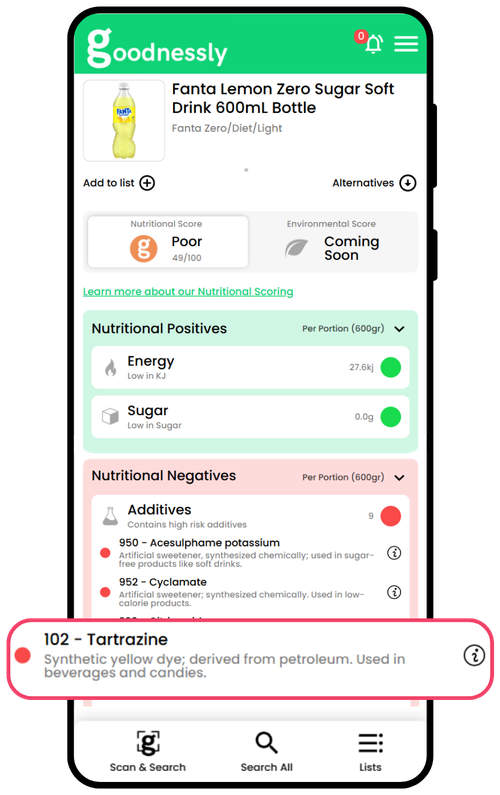
What is sodium benzoate?
Sodium benzoate is the sodium salt of benzoic acid (INS/E 211). Manufacturers add it as an antimicrobial preservative, mainly in acidic foods and drinks where it is most effective against yeasts and moulds. Benzoic acid also occurs naturally in some fruits (for example cranberries); the food-additive form is produced industrially. It is evaluated together with benzoic acid (E210), potassium benzoate (E212) and calcium benzoate (E213) as a group.
What's it used for?
- Preserving soft drinks, cordials and other flavoured beverages
- Extending shelf life in sauces, dressings, pickles and condiments
- Controlling spoilage in jams, jellies and some fruit preparations
- Used in selected processed foods where Schedule 15 (AU/NZ) or EU category limits allow it
Where you'll find 211 on the shelf
Unlike tightly restricted colours, sodium benzoate shows up across everyday acidic drinks and preserved foods — always check the ingredients list.
Is sodium benzoate safe? What the research says
Regulators in Australia/NZ, the EU and the US all still permit sodium benzoate within set limits. The debate that matters for shoppers is less about a ban and more about intake in children who drink a lot of flavoured beverages, plus historical formulation questions around benzoates and vitamin C.
| Region | Status | What this means |
|---|---|---|
| AU/NZ Australia & New Zealand (FSANZ) | Permitted | Listed with benzoic acid and its salts (210–213) in Schedule 15 of the Food Standards Code for specified food categories at maximum permitted levels (calculated as benzoic acid). Must be declared by name or code number on the ingredients list. |
| EU European Union (EFSA) | Permitted; group ADI | Authorised as E211. EFSA’s 2016 re-evaluation of E210–E213 set a group Acceptable Daily Intake of 5 mg/kg body weight/day expressed as benzoic acid. The Panel estimated the ADI could be exceeded for toddlers and children who regularly consume flavoured drinks, especially when carry-over from other foods is included. |
| US United States (FDA) | Permitted (GRAS) | Affirmed as generally recognized as safe (GRAS) under 21 CFR 184.1733 as an antimicrobial and flavouring adjuvant, with current use typically not exceeding 0.1% in food under good manufacturing practice. |
JECFA’s 92nd meeting (2021) established a group ADI of 0–20 mg/kg body weight/day (as benzoic acid equivalents) for benzoic acid, benzoate salts and related benzyl compounds, withdrawing the previous 0–5 mg/kg group ADI. That is a different numerical frame from EFSA’s still-current 5 mg/kg figure — shoppers should not treat the two numbers as interchangeable without checking which body they are citing.
- EFSA 2016 group ADI: the Panel derived 5 mg/kg bw/day (as benzoic acid) for E210–E213 and noted that high-level exposure estimates for toddlers and children consuming flavoured drinks could exceed that ADI, with carry-over potentially raising intake further.
- JECFA 2021 ADI update: the Committee established a group ADI of 0–20 mg/kg bw (as benzoic acid equivalents) and withdrew the previous 0–5 mg/kg group ADI — a higher numerical ceiling than EFSA currently uses.
- Benzene in some beverages (historical): the FDA has documented that very low levels of benzene can form in some drinks that contain both benzoate salts and ascorbic acid (or erythorbic acid), especially with heat and light. In its mid-2000s survey, FDA reported that levels found did not pose a safety concern for consumers and that products above the 5 ppb bottled-water reference were reformulated.
- Southampton mixture study (context): the 2007 McCann et al. study tested mixtures of certain colours plus sodium benzoate and reported associations with increased hyperactivity scores in some children. EFSA judged the evidence limited and inconsistent and did not change ADIs on that basis. EU mandatory warning labels for activity and attention apply to specified colours, not to sodium benzoate itself.
This section is checked periodically rather than continuously — if you're reading this well after the date above, it's worth confirming nothing has changed before citing it.
Who might want to limit or avoid it
- Parents of toddlers and children who regularly drink flavoured soft drinks or cordials, given EFSA’s estimate that high consumers in these age groups could exceed the group ADI
- Anyone who prefers to minimise preservatives in everyday drinks and sauces, especially products that also list ascorbic acid (vitamin C) alongside a benzoate
- People who have been advised by a clinician to limit benzoates, or who notice that certain preserved foods seem associated with their own symptoms
Goodnessly rates E211 Avoid. Regulators still permit sodium benzoate within set limits, but EFSA’s child-exposure estimates for flavoured drinks, the historical benzene-formation questions in some benzoate-plus-vitamin C beverages, and the unresolved Southampton mixture findings are enough for us to place it in our highest-caution category rather than everyday-use.
How to spot it on a label
Sodium benzoate is usually declared clearly when it is used as a preservative. Look out for:
- Sodium benzoate
- 211 or E211
- "Preservative (211)" or "Preservative (sodium benzoate)" in the ingredients list
- Related group members: benzoic acid (210), potassium benzoate (212), calcium benzoate (213)
Soft drinks, cordials, sauces and pickles are among the most common places to find it in Australia.
Related additives
Frequently asked questions
Is sodium benzoate permitted in Australia and New Zealand?
Yes. FSANZ lists sodium benzoate as additive 211 with the benzoates group (210–213) in Schedule 15 of the Food Standards Code for specified food categories at maximum permitted levels. Permission does not mean every consumer will choose to eat it.
Can sodium benzoate and vitamin C form benzene in soft drinks?
Under some conditions, very low levels of benzene have been associated with beverages that contain both benzoate salts and ascorbic acid (vitamin C) or erythorbic acid, especially with heat and light. The US FDA surveyed soft drinks and other beverages in the mid-2000s, reported that the levels found did not pose a safety concern for consumers, and noted that products above the 5 ppb bottled-water reference were reformulated. Industry guidance since then has focused on formulation and storage steps that minimise formation.
Was sodium benzoate part of the Southampton hyperactivity study?
Yes, as part of mixtures. The 2007 McCann et al. (Southampton) study tested drinks containing certain artificial colours plus sodium benzoate and reported associations with higher hyperactivity scores in some 3-year-old and 8/9-year-old children. The design could not show which ingredient in the mixture was responsible. EFSA judged the evidence limited and inconsistent and did not change acceptable daily intakes on that basis. EU mandatory "may have an adverse effect on activity and attention in children" warning labels apply to specified colours, not to sodium benzoate itself.
Does Goodnessly rate E211 as safe, caution, or avoid?
Goodnessly rates E211 (Sodium benzoate) as Avoid. Regulators still permit it within set limits, but EFSA's 2016 estimate that high child consumers of flavoured drinks could exceed the group ADI, the historical benzene-formation questions in some benzoate-plus-vitamin C drinks, and the unresolved Southampton mixture findings are enough for us to place it in our highest-caution category.
Don't decode labels by hand
Scan any product with the Goodnessly app to instantly see its full additive breakdown, kept current as new research like this comes to light.
Download our app to check additives in everyday foods
At Goodnessly we aim to educate and empower individuals to make informed choices about everyday products.
© 2024 . All rights reserved.
Facebook
Instagram
X
TikTok