What is E228?
Potassium bisulphite (potassium hydrogen sulphite) — a sulphite preservative in the E220–E228 group, less common on Australian labels than metabisulphites but assessed under the same group rules.
Potassium bisulphite (E228), also called potassium hydrogen sulphite or potassium bisulfite, is a sulphite used as a preservative and antioxidant in wine and other permitted foods. It is assessed with the wider sulphite group (E220–E228). It is permitted in Australia/NZ, the EU and the US within set limits, and must usually be declared when present at 10 milligrams per kilogram or more. EFSA's 2022 follow-up withdrew the temporary group Acceptable Daily Intake for sulphur dioxide–sulphites because toxicity data remained inadequate, and instead used a margin-of-exposure approach that raised a safety concern for high consumers in most population groups. Regulators and allergy bodies have long noted that sulphites may be associated with asthma-like symptoms in some sensitive individuals. Goodnessly rates it Avoid.
Download our app to check additives in everyday foods
Read the FAQ →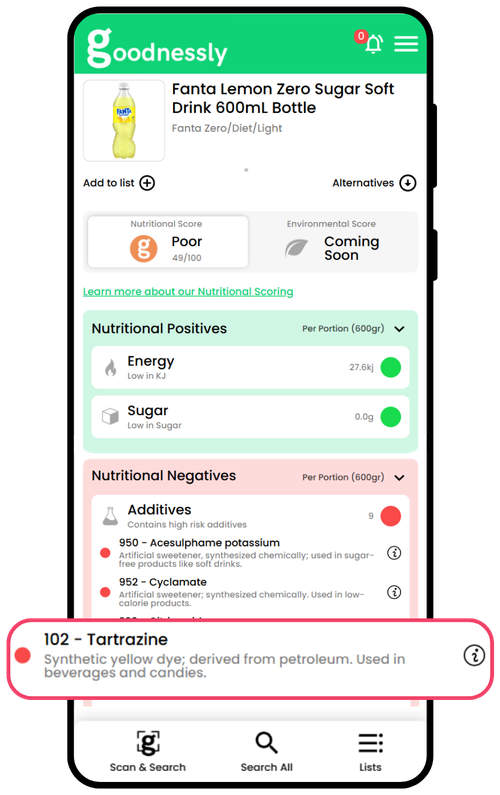
What is potassium bisulphite?
Potassium bisulphite (E228) is the potassium salt of bisulphurous acid (also labelled potassium hydrogen sulphite). It is an inorganic sulphite preservative and antioxidant. It belongs to the wider sulphite group that also includes sulphur dioxide (220), sodium sulphite (221), sodium bisulphite (222), sodium metabisulphite (223), potassium metabisulphite (224) and calcium sulphites (226–227). In the EU it is also authorised for certain wine uses alongside sulphur dioxide and potassium metabisulphite. On labels you may see "potassium bisulphite", "potassium bisulfite" (US spelling), "potassium hydrogen sulphite", "228", or the class name "preservative" / "antioxidant" with the number.
What's it used for?
- Used in wine and related fermented drinks as part of sulphite management where permitted
- Preserving dried fruit and limiting browning in some dried fruit and vegetables
- Limiting spoilage and browning in some potato products and processed foods
- Used in selected fruit juices, cordials and other permitted processed foods
Where you'll find E228 on the shelf
Less often named than sodium or potassium metabisulphite, but still part of the same sulphite family on wine and dried-fruit style products.
Is potassium bisulphite safe? What the research says
Potassium bisulphite is regulated as part of the sulphur dioxide–sulphites group. Major markets still permit it within limits and require declaration at or above 10 mg/kg, while EFSA's latest group assessment withdrew the temporary ADI and flagged a safety concern for high consumers. Sulphites have long been associated in clinical and regulatory literature with adverse reactions in some people with asthma — an association that is still incompletely quantified.
| Region | Status | What this means |
|---|---|---|
| AU/NZ Australia & New Zealand (FSANZ) | Permitted; declare ≥10 mg/kg | Permitted under the Food Standards Code for specified foods at maximum levels (often expressed as sulphur dioxide equivalents). Added sulphites must be declared when present at 10 milligrams per kilogram (10 mg/kg) or more. FSANZ and Australian allergy guidance note that sulphite sensitivity is more common among people with asthma. |
| EU European Union (EFSA) | Permitted; ADI withdrawn 2022 | Authorised as E228 (potassium hydrogen sulphite / potassium bisulphite) within the E220–E228 group, including specified wine uses. EFSA's 2016 re-evaluation set a temporary group ADI of 0.7 milligrams of SO₂ equivalents per kilogram of body weight per day. The 2022 follow-up withdrew that temporary ADI because the toxicity database remained inadequate, applied a margin-of-exposure approach (reference point 38 mg SO₂ equivalents/kg bw/day; assessment factor 80), and concluded this raises a safety concern for estimated dietary exposures in both refined and maximum-permitted-level scenarios for most population groups. EFSA also restated the need to further investigate hypersensitivity among some sensitive consumers. |
| US United States (FDA) | GRAS; declare ≥10 ppm | Potassium bisulfite is listed as generally recognized as safe under 21 CFR 182.3616 when used in accordance with good manufacturing practice, with carve-outs including meats, foods recognised as a source of vitamin B1, and fruits or vegetables intended to be served or sold raw/fresh. Sulfiting agents must generally be declared when present at 10 parts per million (10 mg/kg) or more; functional sulfites must be declared regardless of level. |
Wording matters here: regulators describe sulphite-related breathing difficulties in some sensitive people — particularly some people with asthma — as a recognised hypersensitivity concern, not as proof that potassium bisulphite will cause asthma in the general population. Prevalence estimates vary; ASCIA and similar bodies advise sulphite-sensitive individuals to read labels carefully.
- EFSA 2022 follow-up (group E220–E228): withdrew the temporary group ADI; used a margin-of-exposure approach and concluded estimated intakes raise a safety concern for high consumers in all population groups except adolescents (refined scenario). Potassium bisulphite (E228) is included in that group assessment.
- Hypersensitivity data gaps: EFSA restated its recommendation to further investigate hypersensitivity or intolerance among some sensitive consumers, because knowledge gaps remain.
- Label thresholds unchanged: AU/NZ and US still generally require sulphite declaration at or above 10 mg/kg (10 ppm), so wine and dried-fruit labels remain the practical first check.
This section is checked periodically rather than continuously — if you're reading this well after the date above, it's worth confirming nothing has changed before citing it.
Who might want to limit or avoid it
- People with asthma or a known sulphite sensitivity, given longstanding clinical and regulatory notes that sulphites may be associated with wheezing or other reactions in some sensitive individuals
- High consumers of wine, dried fruit or other sulphited foods, given EFSA's 2022 finding that estimated intakes raise a safety concern for high consumers in most age groups
- Anyone who prefers to minimise preservative sulphites and can choose unsulphited dried fruit or lower-sulphite wine options where available
Goodnessly rates E228 Avoid. Potassium bisulphite remains permitted within set limits in Australia/NZ, the EU and the US, but EFSA's 2022 withdrawal of the temporary group ADI for E220–E228, the margin-of-exposure concern for high consumers, and the well-recognised association between sulphites and adverse reactions in some sensitive people — including some people with asthma — place it in our highest-caution category.
How to spot it on a label
E228 and related sulphites must usually be declared when at or above 10 mg/kg. Look out for:
- Potassium bisulphite / potassium bisulfite / potassium hydrogen sulphite
- 228 or E228
- Preservative (228) or antioxidant (228)
- Other sulphites: 220–224, 226–227
Less common on everyday Australian labels than 220, 223 or 224, but still part of the same sulphite declaration rules.
Related additives
Frequently asked questions
What is Potassium bisulphite (E228) made from?
Potassium bisulphite is an inorganic salt (also called potassium hydrogen sulphite) manufactured for use as a food preservative and antioxidant. In food it belongs to the sulphite group (E220–E228). Small amounts of sulphites can also occur naturally in some foods.
Is potassium bisulphite the same as potassium metabisulphite?
They are related but not identical. Potassium bisulphite is E228; potassium metabisulphite is E224. Both are assessed together in the EFSA sulphite group (E220–E228), and residual sulphite on labels is often expressed as sulphur dioxide equivalents. Check the number or full name on the ingredients list.
Can potassium bisulphite affect people with asthma?
Sulphites have long been associated in clinical and regulatory literature with adverse reactions — including asthma-like symptoms such as wheezing — in some sensitive individuals, and sensitivity appears more common among people who already have asthma. That is an association for a sensitive subgroup, not evidence that potassium bisulphite causes asthma in the general population. If you have asthma or a known sulphite sensitivity, check labels and follow clinical advice.
Does Goodnessly rate E228 as safe, caution or avoid?
Goodnessly rates E228 (Potassium bisulphite) as Avoid. It remains permitted within set limits, but EFSA's 2022 group ADI withdrawal and high-consumer concern, plus the recognised association with reactions in some sulphite-sensitive people, place it in our highest-caution category.
Don't decode labels by hand
Scan any product with the Goodnessly app to instantly see its full additive breakdown, kept current as new research like this comes to light.
Download our app to check additives in everyday foods