What is E339?
A dibasic sodium phosphate used for buffering, acidity control, emulsifying or stabilising functions where permitted. Goodnessly rates E339 Safe, while food-category permissions and regulator conditions still apply.
A dibasic sodium phosphate used for buffering, acidity control, emulsifying or stabilising functions where permitted. Check the food category, amount and full formulation rather than judging one ingredient in isolation.
Download our app to check additives in everyday foods · Eco score: Coming Soon
Read the FAQ →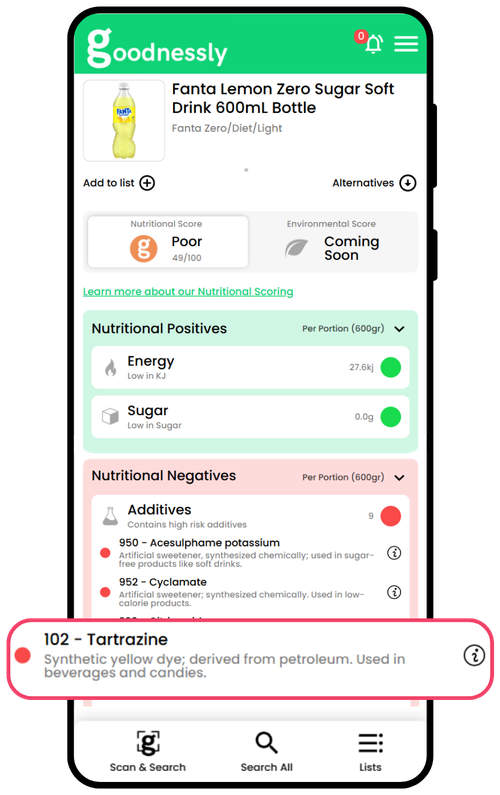
What is Sodium phosphate, dibasic?
A dibasic sodium phosphate used for buffering, acidity control, emulsifying or stabilising functions where permitted. Its function depends on the formulation and the conditions attached to the permitted use.
What's it used for?
- Buffering a food’s acidity
- Supporting emulsification or texture
- Helping maintain formulation stability
- Serving a specified sequestrant or nutrient-related function
Where you'll find E339 on the shelf
You may see E339 in packaged foods where its technical function is useful and the food category permits it.
Is E339 permitted? What the regulators say
Sodium phosphate, dibasic is listed in the checked AU/NZ and EU frameworks with conditions, and the US source gives a specified food-use pathway. Permission is conditional: category, level, identity and specifications matter.
| Region | Status | What this means |
|---|---|---|
| AU/NZ Australia & New Zealand (FSANZ) | Permitted with conditions | FSANZ Schedule 15 lists sodium phosphate forms, including dibasic sodium phosphate, for specified categories and conditions. [FSANZ source] |
| EU European Union (EUR-Lex) | Authorised with conditions | The consolidated Union list includes E339 phosphate forms for specified categories and conditions of use. [EUR-Lex source] |
| US United States (FDA) | Permitted with conditions | FDA 21 CFR §182.1778 covers sodium phosphate (mono-, di- and tribasic) as generally recognised as safe when used according to good manufacturing practice. [FDA source] |
Goodnessly rates E339 Safe within its rating system. The rating does not remove the need to consider the product category, amount or full formulation.
- EFSA’s 2019 opinion set the group ADI at 40 mg phosphorus/kg body weight/day and identified higher exposure in some younger age groups.
- EFSA follow-up work in 2025–26 discussed updated exposure assessment and specifications for phosphates; this does not replace the applicable conditions in the Union list.
- For people with kidney disease, the EFSA qualification makes the whole-diet context especially important.
This section is checked periodically rather than continuously — confirm the current primary source before relying on a regulatory detail.
Who might want to limit or avoid it
- People comparing additive functions across products
- People checking the frequency of this ingredient in their usual foods
- People who want to consider the whole formulation and serving pattern
Goodnessly rates E339 Safe as a practical prompt to understand the ingredient, the product and the overall formulation.
How to spot it on a label
Look for:
- Sodium phosphate, dibasic
- 339
- E339
- Additive class (339)
Ingredient labels may use the name, the number, or the additive class followed by the number.
Related additives
Frequently asked questions
What is E339?
E339 is Sodium phosphate, dibasic, a dibasic sodium phosphate used for buffering, acidity control, emulsifying or stabilising functions where permitted.
Is E339 permitted?
E339 is listed with conditions in Australia/New Zealand and the EU, and the FDA source gives a specified US food-use pathway.
What should I know about sodium phosphate, dibasic?
Use depends on the food category, amount, identity and the applicable regulator conditions; a listing is not a blanket permission for every food.
How does Goodnessly rate E339?
Goodnessly rates E339 (Sodium phosphate, dibasic) as Safe within its rating system.
Don't decode labels by hand
Scan any product with the Goodnessly app to see its full additive breakdown and understand the label at a glance.
Download our app to check additives in everyday foods · Eco score: Coming Soon