What is 413?
A natural gum from the sap of Astragalus shrubs, used to thicken and stabilise foods.
Tragacanth gum (413) is a natural gum collected from the dried sap of Astragalus shrubs, mainly grown in the Middle East. It thickens and stabilises sauces, dressings and icing. It is permitted in Australia, New Zealand, the EU and the US. EFSA re-evaluated it in 2017 and concluded there was no need for a numerical Acceptable Daily Intake. Goodnessly rates it Moderate Risk.
Download our app to check additives in everyday foods
Read the FAQ →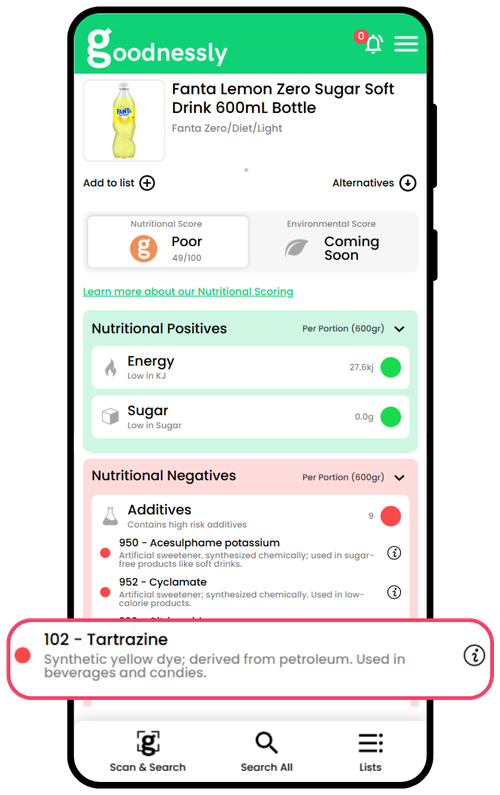
What is tragacanth gum?
Tragacanth is a complex plant carbohydrate harvested by tapping the roots and stems of several Astragalus species. It swells in water to form a thick, stable gel that holds up well in acidic foods, which makes it useful in dressings and sugar decorations.
What's it used for?
- Thickener in salad dressings and sauces
- Stabiliser in icing, fondant and cake decorations
- Texture in some desserts and fillings
- Also used in medicines and cosmetics
Where you'll find 413 on the shelf
It is less common than guar or xanthan gum, but shows up in dressings and decorating products.
Is tragacanth gum safe? What the research says
Regulators consider tragacanth acceptable at permitted levels, and as a fibre it is largely not digested. Large amounts may cause bloating or loose stools, and there are published reports of allergic reactions in sensitive people, mainly from occupational or older medical exposure.
| Region | Status | What this means |
|---|---|---|
| AU/NZ Australia & New Zealand (FSANZ) | Permitted | Listed as a thickener in the Food Standards Code. Declared as "thickener (413)" or by name. |
| EU European Union (EFSA) | Permitted | Authorised as E413. EFSA's 2017 re-evaluation concluded there was no need for a numerical Acceptable Daily Intake and no safety concern at reported uses. |
| US United States (FDA) | Permitted | Gum tragacanth is Generally Recognised as Safe under 21 CFR 184.1351. |
JECFA (1987) and the EU's former Scientific Committee for Food (1989) both allocated tragacanth an Acceptable Daily Intake "not specified". EFSA noted that intakes of up to 9.9 grams a day for 21 days were well tolerated in people.
- EFSA 2017 re-evaluation: EFSA concluded there was no need for a numerical Acceptable Daily Intake for E413.
- Supply: Tragacanth supply is limited and costly, so manufacturers often use other gums instead.
This section is checked periodically rather than continuously — if you're reading this well after the date above, it's worth confirming nothing has changed before citing it.
Who might want to limit or avoid it
- People with known allergy to tragacanth or related plant gums
- People with sensitive digestion, as gums in larger amounts may cause bloating
- Anyone who prefers to limit thickeners in processed foods
Goodnessly rates 413 Moderate Risk. It is permitted everywhere, but reports of allergy in sensitive people put it in our Moderate Risk category.
How to spot it on a label
Look out for:
- Tragacanth or gum tragacanth
- 413 or E413
- Thickener (413)
- Vegetable gum (413)
Look on dressings, sauces and cake decorating products.
Related additives
Frequently asked questions
Where does tragacanth gum come from?
It is the dried sap of several Astragalus shrubs, mainly from Iran and nearby regions. The sap is collected by tapping the roots and stems.
Is tragacanth gum vegan?
Yes. It is a plant-based gum and is not made from animal ingredients.
Can tragacanth gum cause allergies?
Allergic reactions have been reported in a small number of sensitive people, mainly from occupational or older medical exposure. Anyone with a known gum allergy should check labels.
How does Goodnessly rate 413?
Goodnessly rates 413 (tragacanth gum) as Moderate Risk. It is permitted everywhere, but reports of allergy in sensitive people put it in this category.
Don't decode labels by hand
Scan any product with the Goodnessly app to instantly see its full additive breakdown, kept current as new research like this comes to light.
Download our app to check additives in everyday foods