What is E510?
Ammonium chloride — a dough conditioner and yeast nutrient hiding in ordinary bread, and the exact ingredient that gives Nordic salty liquorice its sharp, salty bite.
E510 (ammonium chloride) is mainly used as a yeast nutrient and dough conditioner in commercial bread-making, and separately as a flavouring salt in strong Nordic-style salty liquorice (salmiakki). It's permitted in Australia, the EU and the US, and major regulators haven't set a strict numerical intake limit because ammonium and chloride ions are already normal parts of the body's chemistry. The caution comes from strong salty liquorice specifically: eating a lot of it regularly has been linked in case reports to genuine blood pressure and acid-base disturbances, which is why some Nordic and European food safety bodies advise moderating intake of extra-strong salmiak products. Goodnessly rates it Caution.
Download our app to check additives in everyday foods
Read the FAQ →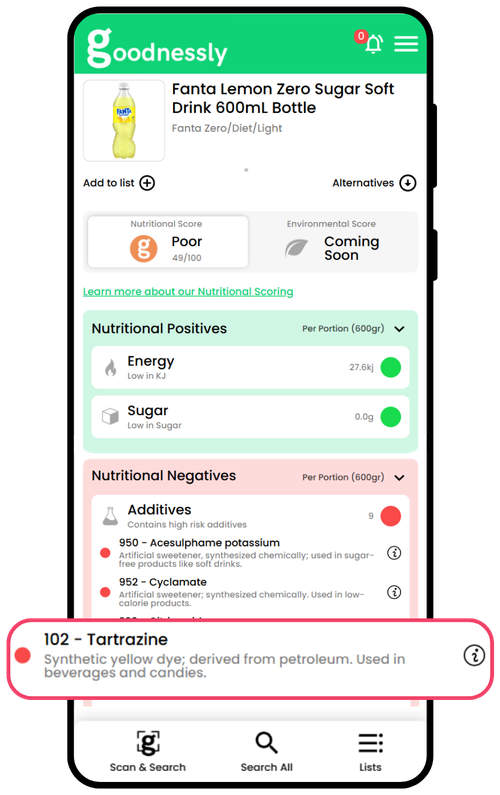
What is ammonium chloride?
Ammonium chloride is made by reacting ammonia with hydrochloric acid, though it also occurs naturally as the mineral sal ammoniac. In food manufacturing it has two quite different jobs. In bread-making, it acts as a nitrogen source (yeast food) that helps commercial yeast ferment more reliably and consistently, and it can also help condition dough. Separately — and much more visibly — it's the defining ingredient in Nordic-style salty liquorice, known as salmiakki in Finland and salmiak more broadly, where it delivers the sharp, mineral, almost metallic saltiness that distinguishes it from ordinary sweet liquorice.
What's it used for?
- Yeast nutrient and dough conditioner in commercial bread
- Flavouring salt in Nordic-style salty liquorice (salmiakki)
- Occasional use as a fermentation aid in other baked or brewed products
Where you'll find E510 on the shelf
Most people encounter it without noticing it in ordinary packaged bread; the more concentrated exposure comes from imported or specialty salty liquorice.
Is ammonium chloride safe? What the research says
Ammonium chloride's regulatory story is fairly quiet on the bread side and more nuanced on the liquorice side, where the concern is about total quantity eaten rather than legal status.
| Region | Status | What this means |
|---|---|---|
| AU/NZ Australia & New Zealand (FSANZ) | Permitted | Permitted as a food additive (yeast food/dough conditioner); must be declared by name or number on the ingredient list. |
| EU European Union (EFSA) | Permitted | Listed as E510, permitted for specific uses including flour treatment. No modern numerical Acceptable Daily Intake has been set. |
| US United States (FDA) | GRAS | Generally Recognized As Safe for use as a dough strengthener and yeast nutrient in baked goods. |
JECFA has not allocated a numerical Acceptable Daily Intake for ammonium chloride, largely because ammonium and chloride ions are ordinary constituents of the body that are handled through existing metabolic and kidney pathways at typical food-use levels. The absence of a numerical ADI reflects low general concern rather than a data gap regulators are worried about.
- Salty liquorice advisories: several Nordic and European food safety bodies have issued consumer guidance recommending people moderate their intake of extra-strong salmiak-style liquorice, particularly frequent large-volume eaters, pregnant women and young children, because of the concentrated ammonium chloride (and, separately, glycyrrhizin) content in these products.
- Case reports of acid-base disturbance: clinical literature includes isolated case reports of metabolic acidosis and blood pressure changes in people who consumed very large amounts of salty liquorice over sustained periods, though these involve unusually heavy, habitual intake rather than occasional treats.
- No change to bread-use status: there's no comparable safety signal for the small amounts used as a yeast nutrient in commercial bread, which is a different use case and a much lower level of exposure than concentrated salmiak confectionery.
This section is checked periodically rather than continuously — if you're reading this well after the date above, it's worth confirming nothing has changed before citing it.
Who might want to limit or avoid it
- Frequent, heavy eaters of strong Nordic-style salty liquorice, given the case reports linking large sustained intake to blood pressure and acid-base changes
- People with existing kidney or blood pressure conditions who are advised to watch their electrolyte intake generally
- Parents managing how much salmiak-style confectionery young children eat, following the same general-caution advisories issued in some Nordic countries
Goodnessly rates E510 Caution. Its use as a bread yeast nutrient is well established and low-concern, but its role as the defining flavour in strong salty liquorice means genuine, if occasional, case reports of harm exist at high sustained intake — enough for us to flag it rather than clear it outright.
How to spot it on a label
E510 must be declared clearly. Look out for:
- Ammonium chloride
- 510 or E510
- Sal ammoniac (older or technical naming)
It's most concentrated in strong salty liquorice, so check the ingredient list on imported Nordic-style confectionery specifically.
Related additives
Frequently asked questions
Is ammonium chloride bad for you?
In the small amounts used as a bread yeast nutrient, no safety concern has been identified and regulators haven't set a strict intake limit. The concern is specific to strong salty liquorice, where case reports link very high, sustained intake to blood pressure and acid-base changes.
Why is ammonium chloride used in bread?
It acts as a nitrogen source, sometimes called a yeast food, that helps commercial yeast ferment more reliably and consistently. It can also help condition the dough. It's used in small, standardised amounts rather than the much higher concentrations found in salty liquorice.
What's the deal with ammonium chloride in salty liquorice?
Nordic-style salty liquorice, known as salmiakki or salmiak, uses ammonium chloride to create its distinctive sharp, salty taste. Eating large amounts regularly has been linked in case reports to blood pressure and acid-base disturbances, which is why some food safety authorities advise moderating intake of the strongest products.
Does Goodnessly rate E510 as safe, caution or avoid?
Goodnessly rates E510 (Ammonium Chloride) as Caution. Its bread-making use is low-concern, but the case reports tied to heavy, sustained intake of strong salty liquorice mean it doesn't clear our bar for a Safe rating.
Don't decode labels by hand
Scan any product with the Goodnessly app to instantly see its full additive breakdown, kept current as new research like this comes to light.
Download our app to check additives in everyday foods