Additive 173 (E173): what is aluminium?
Also labelled: Aluminium · Aluminum · Aluminium powder · Aluminium leaf · Colour 173 · INS 173 · E173
A decorative metallic colour made from aluminium powder or leaf.
Aluminium (173) is metallic aluminium used as a surface colour on confectionery and cake decorations. It is permitted in Australia and New Zealand. The EU authorises E173 only as an external coating of sugar confectionery for cake decoration. It is not approved as a US food colour. Goodnessly rates it Hazardous Risk.
Permitted in Australia and New Zealand (FSANZ). In the EU it is authorised only as an external coating of sugar confectionery for cake decoration (Annex II, Parts B and E). It is not approved as a US food colour: the FDA lists aluminum powder for drugs (21 CFR 73.1645) and cosmetics (21 CFR 73.2645) only.
Download our app to check additives in everyday foods
Read the FAQ →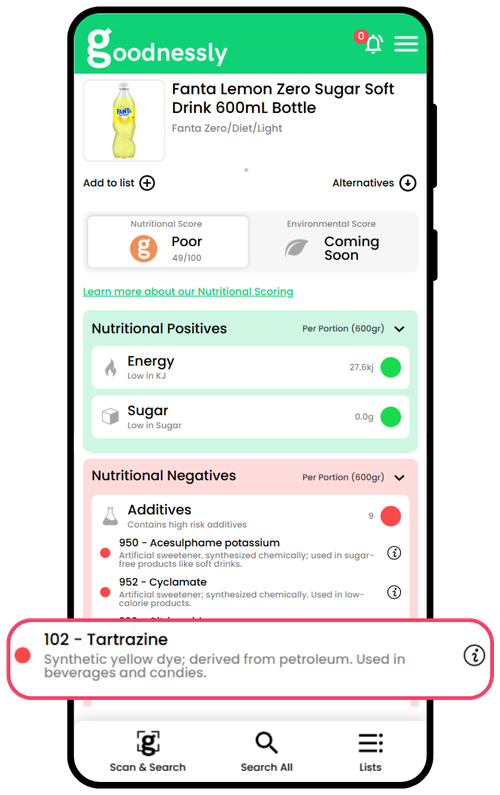
What is aluminium (173)?
Additive 173 is metallic aluminium, applied as a thin powder or leaf to give sweets and decorations a silver-grey sheen. It is a surface colour, not a dye mixed through the food. It is a different use from aluminium that can come from cookware or from other additives that contain aluminium salts.
What's it used for?
- External coating on sugar confectionery
- Decorative finishes on cakes and celebratory sweets
Where you'll find aluminium on the shelf
Look for it on shiny or metallic decorations, not in everyday pantry staples.
Is aluminium safe? What the research says
EFSA (2008) set a tolerable weekly intake of 1 mg/kg body weight for aluminium from all dietary sources, later confirming that approach in follow-up work. Most dietary aluminium comes from other foods and contact materials, not from this decorative colour. The EU keeps E173 to a narrow external use. The FDA does not list aluminum powder as a food colour.
| Region | Status | What this means |
|---|---|---|
| AU/NZ Australia & New Zealand (FSANZ) | Permitted | Listed as aluminium (173) in the Food Standards Code (Schedule 8) and permitted as a colour under Schedule 15. |
| EU European Union (EFSA) | Limited use | Authorised as E173 only for the external coating of sugar confectionery for the decoration of cakes (Annex II, Parts B and E). |
| US United States (FDA) | Not permitted as a food colour | Aluminum powder is listed for drugs (21 CFR 73.1645) and cosmetics (21 CFR 73.2645). We found no food-colour listing in 21 CFR Parts 73 or 74. |
Aluminium intake is assessed across the diet, not from this additive alone. Decorative use is typically a very small contribution.
- EU use limit (current Annex II): E173 remains authorised only for external coating of sugar confectionery for cake decoration.
- US colour lists: eCFR still lists aluminum powder for drugs and cosmetics, not for food, as of our November 2026 check.
This section is checked periodically rather than continuously — if you're reading this well after the date above, it's worth confirming nothing has changed before citing it.
Who might want to limit or avoid it
- Anyone avoiding metallic colours or aluminium-containing additives
- Shoppers comparing Australian and US or EU products
- People advised by a clinician to limit aluminium intake
Goodnessly rates 173 Hazardous Risk. The EU limits it to decoration only, and it is not approved as a US food colour.
How to spot it on a label
Look out for:
- Aluminium or aluminum
- Colour (173)
- E173
- Aluminium powder or aluminium leaf
Always check the ingredient list, as the same ingredient can be listed under different names.
Related additives
Frequently asked questions
Is aluminium (173) the same as aluminium in cookware?
No. Additive 173 is metallic aluminium powder or leaf used as a surface colour. Aluminium can also come from cookware or from other additives that are aluminium salts, which have different numbers and uses.
Is 173 allowed in the EU and US?
In the EU it is allowed only as an external coating of sugar confectionery for cake decoration. It is not approved as a US food colour. It is permitted in Australia and New Zealand.
Does this page cover aluminium in baking powder or anti-caking agents?
No. Those are different additives, such as sodium aluminium phosphate (541) or sodium aluminosilicate (554). This page is only about aluminium used as colour 173.
How does Goodnessly rate 173?
Goodnessly rates 173 (Aluminium) as Hazardous Risk. The EU limits it to decoration only, and it is not approved as a US food colour.
Don't decode labels by hand
Scan any product with the Goodnessly app to instantly see its full additive breakdown, kept current as new research like this comes to light.
Download our app to check additives in everyday foods