What is E212?
Potassium benzoate — the potassium salt of benzoic acid, a preservative in the E210–E213 benzoate group used in drinks, sauces and other acidic foods.
Potassium benzoate (E212) is a preservative in the benzoic acid–benzoates group (E210–E213). It is often chosen instead of sodium benzoate when a lower-sodium formulation is wanted. It is permitted in Australia/NZ and the EU within set limits; EFSA's 2016 group ADI is 5 mg/kg body weight per day expressed as benzoic acid, with estimated high intakes in children who drink a lot of flavoured soft drinks able to approach or exceed that ADI. In the US, FDA's Substances Added to Food inventory lists potassium benzoate with specific CFR citations (including margarine and certain food-contact uses); beverage use of benzoate salts is discussed in FDA's benzene Q&A. Benzoates plus ascorbic acid can form trace benzene under some conditions — FDA has stated levels found in its surveys did not pose a safety concern and many products were reformulated. Goodnessly rates it Avoid.
Download our app to check additives in everyday foods
Read the FAQ →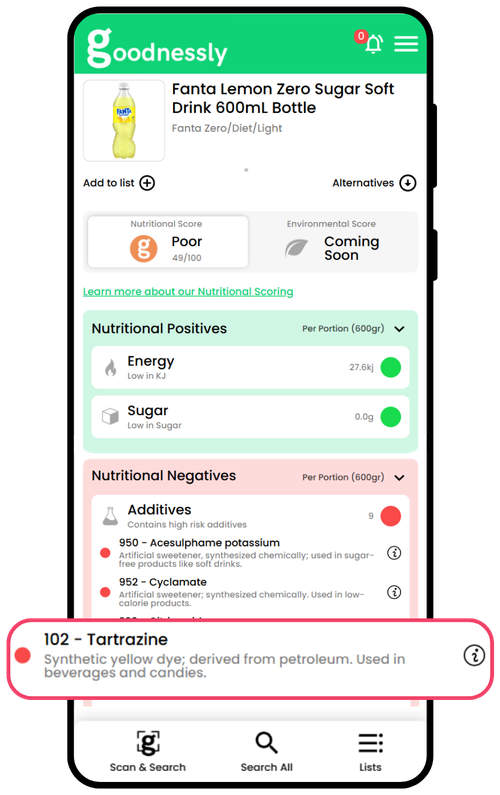
What is potassium benzoate?
Potassium benzoate (E212) is the potassium salt of benzoic acid. Like sodium benzoate (E211), it works best as an antimicrobial in acidic foods and drinks. It belongs to the benzoate group with benzoic acid (210), sodium benzoate (211) and calcium benzoate (213). On labels you may see "potassium benzoate", "212", "E212", or "preservative (212)".
What's it used for?
- Preserving acidic soft drinks, cordials and flavoured waters (often as a lower-sodium alternative to sodium benzoate)
- Preserving sauces, pickles, relishes and similar acidic condiments
- Used in some jams, jellies and fruit preparations where benzoates are permitted
- Used in selected margarine and other permitted processed foods
Where you'll find E212 on the shelf
Same neighbourhood as sodium benzoate — acidic drinks and condiments — especially where manufacturers want a potassium rather than sodium salt.
Is potassium benzoate safe? What the research says
Potassium benzoate is assessed with the wider benzoate group. EFSA keeps a numerical group ADI and has flagged that high consumers of flavoured drinks — especially children — may exceed it. FDA and other agencies have also documented that benzoate salts together with ascorbic or erythorbic acid can form benzene in some beverages; survey levels were described as not posing a safety concern, and manufacturers reformulated. Mixture studies that included sodium benzoate plus certain colours (the Southampton work) are about combinations, not proof that potassium benzoate alone softens attention or behaviour.
| Region | Status | What this means |
|---|---|---|
| AU/NZ Australia & New Zealand (FSANZ) | Permitted (benzoates group) | Listed in the Food Standards Code with benzoic acid and sodium, potassium and calcium benzoates (210–213) for specified categories and maximum levels in Schedule 15. Must be declared by name or code number when used as a food additive. |
| EU European Union (EFSA) | Authorised; group ADI 5 mg/kg bw/day | Authorised as E212 under Regulation (EC) No 1333/2008. EFSA's 2016 re-evaluation of E210–E213 set a group ADI of 5 mg/kg bw/day expressed as benzoic acid. The Panel did not identify genotoxicity or carcinogenicity concerns for the additives themselves at that assessment, but noted that high-level exposure estimates for toddlers and children consuming flavoured drinks could exceed the ADI, with carry-over able to raise intake further. |
| US United States (FDA) | Listed for specified uses | FDA's Substances Added to Food inventory lists potassium benzoate as an antimicrobial agent with CFR references including 21 CFR 166.110 (margarine) and 177.1210 (certain food-contact closures). Unlike sodium benzoate, it does not have a broad Part 184 GRAS affirmation for general food use. FDA's benzene-in-beverages Q&A discusses benzoate salts (sodium or potassium) with ascorbic acid; FDA stated survey levels did not pose a safety concern. |
Benzene formation is a chemistry/processing issue for some benzoate + vitamin C drinks, not evidence that potassium benzoate "is benzene" or that every product contains concerning levels. Southampton mixture findings cannot be attributed to potassium benzoate alone. Hypersensitivity to benzoates is reported in a sensitive subgroup — an association, not a general-population diagnosis.
- EFSA 2016 (E210–E213): group ADI 5 mg/kg bw/day as benzoic acid; possible ADI exceedance for high child consumers of flavoured drinks; E212 included.
- JECFA 2021 update (benzoates): group ADI revised to 0–20 mg/kg bw as benzoic acid equivalents for benzoic acid, benzoate salts and related benzyl compounds (previous 0–5 withdrawn) — still not a reason to ignore EFSA's drinker-exposure note.
- FDA benzene Q&A: continues to describe possible low-level benzene formation from benzoate + ascorbic/erythorbic acid under heat/light; survey findings characterised as not a safety concern, with reformulation common.
This section is checked periodically rather than continuously — if you're reading this well after the date above, it's worth confirming nothing has changed before citing it.
Who might want to limit or avoid it
- Parents of children who drink large amounts of preserved flavoured soft drinks, given EFSA's ADI-exceedance estimates for high young consumers
- People who prefer to avoid benzoate preservatives, including when ascorbic acid (vitamin C) is also listed
- Anyone with a clinician-recognised sensitivity to benzoates or related preservatives
Goodnessly rates E212 Avoid. Potassium benzoate remains permitted in Australia/NZ and the EU within limits, and appears in US listings for specified uses, but EFSA's group ADI exposure concerns for high child drinkers, the benzoate–ascorbic benzene chemistry history, and our stricter-than-permission consumer stance place it with the other benzoates in Avoid.
How to spot it on a label
Check acidic drinks and condiments for:
- Potassium benzoate
- 212 or E212
- Preservative (212)
- Other benzoates: 210, 211, 213
Often swaps with sodium benzoate (211) in low-sodium recipes — same preservative family.
Related additives
Frequently asked questions
What is Potassium benzoate (E212) made from?
It is the potassium salt of benzoic acid, manufactured for use as a food preservative. It is in the same group as sodium benzoate (E211), often used where a potassium salt is preferred.
Is potassium benzoate safer than sodium benzoate?
Regulators assess them together in the benzoate group (E210–E213) with a shared group ADI in the EU. Choosing potassium mainly changes the sodium content of the recipe, not the core benzoate safety assessment. Goodnessly rates both Avoid.
Can potassium benzoate form benzene with vitamin C?
Benzoate salts together with ascorbic or erythorbic acid can form trace benzene in some beverages under heat or light. FDA has described survey levels as not posing a safety concern and notes that many products were reformulated. That is a processing chemistry issue, not proof that every listed product contains benzene.
Does Goodnessly rate E212 as safe, caution or avoid?
Goodnessly rates E212 (Potassium benzoate) as Avoid, consistent with other benzoates in our ratings.
Don't decode labels by hand
Scan any product with the Goodnessly app to instantly see its full additive breakdown, kept current as new research like this comes to light.
Download our app to check additives in everyday foods