What is E213?
Calcium benzoate — a benzoate preservative salt, sharing the same allergy and benzene-formation considerations as its better-known relatives sodium and potassium benzoate.
E213 (calcium benzoate) is made by combining calcium with benzoic acid, working as a preservative in acidic foods in the same way as benzoic acid (E210) and its other salts. It carries the same considerations as those relatives: possible allergy-type reactions in sensitive people, and a shared family concern about benzene formation when combined with Vitamin C. Goodnessly rates it Avoid.
Download our app to check additives in everyday foods
Read the FAQ →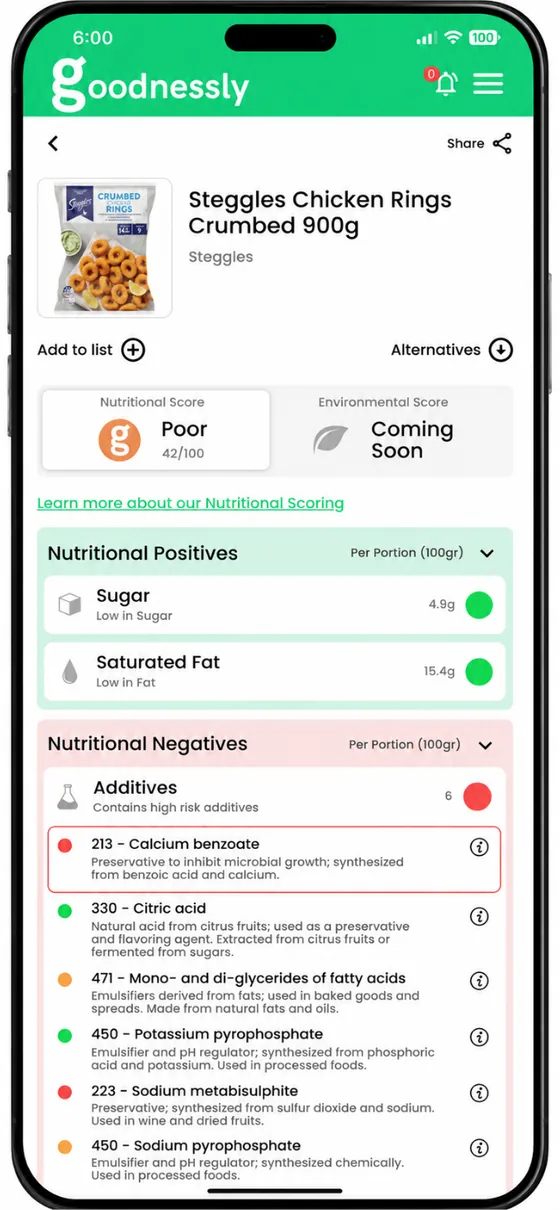
What is calcium benzoate?
Calcium benzoate is made by combining calcium with benzoic acid, the same preservative acid covered in detail on our E210 page. Like the other benzoate salts (sodium benzoate E211, potassium benzoate E212), it works by penetrating microbial cells and disrupting their function, but only in acidic conditions below about pH 4.5. Calcium benzoate is less commonly used than its sodium and potassium counterparts, but shares the same fundamental chemistry and safety profile.
What's it used for?
- Preventing yeast and mould growth in acidic beverages
- Preserving pickled and acidic condiments
- Occasionally used as a calcium-fortifying preservative combination
Where you'll find 213 on the shelf
Less common than its sodium and potassium relatives, found in similar acidic products.
Is calcium benzoate safe? What the research says
Calcium benzoate was reviewed by EFSA in the same 2016 assessment covering the whole benzoate group, alongside E210, E211 and E212.
| Region | Status | What this means |
|---|---|---|
| AU/NZ Australia & New Zealand (FSANZ) | Permitted | Must be declared by name or number (213) on the ingredient list, permitted at set maximum levels. |
| EU European Union (EFSA) | Permitted, ADI set | Listed as E213. Covered by the same 2016 EFSA re-evaluation as E210, E211 and E212, which set a group Acceptable Daily Intake of 5 mg per kilogram of bodyweight per day, expressed as benzoic acid, across all four. |
| US United States (FDA) | Not listed | No US clearance for calcium benzoate specifically. Benzoic acid (21 CFR 184.1021) and sodium benzoate (21 CFR 184.1733) hold GRAS status, but the calcium salt isn't on the list. |
For the full detail on the benzene-formation reaction with Vitamin C and the documented allergy-type reactions linked to benzoates, see our E210 (Benzoic Acid) page — the same considerations apply here, since calcium benzoate shares the same active benzoate chemistry.
- No developments specific to calcium benzoate: because it's used far less often than sodium or potassium benzoate, most regulatory and research attention on this additive family focuses on those two rather than the calcium salt specifically.
This section is checked periodically rather than continuously — if you're reading this well after the date above, it's worth confirming nothing has changed before citing it.
Who might want to limit or avoid it
- People with asthma or a history of hives, who report higher rates of pseudo-allergic reactions to benzoates as a group
- Anyone who regularly consumes products combining a benzoate with Vitamin C, given the benzene-formation concern shared across the family
- Anyone who prefers to choose naturally preserved products where practical
Goodnessly rates E213 Avoid, consistent with how we rate the rest of the benzoate family. It's approved in Australia, New Zealand and the EU, where it carries a formal daily intake limit, but the same allergy and benzene-formation considerations that apply to sodium and potassium benzoate apply here too.
How to spot it on a label
E213 must be declared clearly. Look out for:
- Calcium benzoate
- 213 or E213
- "Preservative (213)" in the ingredients list
- Related benzoates: benzoic acid (210), sodium benzoate (211), potassium benzoate (212)
Related additives
Frequently asked questions
Is calcium benzoate the same as sodium benzoate?
They're closely related benzoate salts, but not identical — calcium benzoate uses calcium rather than sodium as its accompanying ion. Both work the same way as preservatives and carry the same core safety considerations.
Why is calcium benzoate less common than sodium benzoate?
Sodium benzoate is more soluble in water, which makes it more practical for many food and drink applications. Calcium benzoate is used less frequently but performs a similar preservative function.
Does Goodnessly rate E213 as safe, caution, or avoid?
Goodnessly rates E213 (Calcium Benzoate) as Avoid, consistent with the rest of the benzoate family. It's approved in Australia, New Zealand and the EU, where it carries a formal daily intake limit, but shares the same allergy and benzene-formation considerations as sodium and potassium benzoate.
Don't decode labels by hand
Scan any product with the Goodnessly app to instantly see its full additive breakdown, kept current as new research like this comes to light.
Download our app to check additives in everyday foods