What is E281?
Sodium propionate — the sodium salt of propionic acid, a mould-inhibiting preservative in the E280–E283 group used in bread and other foods.
Sodium propionate (E281) is the sodium salt of propionic acid, used to inhibit mould in bakery products and some other foods. It is assessed with propionic acid and the other propionate salts (E280–E283). It is permitted in Australia/NZ, the EU and the US (GRAS under 21 CFR 184.1784 for listed foods). EFSA's 2014 group re-evaluation did not allocate a numerical ADI but concluded authorised uses were not a safety concern; a 2016 EFSA opinion on extending some meat/fish uses of E281 likewise did not identify a safety concern. Goodnessly rates it Avoid as part of the high-exposure bakery propionate group.
Download our app to check additives in everyday foods
Read the FAQ →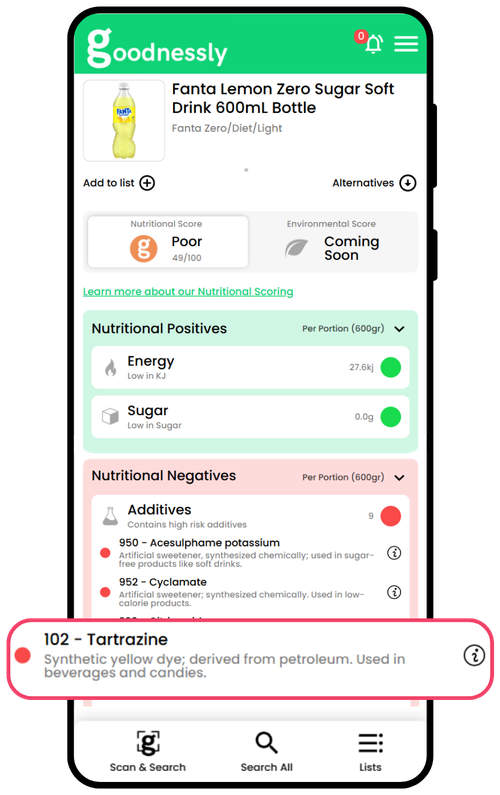
What is sodium propionate?
Sodium propionate (E281) is the sodium salt of propionic acid (propanoic acid). In solution it provides the same propionate antimicrobial activity used against mould in bread and related foods. It sits alongside propionic acid (280), calcium propionate (282) and potassium propionate (283). On labels you may see "sodium propionate", "281", "E281", or "preservative (281)".
What's it used for?
- Inhibiting mould in bread, rolls, tortillas and other prepacked bakery products
- Preserving some processed cheeses and bakery fillings where permitted
- Used in selected meat preparations, processed meat or processed fish where a jurisdiction authorises those uses
- Functioning as an antimicrobial and, in some recipes, a flavouring adjunct
Where you'll find E281 on the shelf
Same bakery aisle story as other propionates — packaged bread and longer-shelf bakery foods.
Is sodium propionate safe? What the research says
Sodium propionate shares the EFSA group assessment with E280–E283: no numerical ADI in 2014, no safety concern flagged for authorised bakery-centric uses at assessed maxima, and a later opinion that did not object to certain higher-level meat/fish extensions for E281. US law affirms it as GRAS for listed food categories. Goodnessly's Avoid rating reflects preservative minimisation in a staple food category rather than a regulatory ban.
| Region | Status | What this means |
|---|---|---|
| AU/NZ Australia & New Zealand (FSANZ) | Permitted (propionates group) | Sodium propionate (281) is permitted under the Food Standards Code with the propionate group for specified foods, including bakery uses. Declare by name or number on packaged foods when used as a food additive. |
| EU European Union (EFSA) | Authorised; group assessed 2014/2016 | Authorised as E281 under Regulation (EC) No 1333/2008 within propionic acid–propionates. EFSA 2014: no numerical ADI; authorised uses not considered a safety concern at assessed maxima. EFSA 2016: extension of use of sodium propionate in some meat and fish categories up to 5,000 mg/kg was not considered a safety concern in that opinion. Category limits in Annex II still govern what is actually legal on the shelf. |
| US United States (FDA) | GRAS (21 CFR 184.1784) | Sodium propionate is affirmed as GRAS under 21 CFR 184.1784 as an antimicrobial and flavouring agent in listed foods (including baked goods, cheeses, gelatins/puddings, jams/jellies, meat products and others) at current good manufacturing practice. Prior sanctions differing from that listing are stated not to exist or to have been waived. |
As with propionic acid, "no safety concern at authorised uses" is an EFSA exposure conclusion, not a recommendation to seek the additive out. Personal sensitivity reports around propionate-preserved bread remain anecdotal or limited-subgroup findings — use association language and clinical advice where relevant.
- EFSA 2014 group opinion: E281 included with E280–E283; no numerical ADI; authorised uses not flagged as a safety concern for food as consumed.
- EFSA 2016 E281 extension opinion: higher proposed use levels in some meat/fish categories not considered a safety concern in that assessment.
- US GRAS listing current: 21 CFR 184.1784 remains the primary direct-food citation for sodium propionate.
This section is checked periodically rather than continuously — if you're reading this well after the date above, it's worth confirming nothing has changed before citing it.
Who might want to limit or avoid it
- People minimising preservatives in everyday bread who can choose preservative-free or freshly baked options
- Anyone avoiding the whole E280–E283 set for a simple shopping rule
- People on clinician advice related to propionate sensitivity or low-additive diets
Goodnessly rates E281 Avoid. Sodium propionate remains permitted in Australia/NZ, the EU and the US, with EFSA not flagging authorised uses as a safety concern, but its role as a staple-food mould inhibitor in the propionate group keeps it in our highest-caution consumer category.
How to spot it on a label
On packaged bakery and related labels, look for:
- Sodium propionate
- 281 or E281
- Preservative (281)
- Related: 280 propionic acid, 282 calcium propionate, 283 potassium propionate
If sodium content matters to you, compare with calcium propionate (282), which is often used on AU bread instead.
Related additives
Frequently asked questions
What is Sodium propionate (E281) made from?
It is the sodium salt of propionic acid, manufactured for use as a food preservative (mould inhibitor). It belongs to the E280–E283 propionate group.
Is sodium propionate the same as calcium propionate?
Related but not identical. Sodium propionate is E281; calcium propionate is E282. Both supply propionate activity; calcium propionate is more common on many Australian bread labels.
Is sodium propionate banned anywhere major?
No. It remains authorised in the EU and permitted in Australia/NZ, and is GRAS in the US for listed foods. Goodnessly's Avoid rating is a consumer caution tier, not a ban notice.
Does Goodnessly rate E281 as safe, caution or avoid?
Goodnessly rates E281 (Sodium propionate) as Avoid.
Don't decode labels by hand
Scan any product with the Goodnessly app to instantly see its full additive breakdown, kept current as new research like this comes to light.
Download our app to check additives in everyday foods