What is 309?
One of the natural forms of vitamin E, used as an antioxidant to stop fats and oils going rancid.
Delta-tocopherol (309), written d-tocopherol or δ-tocopherol, is one of the natural forms of vitamin E. In food it works as an antioxidant that slows fats and oils from going rancid. It is permitted in Australia, New Zealand, the EU and the US. EFSA re-evaluated the tocopherols (E306–E309) in 2015 and concluded they are not of safety concern at reported use levels. Goodnessly rates it Risk Free.
Download our app to check additives in everyday foods
Read the FAQ →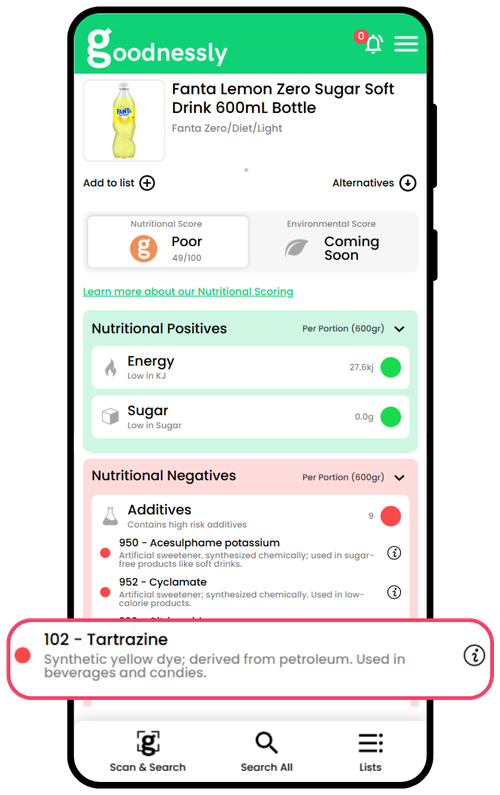
What is delta-tocopherol?
Tocopherols are a family of fat-soluble compounds that make up vitamin E. Delta-tocopherol is one of four forms (alpha, beta, gamma and delta). It is usually obtained from vegetable oils such as soybean oil during refining. As an additive it is valued for protecting fats from oxidation rather than for its vitamin activity.
What's it used for?
- Antioxidant in vegetable oils, margarines and spreads
- Protecting fats in snacks, biscuits and cereals
- Stabilising flavours and fat-soluble vitamins
- Used in some supplements and infant formula ingredients
Where you'll find 309 on the shelf
It is often listed in oils and fat-based products, sometimes simply as "antioxidant (309)".
Is d-tocopherol safe? What the research says
Tocopherols are naturally present in many foods, especially nuts, seeds and vegetable oils. EFSA's 2015 re-evaluation concluded the tocopherol food additives are not of safety concern at reported uses and use levels. It assessed gamma- and delta-tocopherol by read-across from alpha-tocopherol, because specific data were more limited.
| Region | Status | What this means |
|---|---|---|
| AU/NZ Australia & New Zealand (FSANZ) | Permitted | Listed as an antioxidant in the Food Standards Code. Declared as "antioxidant (309)" or by name. |
| EU European Union (EFSA) | Permitted | Authorised as E309. EFSA's 2015 re-evaluation concluded no safety concern at reported uses and use levels. |
| US United States (FDA) | Permitted | Tocopherols are Generally Recognised as Safe under 21 CFR 182.3890. |
EFSA could not set an Acceptable Daily Intake in 2015 because data were limited, but its conclusion of no safety concern did not apply to infants under 12 weeks of age, which it flagged for separate assessment.
- EFSA 2015 re-evaluation: EFSA concluded that E306–E309 are not of safety concern at reported uses and levels.
- Infant foods follow-up: EFSA issued a call for data on tocopherols in foods for infants below 16 weeks of age as follow-up work.
- Labelling in AU/NZ: FSANZ requires antioxidants to be declared by class name plus name or number.
This section is checked periodically rather than continuously — if you're reading this well after the date above, it's worth confirming nothing has changed before citing it.
Who might want to limit or avoid it
- People taking high-dose vitamin E supplements, who may want to keep an eye on total intake (talk to your doctor)
- People with a soy allergy who want to check the source oil, although refined tocopherols usually contain very little protein
- Anyone curious about what the antioxidant number on their oil means
Goodnessly rates 309 Risk Free. It is a natural form of vitamin E, permitted everywhere, with no safety concern found at food-use levels.
How to spot it on a label
Look out for:
- Delta-tocopherol, d-tocopherol or δ-tocopherol
- 309 or E309
- Antioxidant (309)
- Vitamin E or mixed tocopherols (when combined with other forms)
It is common in oils, spreads and fat-based snacks.
Related additives
Frequently asked questions
Is delta-tocopherol the same as vitamin E?
It is one of the forms of vitamin E. Alpha-tocopherol has the most vitamin activity in the body, while delta-tocopherol is valued in food mainly as an antioxidant.
Is delta-tocopherol natural?
It occurs naturally in vegetable oils, nuts and seeds. The additive is usually extracted from vegetable oils such as soybean oil during refining.
Is delta-tocopherol vegan?
It is normally plant-derived, so it is generally suitable for vegans. Check with the manufacturer if you need to be certain.
How does Goodnessly rate 309?
Goodnessly rates 309 (delta-tocopherol) as Risk Free. It is a natural form of vitamin E, permitted everywhere, with no safety concern found at food-use levels.
Don't decode labels by hand
Scan any product with the Goodnessly app to instantly see its full additive breakdown, kept current as new research like this comes to light.
Download our app to check additives in everyday foods