What is E509?
Calcium chloride — a simple mineral salt used as a firming agent and electrolyte, well known for its role in making cheese and pickles crisp.
E509 (calcium chloride) is a simple salt of calcium and chlorine, used as a firming agent, electrolyte and sequestrant in a wide range of foods. It's also used medically as an electrolyte replacement and holds Generally Recognized As Safe status in the US. Goodnessly rates it Safe.
Download our app to check additives in everyday foods
Read the FAQ →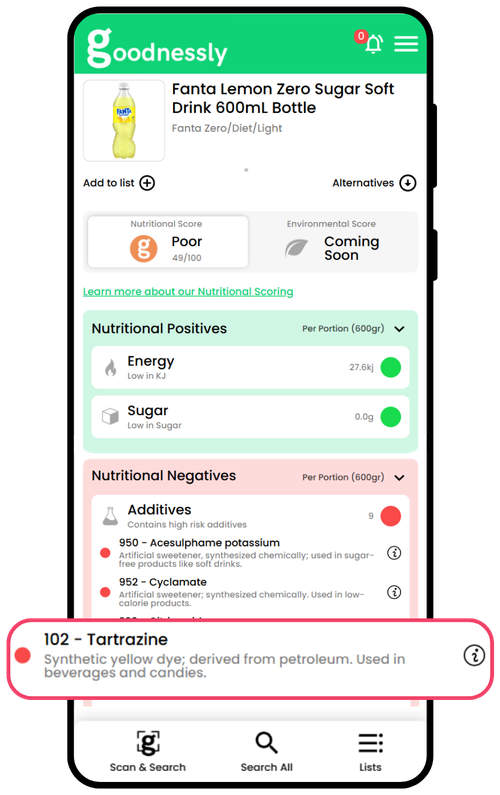
What is calcium chloride?
Calcium chloride is a simple inorganic salt made from calcium and chlorine. It's highly soluble in water and has a salty, slightly bitter taste, which is why it's used in small amounts rather than as a bulk ingredient. It's also widely used outside food, including in medicine as an electrolyte replacement and in de-icing roads, though the food-grade version used as an additive is a distinct, purified application.
What's it used for?
- Firming agent in canned vegetables and pickles, keeping them crisp
- Coagulant in cheese and tofu production
- Electrolyte in sports drinks
- Sequestrant to bind trace metals and improve stability
Where you'll find 509 on the shelf
Common wherever crispness or firmness matters.
Is calcium chloride safe? What the research says
Calcium chloride is one of the most extensively used firming agents in food, with a long, uncontroversial safety record.
| Region | Status | What this means |
|---|---|---|
| AU/NZ Australia & New Zealand (FSANZ) | Permitted | Permitted as a firming agent and sequestrant with no specific quantity restriction in most categories. |
| EU European Union (EFSA) | Permitted | Listed as E509, approved for general food use. |
| US United States (FDA) | GRAS | Holds Generally Recognized As Safe status under 21 CFR 184.1193. |
Calcium chloride is also used medically as an electrolyte replacement, reflecting decades of established clinical safety data alongside its food-additive approval.
- No significant regulatory changes: calcium chloride's approval status has remained stable, reflecting its long, low-controversy safety record.
This section is checked periodically rather than continuously — if you're reading this well after the date above, it's worth confirming nothing has changed before citing it.
Who this matters to
- No population group has a specific safety-based reason to limit E509 at typical food-additive levels
Goodnessly rates E509 Safe. It's one of the most extensively used firming agents in food, with decades of established clinical and food safety data.
How to spot it on a label
E509 is usually declared clearly. Look out for:
- Calcium chloride
- 509 or E509
- "Firming agent (509)" in the ingredients list
Pickles, canned vegetables and cheese are the most common places to find it.
Related additives
Frequently asked questions
Why does calcium chloride taste bitter?
Calcium chloride has a naturally salty, slightly bitter taste, which is part of why it's used in small quantities as a functional additive rather than a bulk ingredient.
Is calcium chloride the same as table salt?
No. Table salt is sodium chloride. Calcium chloride is a different compound, made from calcium rather than sodium, and is used for different functional purposes like firming and coagulation.
Does Goodnessly rate E509 as safe, caution, or avoid?
Goodnessly rates E509 (Calcium Chloride) as Safe. It's one of the most extensively used firming agents in food, with decades of established clinical and food safety data.
Don't decode labels by hand
Scan any product with the Goodnessly app to instantly see its full additive breakdown, kept current as new research like this comes to light.
Download our app to check additives in everyday foods