What is E526?
Calcium hydroxide, also called slaked lime — a mineral used as a firming agent and acidity regulator, with a long history in traditional corn processing.
E526 (calcium hydroxide, also called slaked lime) is made by combining calcium oxide with water. It's used as a firming agent and acidity regulator, and has a particularly long history in nixtamalization, the traditional process used to prepare corn for tortillas and masa. Goodnessly rates it Safe.
Download our app to check additives in everyday foods
Read the FAQ →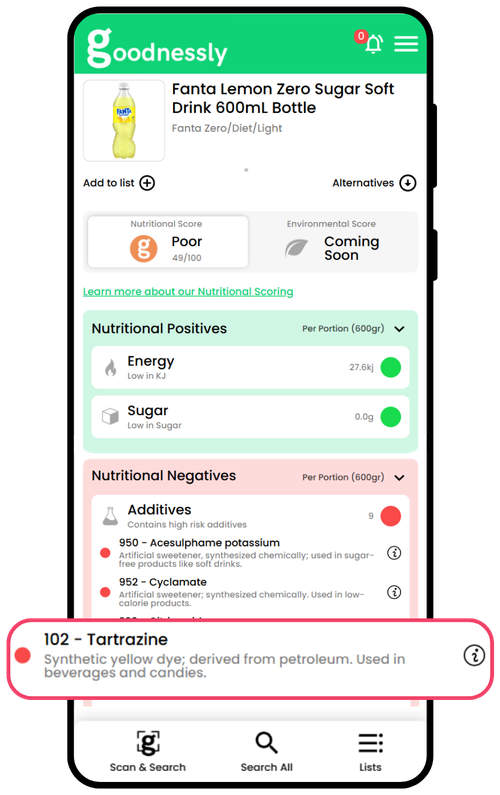
What is calcium hydroxide?
Calcium hydroxide, also known as slaked lime, is made by combining calcium oxide (quicklime) with water. It's a strongly alkaline compound, used sparingly and always neutralised or well-diluted before food reaches the consumer. It has a particularly long history in nixtamalization — the traditional Mesoamerican process of soaking and cooking corn in a calcium hydroxide solution before grinding it into masa for tortillas, a practice dating back thousands of years.
What's it used for?
- Traditional corn processing (nixtamalization) for tortillas and masa
- Firming agent in some processed foods
- Acidity regulator
Where you'll find 526 on the shelf
Most familiar as part of traditional corn tortilla and masa production.
Is calcium hydroxide safe? What the research says
Calcium hydroxide has a food-processing history stretching back thousands of years, and a clean modern regulatory record.
| Region | Status | What this means |
|---|---|---|
| AU/NZ Australia & New Zealand (FSANZ) | Permitted | Permitted as a firming agent and acidity regulator with no specific quantity restriction in most categories. |
| EU European Union (EFSA) | Permitted | Listed as E526, approved for general food use. |
| US United States (FDA) | GRAS | Holds Generally Recognized As Safe status for use as a food additive. |
Calcium hydroxide is strongly alkaline in its concentrated form, so it's always neutralised or well-diluted during food processing before the food reaches the consumer, as has been the practice in traditional nixtamalization for millennia.
- No significant regulatory changes: calcium hydroxide's approval status has remained stable, reflecting its long, low-controversy safety record.
This section is checked periodically rather than continuously — if you're reading this well after the date above, it's worth confirming nothing has changed before citing it.
Who this matters to
- No population group has a specific safety-based reason to limit E526 at typical food-additive levels
Goodnessly rates E526 Safe. It has a food-processing history stretching back thousands of years, always used diluted or neutralised in the finished product.
How to spot it on a label
E526 is usually declared clearly. Look out for:
- Calcium hydroxide
- Slaked lime
- 526 or E526
- "Firming agent (526)" in the ingredients list
Corn tortillas and masa are the most traditional places to find it.
Related additives
Frequently asked questions
Is calcium hydroxide the same as slaked lime?
Yes — calcium hydroxide and slaked lime both refer to the same compound, made by combining calcium oxide (quicklime) with water.
What is nixtamalization?
Nixtamalization is the traditional Mesoamerican process of soaking and cooking corn in a calcium hydroxide solution before grinding it into masa for tortillas. It's been practised for thousands of years and also improves the nutritional availability of certain nutrients in the corn.
Does Goodnessly rate E526 as safe, caution, or avoid?
Goodnessly rates E526 (Calcium Hydroxide) as Safe. It has a food-processing history stretching back thousands of years, always used diluted or neutralised in the finished product.
Don't decode labels by hand
Scan any product with the Goodnessly app to instantly see its full additive breakdown, kept current as new research like this comes to light.
Download our app to check additives in everyday foods