What is E578?
Calcium gluconate — a simple calcium salt of gluconic acid, used as a firming agent and calcium fortification ingredient, and well known as a medical treatment too.
E578 (calcium gluconate) is made by combining calcium with gluconic acid, a naturally occurring acid formed when glucose is oxidised. It holds Generally Recognized As Safe status in the US, and is also widely used in medicine, including as a treatment for low blood calcium and for hydrofluoric acid burns. Goodnessly rates it Safe.
Download our app to check additives in everyday foods
Read the FAQ →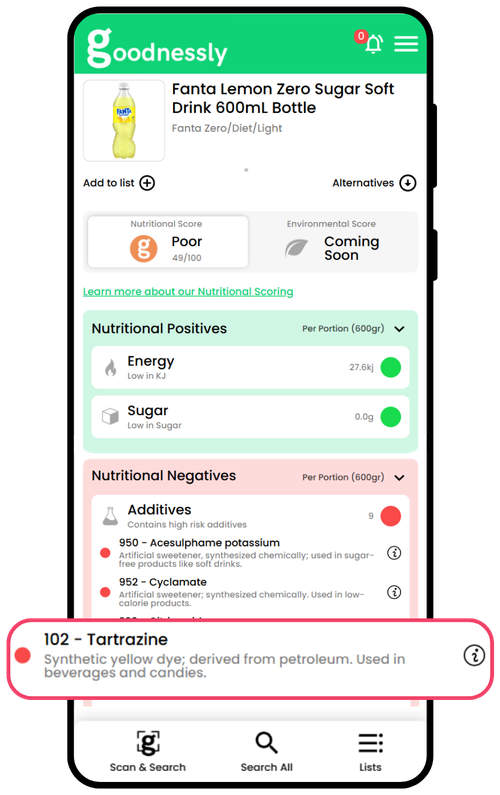
What is calcium gluconate?
Calcium gluconate is made by combining calcium with gluconic acid, a compound formed naturally when glucose is oxidised. It's used in medicine as well as in food: it's a standard treatment for low blood calcium (hypocalcaemia), and it's also given for the heart effects of high potassium and for hydrofluoric acid burns. Hospitals generally choose it over calcium chloride because it's gentler on the tissue if it leaks from the vein, rather than because it delivers more calcium — gram for gram it actually carries less elemental calcium than most other calcium salts.
What's it used for?
- Firming agent in canned and processed fruits and vegetables
- Calcium fortification in juices, cereals and supplements
- Used medically for calcium deficiency and certain poisonings, separate from its food-additive role
Where you'll find 578 on the shelf
Common in calcium-fortified products and canned produce.
Is calcium gluconate safe? What the research says
Calcium gluconate has a long, clean safety record in both food and medicine.
| Region | Status | What this means |
|---|---|---|
| AU/NZ Australia & New Zealand (FSANZ) | Permitted | Permitted as a firming agent and calcium source with no specific quantity restriction in most categories. |
| EU European Union (EFSA) | Permitted | Listed as E578, approved for general food use. |
| US United States (FDA) | GRAS | Holds Generally Recognized As Safe status under 21 CFR 184.1199. |
Calcium gluconate's medical use, including as an emergency treatment for certain poisonings, reflects decades of established clinical safety data alongside its food-additive approval.
- No significant regulatory changes: calcium gluconate's approval status has remained stable, reflecting its long, low-controversy safety record.
This section is checked periodically rather than continuously — if you're reading this well after the date above, it's worth confirming nothing has changed before citing it.
Who this matters to
- No population group has a specific safety-based reason to limit E578 at typical food-additive levels
Goodnessly rates E578 Safe. It has a long, clean safety record in both food and clinical medicine.
How to spot it on a label
E578 is usually declared clearly. Look out for:
- Calcium gluconate
- 578 or E578
- "Firming agent (578)" in the ingredients list
Canned produce and fortified products are the most common places to find it.
Related additives
Frequently asked questions
Is calcium gluconate used in medicine?
Yes — separate from its food-additive role, calcium gluconate is a standard clinical treatment for low blood calcium. It's also given for the heart effects of high potassium and for hydrofluoric acid burns.
What is gluconic acid?
Gluconic acid is a naturally occurring compound formed when glucose is oxidised. Combining it with calcium produces calcium gluconate, a well-tolerated calcium salt used in both food and medicine.
Does Goodnessly rate E578 as safe, caution, or avoid?
Goodnessly rates E578 (Calcium Gluconate) as Safe. It has a long, clean safety record in both food and clinical medicine, holding GRAS status in the US.
Don't decode labels by hand
Scan any product with the Goodnessly app to instantly see its full additive breakdown, kept current as new research like this comes to light.
Download our app to check additives in everyday foods