What is E622?
Monopotassium L-glutamate (E622) — a glutamate flavour enhancer used to add savoury taste to soups, seasonings and prepared foods.
Monopotassium L-glutamate (E622) is the potassium salt of glutamic acid and a member of the E620–E625 glutamate group. EFSA set a group ADI of 30 mg/kg body weight per day for added glutamates and identified high-exposure scenarios above that level. It is permitted for specified uses in Australia/NZ and the EU, while FDA lists monopotassium glutamate as GRAS under 21 CFR 582.1516. Goodnessly rates it Avoid.
Download our app to check additives in everyday foods
Read the FAQ →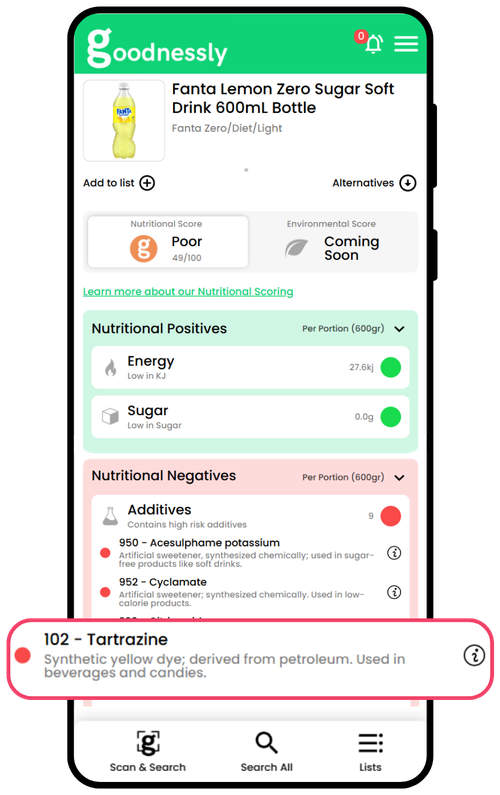
What is monopotassium L-glutamate?
Monopotassium L-glutamate is a potassium salt of glutamic acid. It delivers a savoury / umami flavour and may be used as an alternative to MSG in some formulations. On labels it may appear as "monopotassium glutamate", "potassium glutamate", "622", "E622" or "flavour enhancer (622)".
What's it used for?
- Adding savoury flavour to soups, sauces and broths
- Seasoning snack foods, savoury mixes and prepared meals
- Formulating glutamate flavour systems with other glutamate salts
- Part of the E620–E625 glutamate group assessed by EFSA
Where you'll find E622 on the shelf
Look in savoury foods and seasoning systems where a glutamate flavour enhancer is used.
Is monopotassium glutamate safe? What the research says
EFSA’s group assessment covers monopotassium glutamate with the other added glutamates. Its 30 mg/kg body-weight group ADI and exposure findings are the relevant regulatory context. Goodnessly’s Avoid rating is a consumer preference against routine added flavour enhancers, not a claim that permitted E622 use is a ban or proven cause of illness.
| Region | Status | What this means |
|---|---|---|
| AU/NZ Australia & New Zealand (FSANZ) | Permitted (specified foods; Schedule 15) | FSANZ identifies monopotassium L-glutamate as additive 622. Schedule 15 sets the food categories and maximum permitted levels, and added glutamates must be declared by name or code number on the ingredient list. |
| EU European Union (EFSA) | Authorised; glutamate group ADI 30 mg/kg bw/day | E622 is included in the EU Union list under Regulation (EC) No 1333/2008 for specified categories. EFSA’s 2017 re-evaluation set a group ADI of 30 mg/kg bw/day for E620–E625 and recommended review of some maximum levels after exposure estimates in high-consumption groups. |
| US United States (FDA) | GRAS under 21 CFR 582.1516 | 21 CFR 582.1516 lists monopotassium glutamate as generally recognised as safe when used in accordance with good manufacturing or feeding practice. The listing does not turn every food into a source of added glutamate; the amount depends on the recipe. |
Glutamate is also naturally present in many foods. This page is about the deliberate additive E622 and does not imply that naturally occurring glutamate should be avoided.
- EFSA 2017: group ADI 30 mg/kg bw/day for E620–E625, with high-exposure scenarios above the group ADI.
- FSANZ: additive 622 is included among the added permitted glutamates that must be declared by name or number.
- FDA 21 CFR 582.1516: monopotassium glutamate is affirmed GRAS for use consistent with good manufacturing practice.
This section is checked periodically rather than continuously — if you're reading this well after the date above, it's worth confirming nothing has changed before citing it.
Who might want to limit or avoid it
- People who prefer to avoid added flavour enhancers
- Households reducing highly seasoned or ultra-processed foods
- People who want to distinguish added glutamate codes from naturally occurring glutamate
Goodnessly rates E622 Avoid. The additive remains permitted in the three regions for specified uses, but a group-ADI framework and a preference for simpler ingredient lists keep it out of Clear.
How to spot it on a label
Look for:
- Monopotassium L-glutamate
- Monopotassium glutamate
- 622 or E622
- Flavour enhancer (622)
- Other glutamates E620–E625
It can appear alongside MSG or other glutamate flavour enhancers.
Related additives
Frequently asked questions
What is E622?
E622 is monopotassium L-glutamate, a potassium salt of glutamic acid used as a flavour enhancer.
Is E622 the same as MSG?
No. MSG is E621, the sodium salt. E622 is the potassium salt. Both belong to the glutamate group and are used for savoury flavour.
Is monopotassium glutamate permitted?
Yes. It is permitted for specified uses in Australia/NZ and the EU, and FDA lists it as GRAS under 21 CFR 582.1516 when used according to good practice.
Does Goodnessly rate E622 as safe, caution or avoid?
Goodnessly rates E622 (monopotassium L-glutamate) as Avoid.
Don't decode labels by hand
Scan any product with the Goodnessly app to instantly see its full additive breakdown, kept current as new research like this comes to light.
Download our app to check additives in everyday foods