What is E961?
Neotame — a high-intensity sweetener chemically related to aspartame, used at very low levels in sugar-free and energy-reduced foods.
Neotame (E961) is an intense sweetener and flavour enhancer made by chemically modifying aspartame with a 3,3-dimethylbutyl group. It is far sweeter than sugar, so only tiny amounts are needed. It is permitted in Australia/NZ, the EU and the US. EFSA's 2025 re-evaluation set an ADI of 10 mg/kg body weight per day (replacing the previous 2 mg/kg ADI) and concluded there is no safety concern at currently permitted and reported uses, with dietary exposure estimates below the new ADI. FDA authorises neotame as a food additive under 21 CFR 172.829 as a sweetener and flavour enhancer in foods generally (excluding meat and poultry) under CGMP. Unlike aspartame, neotame is not typically considered a major phenylalanine source at normal use levels; EFSA noted phenylalanine contribution at the ADI would be very small. Goodnessly still rates intense sweeteners Avoid.
Download our app to check additives in everyday foods
Read the FAQ →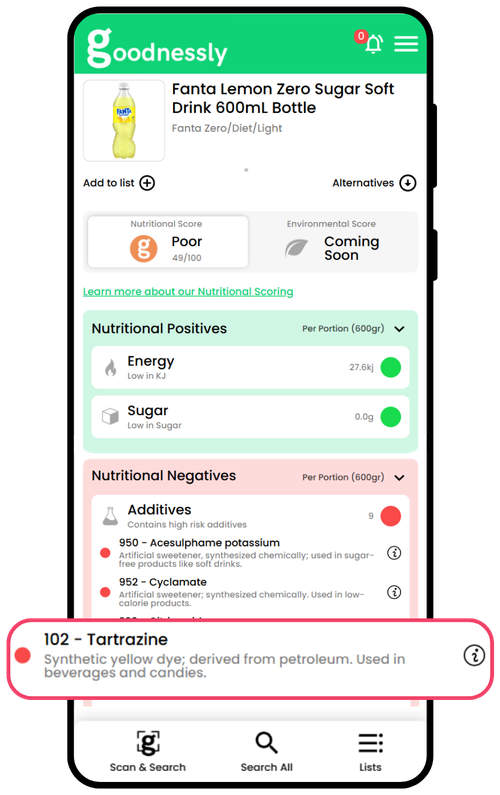
What is neotame?
Neotame (E961) is N-[N-(3,3-dimethylbutyl)-L-α-aspartyl]-L-phenylalanine 1-methyl ester, a chemically manufactured intense sweetener derived from an aspartame intermediate. It is used both to sweeten and, at lower levels, as a flavour enhancer. On labels you may see "neotame", "961", "E961", or "sweetener (961)".
What's it used for?
- Sweetening energy-reduced or no-added-sugar drinks, confectionery and desserts
- Table-top sweeteners (where permitted)
- Flavour enhancing at low levels in some sauces, snacks and chewing gum
- Used in some sugar-free bakery decorations and supplements in markets that allow those uses
Where you'll find E961 on the shelf
Less common than aspartame or Ace-K in many markets, but possible anywhere a product markets intense sweetness without sugar.
Is neotame safe? What the research says
EFSA's July 2025 re-evaluation raised the ADI to 10 mg/kg bw/day and found exposure estimates below that ADI, concluding no safety concern at permitted and reported uses. FDA has authorised neotame since 2002 under 21 CFR 172.829. Goodnessly's Avoid rating is the same consumer-tier stance used for aspartame (E951) and acesulphame potassium (E950): legal permission plus an ADI is not the same as a recommendation to seek these sweeteners out.
| Region | Status | What this means |
|---|---|---|
| AU/NZ Australia & New Zealand (FSANZ) | Permitted (intense sweetener) | Listed as neotame (961) in the Australia New Zealand Food Standards Code for specified foods with maximum levels in Schedule 15. Must be declared by name or number when used as a food additive sweetener. |
| EU European Union (EFSA) | Authorised; ADI 10 mg/kg bw/day (EFSA 2025) | Authorised as E961 under Regulation (EC) No 1333/2008 for specified categories. EFSA's FAF Panel re-evaluation (EFSA Journal 2025;23(7):9480) established an ADI of 10 mg/kg bw/day based on a NOAEL of 1,000 mg/kg bw/day from chronic/carcinogenicity studies in rats, replacing the previous ADI of 2 mg/kg bw/day. The Panel concluded no safety concern at currently permitted and reported uses and use levels, and recommended updates to EU specifications. |
| US United States (FDA) | Permitted food additive (21 CFR 172.829) | Neotame is listed under 21 CFR 172.829 as a sweetening agent and flavour enhancer in foods generally, except meat and poultry, in accordance with current good manufacturing practice. Federal listing remains in force as of this draft (September 2026). |
Neotame is related to aspartame chemically but is used at much lower levels; EFSA discussed phenylalanine release as a small contribution relative to background intake at the ADI. People with PKU should still follow clinician advice on all phenylalanine sources. This page does not claim neotame "causes" metabolic disease.
- EFSA July 2025 (E961): ADI set at 10 mg/kg bw/day (replacing 2); exposure estimates below the ADI; no safety concern at permitted/reported uses; specification recommendations.
- FDA 21 CFR 172.829: continues to list neotame as a general-purpose sweetener/flavour enhancer (meat/poultry excluded) under CGMP.
- Market note: neotame remains less commonly labelled in many EU/AU products than aspartame or Ace-K — still check sweetener lines.
This section is checked periodically rather than continuously — if you're reading this well after the date above, it's worth confirming nothing has changed before citing it.
Who might want to limit or avoid it
- People reducing ultra-processed "diet" and "sugar-free" products as a household rule
- Anyone who prefers to avoid intense sweeteners even when regulators maintain an ADI
- People with PKU who want every phenylalanine-related sweetener flagged for clinician discussion
Goodnessly rates E961 Avoid. Neotame remains permitted in Australia/NZ, the EU and the US, and EFSA's 2025 opinion supports an ADI of 10 mg/kg bw/day with exposures below that limit, but our consumer stance on routine intense-sweetener use matches aspartame and Ace-K.
How to spot it on a label
Check sugar-free and diet products for:
- Neotame
- 961 or E961
- Sweetener (961)
- Sometimes alongside other intense sweeteners
Very high sweetness potency means tiny amounts — still declare it when used as an additive.
Related additives
Frequently asked questions
What is Neotame (E961) made from?
It is a chemically manufactured intense sweetener produced from an aspartame intermediate reacted with 3,3-dimethylbutyraldehyde. It is not a sugar.
Is neotame the same as aspartame?
No. Neotame is a related but distinct sweetener (E961 vs E951). It is much sweeter, so doses are far lower. Goodnessly rates both Avoid.
Did EFSA raise the neotame ADI in 2025?
Yes. EFSA's 2025 re-evaluation set an ADI of 10 mg/kg bw/day, replacing the previous ADI of 2 mg/kg bw/day, and found exposure estimates below the new ADI.
Does Goodnessly rate E961 as safe, caution or avoid?
Goodnessly rates E961 (Neotame) as Avoid. Regulators maintain an ADI; our rating reflects a stricter preference against routine intense-sweetener use.
Don't decode labels by hand
Scan any product with the Goodnessly app to instantly see its full additive breakdown, kept current as new research like this comes to light.
Download our app to check additives in everyday foods