
What is E955?
Sucralose (E955) — a high-intensity sweetener used in sugar-free drinks, desserts, confectionery and other reduced-sugar foods.
Sucralose (E955) is a high-intensity sweetener made by replacing three hydroxyl groups in sucrose with chlorine atoms. EFSA’s 2026 re-evaluation retained an ADI of 15 mg/kg body weight per day and found EU exposure below the ADI, while noting specification uncertainties. It is permitted in Australia/NZ, the EU and the US under specified conditions. Goodnessly rates it Avoid.
Download our app to check additives in everyday foods
Read the FAQ →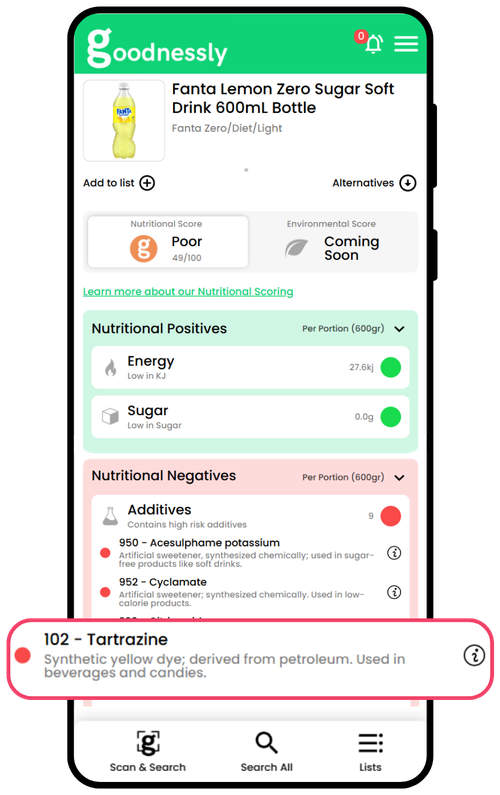
What is sucralose?
Sucralose is a high-intensity, non-nutritive sweetener derived from sucrose chemistry. It is much sweeter than sugar and is used when a product is intended to taste sweet with little or no sugar. Labels may say "sucralose", "955", "E955" or "sweetener (955)".
What's it used for?
- Sweetening reduced-sugar and sugar-free beverages
- Sweetening desserts, confectionery and dairy-style products
- Tabletop sweetener blends
- Replacing some of the sugar in formulated foods
Where you'll find E955 on the shelf
Sucralose is common in products promoted as sugar-free, reduced-sugar or low-kilojoule.
Is sucralose safe? What the research says
EFSA’s 2026 re-evaluation retained the existing ADI of 15 mg/kg body weight per day and found EU exposure estimates below it. EFSA also identified uncertainties and specification issues, including proposed extensions of use. Goodnessly’s Avoid rating is a preference to reduce routine intense sweeteners, not a claim that permitted sucralose use is a ban or proven harm.
| Region | Status | What this means |
|---|---|---|
| AU/NZ Australia & New Zealand (FSANZ) | Permitted (specified foods; Schedule 15) | FSANZ lists sucralose as additive 955 in Schedule 15, with permissions and maximum levels that depend on the food category. It must be declared by name or code number when used as an additive. |
| EU European Union (EFSA) | Authorised; ADI 15 mg/kg bw/day | Sucralose (E955) is on the EU Union list under Regulation (EC) No 1333/2008 for specified categories. EFSA’s 2026 re-evaluation kept the ADI at 15 mg/kg body weight per day and reported EU exposure below the ADI, while flagging specification uncertainties. |
| US United States (FDA) | Permitted under 21 CFR 172.831 | Under 21 CFR 172.831, sucralose may be used as a sweetener in foods generally in accordance with current good manufacturing practice, subject to the section’s specifications and labelling conditions. |
Sucralose’s chemical structure includes chlorine substitutions, but that description alone does not establish a health effect. The relevant safety question is authorised use and exposure; Goodnessly’s rating is a preference-based Avoid choice.
- EFSA 2026: retained the 15 mg/kg bw/day ADI; EU exposure estimates were below the ADI, with specification uncertainties noted.
- FSANZ: sucralose is additive 955 in Schedule 15 with category-specific permissions.
- FDA 21 CFR 172.831: permits sucralose as a sweetener in foods generally under current GMP.
This section is checked periodically rather than continuously — if you're reading this well after the date above, it's worth confirming nothing has changed before citing it.
Who might want to limit or avoid it
- People limiting intense or non-nutritive sweeteners
- Households reducing sugar-free drinks and highly formulated snack products
- Anyone who prefers sweetness from sugar or whole-food ingredients in smaller amounts
Goodnessly rates E955 Avoid. Sucralose is permitted in all three regions for specified uses; the rating reflects a household preference for fewer intense sweeteners rather than a regulatory ban.
How to spot it on a label
Look for:
- Sucralose
- 955 or E955
- Sweetener (955)
- Splenda-style sweetener blends
- Other intense sweeteners in the same ingredient list
Products often combine sucralose with bulking agents or other sweeteners.
Related additives
Frequently asked questions
What is E955?
E955 is sucralose, a high-intensity non-nutritive sweetener used in reduced-sugar foods and drinks.
What ADI did EFSA set for sucralose?
EFSA’s 2026 re-evaluation retained an acceptable daily intake of 15 mg/kg body weight per day and reported EU exposure estimates below the ADI.
Is sucralose permitted in Australia and the US?
Yes. Sucralose is listed as additive 955 in Australia/NZ and is permitted in the US under 21 CFR 172.831, subject to the applicable conditions.
Does Goodnessly rate E955 as safe, caution or avoid?
Goodnessly rates E955 (sucralose) as Avoid.
Don't decode labels by hand
Scan any product with the Goodnessly app to instantly see its full additive breakdown, kept current as new research like this comes to light.
Download our app to check additives in everyday foods
At Goodnessly we aim to educate and empower individuals to make informed choices about everyday products.
© 2024 . All rights reserved.
Facebook
Instagram
X
TikTok