
Paraquat Just Survived a 30-Year Safety Review in Australia — Here's What Changed
Australia's pesticide regulator has finished its reconsideration of paraquat, a herbicide banned in more than 70 countries over its links to Parkinson's disease. The decision, handed down on 23 June 2026 after a review that had been open since 1997, keeps it legal — but only under significantly tighter conditions than before.
Here's what the decision actually found, what's changing, and why it's already controversial.
What Paraquat Actually Is
Paraquat (full name paraquat dichloride) is a herbicide, most commonly sold under the brand name Gramoxone (the product name farmers actually see on the label), along with others like Helmquat, Firestorm and Parazone. It was first synthesised in 1882 as a chemical dye, its ability to kill plants was discovered in 1955, and it's been sold commercially as a weedkiller since the early 1960s.
It works as a fast-acting "contact" herbicide: rather than being absorbed through roots or soil, it kills whatever green plant tissue it directly touches, disrupting photosynthesis so effectively that treated plants visibly wilt and brown within hours. Farmers value it because it works in almost any weather, doesn't leach into groundwater, doesn't damage crop roots below the surface, and supports no-till and minimum-till farming methods that reduce soil erosion. It's become especially popular as more weeds develop resistance to glyphosate (Roundup), giving farmers a second tool when their first one stops working.
The trade-off is acute toxicity to humans. A small accidental sip of concentrated paraquat can be fatal, and there is no antidote. It's responsible for a significant number of poisoning deaths worldwide, both accidental and intentional, which is part of why manufacturers add a strong, unpleasant odour and a distinctive blue-green colour to the concentrate — a deliberate safety measure to make accidental ingestion less likely.
The Parkinson's disease question comes from a specific biological mechanism: paraquat generates reactive oxygen species inside cells, a type of oxidative stress that appears to be particularly damaging to the dopamine-producing neurons that Parkinson's disease progressively destroys. Some population studies have found associations between paraquat exposure and meaningfully higher Parkinson's rates in exposed groups such as farmworkers, though — as this decision shows — regulators and researchers don't uniformly agree on how strong or causal that link actually is.
A Manufacturer Already Stepping Back
One detail adds an extra layer to this decision: in March 2026, Syngenta — paraquat's largest global manufacturer — announced it would stop producing Gramoxone altogether. That announcement landed just three months before APVMA's decision to keep the chemical registered in Australia, subject to the new restrictions below. Whatever the reasons behind Syngenta's own decision, it means Australia has just recommitted to a chemical its biggest supplier is voluntarily exiting.
A Review Nearly Three Decades in the Making
The Australian Pesticides and Veterinary Medicines Authority (APVMA) opened its reconsideration of paraquat in 1997. The review was originally due to conclude in late 2025, but fresh volatility data released by the US Environmental Protection Agency prompted APVMA to conduct further assessment before finalising its position. A three-month public consultation ran from July to October 2024, drawing 171 submissions from scientists, doctors, farmers and advocacy groups. The final decision landed on 23 June 2026.
What APVMA Actually Found
The central question hanging over paraquat for decades has been its link to Parkinson's disease. APVMA's conclusion was direct: the weight of evidence does not show that paraquat exposure through approved uses increases the risk of developing Parkinson's disease. That finding rejects the core premise behind Parkinson's Australia's campaign to ban the chemical, which had run for roughly 30 years and included a petition with 20,000 signatures.
APVMA didn't leave the product unchanged, though. Citing acute toxicity risks to people handling it, and exposure risks to birds and mammals in treated areas, the regulator introduced what it describes as significant new restrictions:
Maximum application rate cut by 80% — from 1,150 grams per hectare down to 231 grams per hectare
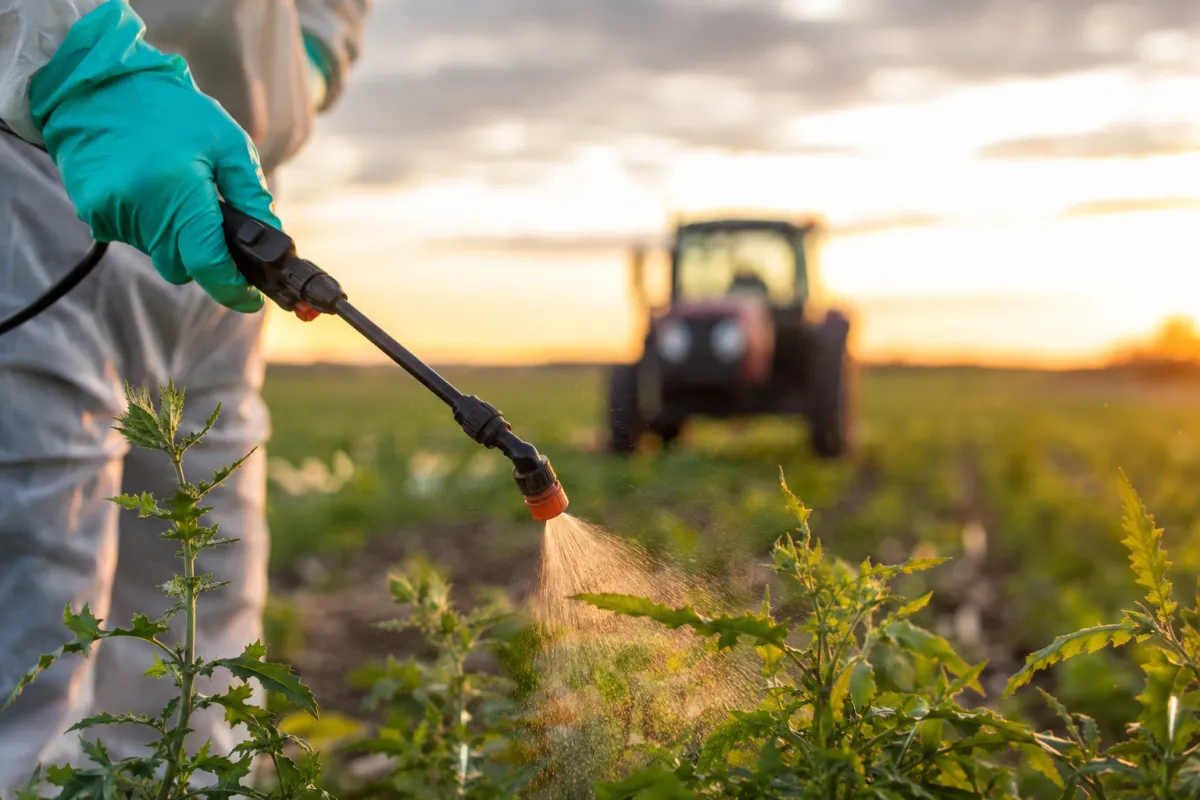
Backpack sprayers permanently banned, due to the difficulty of controlling exposure with that equipment
Mandatory enclosed mixing and loading systems for all uses
Enhanced personal protective equipment requirements, including respirators
The new conditions apply to any paraquat or diquat product manufactured after 23 June 2026. Existing stock made under the old label can still be sold and used for up to two years, giving the industry time to transition.
Why This Matters Beyond Paraquat Itself
This decision touches two threads we've already covered. Paraquat's manufacturer is Syngenta — the same company behind isocycloseram, the pesticide at the centre of the proposed 500-fold berry residue increase we wrote about recently. And one of the most vocal critics of this decision is Pesticide Action Australia, the same advocacy group whose executive director, Josh Davis, we quoted in that piece too. He's now calling for an urgent review of the APVMA's paraquat decision, arguing it should be banned outright for the safety of farmers, their families and rural communities, and that government should fund farmers' transition to alternatives.
On the other side, Grain Producers Australia welcomed the outcome, describing paraquat and diquat as tools that underpin minimum and no-till farming systems — practices credited with reducing soil erosion and preserving soil health across Australia's grain-growing regions.
A Pattern Worth Noticing
One detail from an independent expert reaction to the decision is worth sitting with: a recent study found that 84% of Australia's highest-use pesticides — those used at more than 100 tonnes a year — are already banned in other countries. The same commentary noted that Australia's regulatory approach is risk-based (weighing exposure levels against harm thresholds), while the EU has moved to a hazard-based approach that aims to eliminate inherently toxic compounds regardless of exposure level. Paraquat sitting on the "still approved here, banned in 70 countries elsewhere" list isn't an isolated case — it's part of a broader, measurable gap between Australian and international pesticide regulation.
What This Means Practically
Paraquat is an agricultural chemical, not something that ends up directly in packaged food the way an additive would, so this isn't a "check your pantry" story in the way some of our other pieces have been. Its relevance is more about the bigger picture: it's another data point in a pattern we keep encountering, where Australia's regulatory settings for agricultural chemicals sit some distance from what many other countries have decided is acceptable. For farming families and rural communities specifically, the new restrictions on application rates and equipment are the more immediately practical change.
The Bottom Line
Paraquat just survived the longest regulatory review most Australians have never heard of, emerging with its Parkinson's link officially rejected but its permitted use significantly tightened. Whether that outcome represents responsible risk management or an overdue ban that didn't happen depends heavily on which side of the "risk-based versus hazard-based" regulatory divide you find more convincing — and that's a genuine, unresolved disagreement between Australia's regulator and a growing list of countries that have gone the other way.

Facebook
Instagram
X
TikTok