
What Is Carrageenan and Why Is It in So Many Foods?
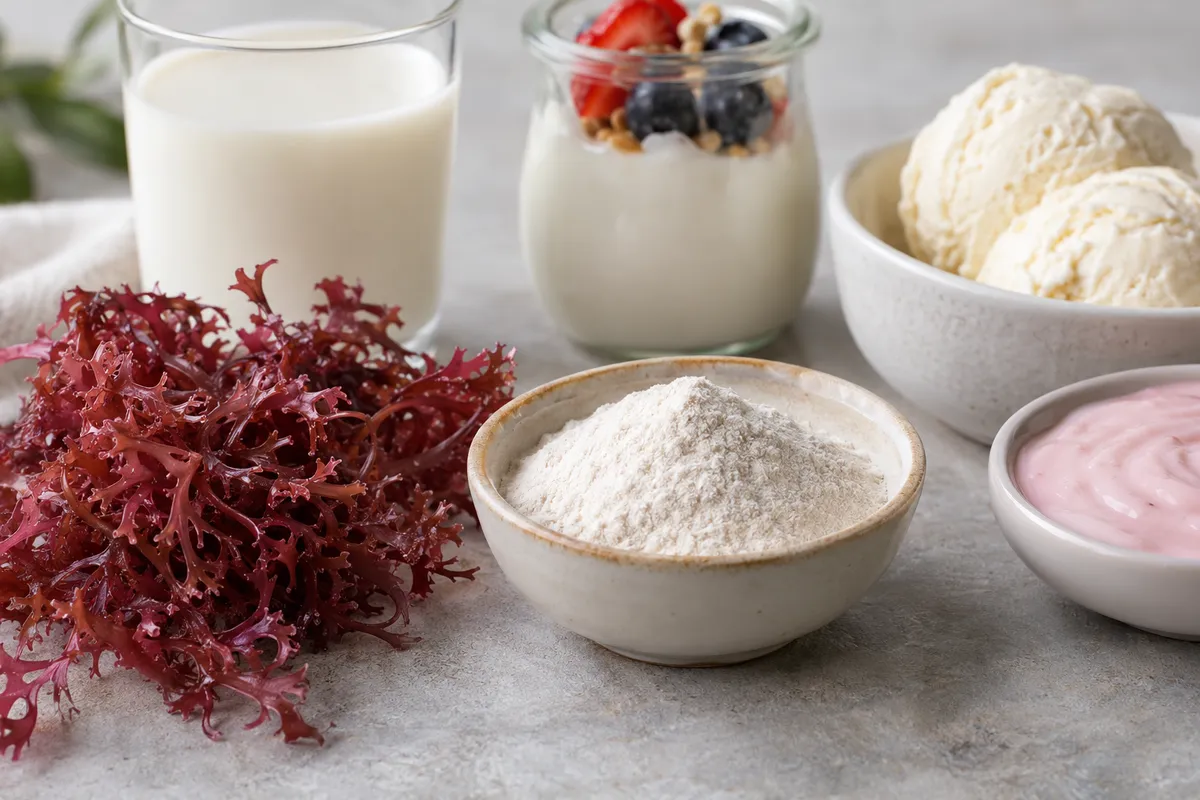
Have you ever checked the ingredients of your favourite plant-based milk, ice cream or yoghurt and noticed carrageenan? This food additive comes from red seaweed and is used to give food a smooth texture and prevent ingredients from separating.
So, what exactly is carrageenan? Why do food manufacturers use it, and is it actually safe to eat?
What Is Carrageenan?
Carrageenan is a food additive made from certain types of red seaweed. It is commonly used as a thickener and stabiliser to improve the texture of food and keep ingredients mixed together.
According to the U.S. Food and Drug Administration (FDA), carrageenan can help thicken, stabilise and improve the texture of food. You may also find it listed as E407 on ingredient labels.
Carrageenan doesn't usually add flavour or significant nutritional value to food — its main purpose is to improve how a product looks and feels.
Why Is Carrageenan Used in Food?
Carrageenan helps food maintain its texture and consistency, which makes it useful for products that need to stay smooth during storage. Food manufacturers use it to:
Thicken liquids like drinks and sauces
Prevent ingredients from separating
Improve the texture of desserts and plant-based products, making them feel smoother and creamier
Help products maintain their intended texture over time
Carrageenan turns up in plant-based milk alternatives, dairy products, ice cream, desserts, sauces and processed meats — by one estimate, it's in around 66% of frozen desserts. Not every product in these categories contains it, so it's worth checking labels if you want to know for sure.
How Is Carrageenan Made?
Carrageenan comes from red seaweed. The seaweed is processed to extract substances with natural thickening and gelling properties, which are then refined into the ingredient manufacturers add to food. Depending on the type used, it can thicken a liquid or give a food a firmer texture.
Is Carrageenan Safe?
This is where things get genuinely more complicated than a simple yes or no.
The European Food Safety Authority (EFSA) re-evaluated carrageenan (E407) and processed Eucheuma seaweed (E407a) in 2018. Reviewers didn't identify evidence of cancer-causing effects or genetic damage in the evidence assessed. But they also couldn't confirm a firm, permanent safe daily intake level — partly because there's currently no validated way to measure the shortest carrageenan molecule chains in food, which happen to be the part most associated with possible harm in the research. EFSA kept the existing intake limit in place, but explicitly as a temporary measure, pending better data within five years.
The FDA also lists carrageenan as a food ingredient permitted for specific uses under its regulations.
So the honest summary is: regulators haven't found it to cause cancer or genetic damage, but they also haven't been able to fully close the book on it, and have asked for more research before confirming a permanent safety threshold.
What Does the Research Say About Potential Downsides?
A number of animal studies have raised genuine questions here. Several have found that concentrated carrageenan solutions can cause intestinal inflammation, damage to the gut lining, and in some cases bloody stools in animals — effects that researchers have compared to ulcerative colitis. Some studies have also linked carrageenan to reduced levels of beneficial gut bacteria.
There's also a small human trial worth knowing about. A 2017 randomised, placebo-controlled trial gave people with ulcerative colitis in remission either carrageenan capsules or a placebo for up to a year. Three of five people given carrageenan relapsed, compared to none of the seven on placebo, and inflammatory markers rose in the carrageenan group but not the placebo group. It was a small trial and the researchers describe the result as preliminary, but it's real human evidence rather than a purely theoretical concern.
You may also come across warnings online about a related substance called poligeenan, made by breaking carrageenan down through much more intensive processing. Poligeenan isn't approved as a food additive, and some of the strongest historical harm findings were specifically about this more processed form rather than the food-grade carrageenan used in products today — though it's worth knowing that not all of the concerning animal findings are limited to poligeenan alone.
Should You Avoid It?
Not necessarily, but it's a reasonable one to pay attention to rather than dismiss outright.
If you have inflammatory bowel disease (Crohn's or ulcerative colitis) or another diagnosed digestive condition, the evidence available — limited as it is — points toward carrageenan being worth minimising, given the human trial result above.
For everyone else, finding carrageenan on a label doesn't automatically mean a food is unhealthy. It's more useful to look at the whole product — a plant-based milk containing carrageenan may have a very different overall nutritional profile from a dessert that's also high in added sugar and saturated fat.
If you'd prefer to avoid it regardless, check ingredient labels and compare products, since not every brand uses it — some use alternative thickeners like guar gum or locust bean gum instead.
The Bottom Line
Carrageenan has a safety picture that's more unsettled than it's sometimes presented as. Regulators haven't found it carcinogenic or genotoxic, but they also couldn't set a permanent safe intake level and are waiting on better testing methods and data. Animal studies have raised real questions about gut inflammation, and a small human trial found a statistically significant increase in relapse among ulcerative colitis patients given carrageenan versus placebo. None of this means panicking over a splash of carrageenan in your ice cream — but if you have an existing gut condition, or you're eating a lot of products that contain it daily, it's worth knowing this is a genuinely open question rather than a settled one.
Sources: EFSA: Re-evaluation of carrageenan (E407) and processed Eucheuma seaweed (E407a), Bhattacharyya et al.: A randomized trial of the effects of the no-carrageenan diet on ulcerative colitis disease activity

Facebook
Instagram
X
TikTok