
PFAS Turned Up in Canola Oil Testing — Here's Where It's Actually Hiding
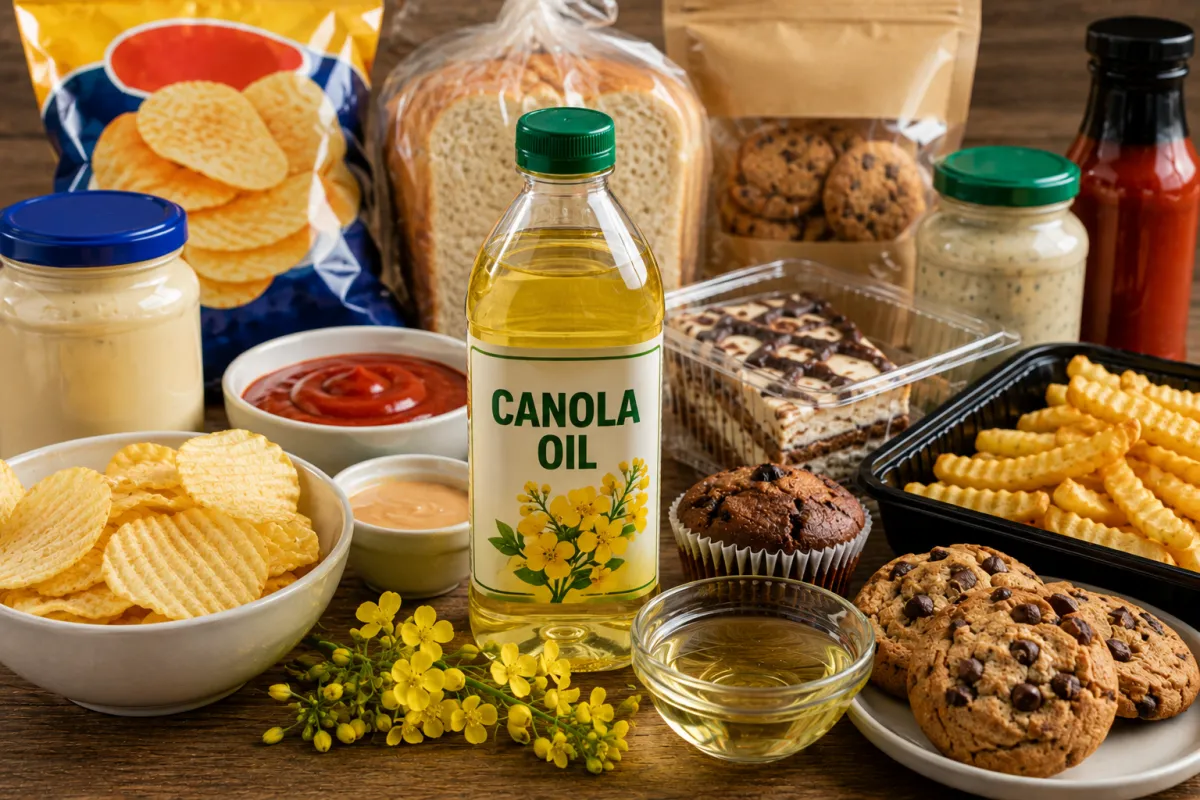
Canola oil shows up in an enormous range of packaged snacks, sauces and baked goods, and sits in a huge share of pantries as the default cooking oil. Seed oils have already had a rough few years in the health conversation — inflammation concerns, processing methods, and their ubiquity in packaged food. Now there's a new data point worth knowing about: independent lab testing has found indications of PFAS, the "forever chemicals" linked to immune, thyroid and developmental effects, in canola oil specifically.
Here's what the testing actually found, why canola in particular may be more exposed than other oils, and what it means given how hard it is to actually avoid.
A Quick Refresher: What PFAS Actually Is
PFAS — per- and polyfluoroalkyl substances — is a group of more than 4,000 synthetic chemicals built around a carbon-fluorine bond so strong it barely exists in nature. That's exactly why it's been used commercially since the 1940s to make things water-, grease- and stain-resistant, in everything from nonstick cookware to food packaging.
It's also why it doesn't break down — not in the environment, and not efficiently in the human body, where it can persist in blood for years to decades after exposure. That's the "forever" in forever chemicals: exposure accumulates over a lifetime rather than passing through.
The health evidence has grown serious enough that the US EPA and the European Parliament have both called PFAS exposure a health crisis. Research has associated it with increased risk of thyroid, kidney and testicular cancer, disruption to thyroid hormone function, a weakened immune response including reduced vaccine effectiveness in children, reproductive and developmental effects, and liver and cholesterol problems. Much of this is still described as association rather than proven causation — human biology is hard to isolate this precisely — but the pattern holds up consistently enough across independent studies that regulators are acting on it now rather than waiting for a final answer.
What the Testing Found
US-based testing group Mamavation, working with an EPA-certified lab, sent 67 cooking oils — spanning canola, olive, avocado, coconut, vegetable oil and ghee — off for testing for organic fluorine, a marker used as an indicator for PFAS. Five of the seventeen canola oil products tested came back positive, with levels between 10 and 25 parts per million. That's 29% of the canola oils tested.
The more striking detail: canola was the only oil category that returned any detections at all. None of the olive, avocado, coconut, vegetable oil or ghee products tested came back positive. Of the five positive canola results, four were popular conventional brands and only one was labelled organic.
It's worth adding one fair caveat: when Mamavation retested those same five products the following year, none of them showed detections above the lab's 10 ppm threshold. That could mean levels genuinely dropped, or it could mean they were still present but below what the lab could pick up — organic fluorine testing isn't precise enough to distinguish between the two. Either way, it doesn't cancel out the original finding, but it's a reason not to treat the 29% figure as a fixed, permanent fact about every bottle of canola oil.
It's important to be precise about what this means more broadly, too. PFAS are not added to canola oil on purpose. Where they show up, it's understood to be contamination somewhere in the manufacturing or packaging chain — not an ingredient anyone chose to include.
Why Canola May Be More Exposed
Canola's processing method is part of the story. Canola, along with soybean, corn and most other seed oils, is typically produced through a process known as RBD — refined, bleached and deodorised. This process usually starts with a solvent extraction step using hexane to pull oil from the crushed seed, followed by further refining stages. More processing steps mean more points of contact with industrial equipment, solvents and packaging — any of which can introduce trace PFAS contamination along the way.
The Glyphosate Connection
There's a second thread worth pulling on, and it links directly to our earlier coverage of glyphosate. Canola grown from genetically modified seed is typically bred to be "Roundup Ready" — resistant to glyphosate, which allows it to be sprayed throughout the growing season without harming the crop. This is a separate issue to PFAS contamination, but it means canola oil can carry residue from two distinct chemical categories: glyphosate from cultivation, and potential PFAS from processing and packaging.
What We Don't Know Yet
This is genuinely a case where the honest answer is "the data is limited." The Mamavation testing is US-based, and we don't have equivalent, publicly available Australian testing of local canola oil for PFAS. Australian canola is grown and processed somewhat differently to the US supply chain, so it would be a mistake to assume the exact same findings apply here — but it would be equally naive to assume Australian canola is automatically exempt, given the RBD processing method is standard globally.
What to Actually Do About It
Given the limited data, treating this as "avoid canola entirely, panic about your pantry" would be overcorrecting. A more measured approach:
1.If you're already reducing seed oils for other reasons (inflammation, processing concerns), canola is a reasonable one to deprioritise first — it now has two separate reasons for caution, not just one.
2.Cold-pressed or expeller-pressed oils are processed without the hexane extraction step, which reduces one of the contamination pathways — look for this on labels if you're staying with a seed oil.
3.Olive oil and avocado oil had zero detections in the same round of testing, and both avoid the RBD/hexane pathway when sold as extra virgin or cold-pressed.
4.Use Goodnessly's seed oil detection to check packaged products — canola, sunflower, vegetable and soybean oil all show up in a huge share of packaged snacks, and swapping the product rather than just the oil in your pantry often has more impact.
The Bottom Line
The testing here is preliminary, US-based, and reflects contamination rather than an intentional ingredient — so this isn't cause for alarm. But it adds a second, independent reason to treat canola oil with more scrutiny than a simple "vegetable oil vs olive oil" comparison would suggest, on top of the existing glyphosate residue question. If you're already working through a seed oil swap, canola is a reasonable place to start.

Facebook
Instagram
X
TikTok