
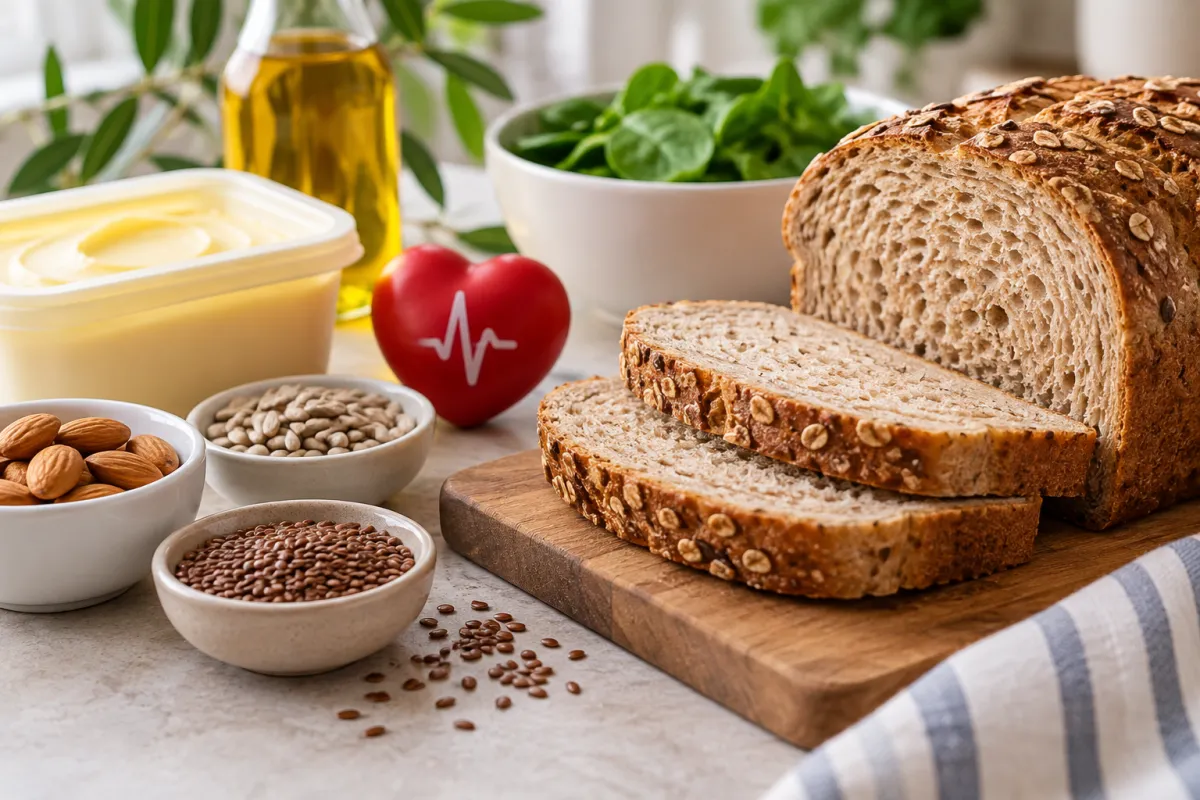
Cholesterol-Lowering Bread? FSANZ Is Deciding Whether to Allow Phytosterols in Everyday Loaves
If you've ever bought a "cholesterol-lowering" margarine or spread from the supermarket, you've already eaten phytosterols. Right now in Australia, that's about the only place you'll find them — they're only approved for use in a handful of specific product categories. Food Standards Australia New Zealand (FSANZ) is currently deciding whether to expand that list to include something much more everyday: bread. Public consultation on the proposal (Application A1326) opened on 15 September 2026 and closes 27 October 2026.
What Are Phytosterols and Phytostanols?
Phytosterols and phytostanols are plant compounds, structurally similar to cholesterol, found naturally in small amounts in vegetable oils, nuts, seeds and grains. When eaten in concentrated amounts, they work by partially blocking the absorption of cholesterol in the gut. This is a genuinely well-established effect — it's the same mechanism behind products like Logicol and Flora ProActiv, which have been sold in Australia for years as an add-on for people managing high cholesterol.
What's Actually Being Proposed
The application, lodged by a food manufacturer, asks FSANZ to approve phytosterols, phytostanols and their esters as an added ingredient in bread and bread products — something not currently permitted under the Food Standards Code. Because this would introduce the compounds into a food most Australians eat daily, rather than a niche spread bought specifically for its cholesterol benefit, FSANZ has classified it as a "novel food" requiring full safety assessment.
Why Bread Specifically Matters
The distinction between a spread and a staple food is the real story here. A margarine substitute is something a person actively chooses because they're managing cholesterol — it's an opt-in product with its own labelling and, typically, its own price premium. Bread is different: it's eaten by almost everyone, including people with no cholesterol concerns at all, children, and people who eat several serves a day. Regulators have to weigh whether a compound that's beneficial at a specific dose for a specific population is appropriate to add to a food eaten far more broadly and far less deliberately.
What the Research Says About Phytosterols Generally
The cholesterol-lowering effect of phytosterols at recommended intakes (around 2-3g per day) is backed by a large body of clinical evidence and is recognised by health authorities internationally, including the Heart Foundation. The area of ongoing scientific discussion is less about whether they work, and more about appropriate dosing across a whole food supply — since unlike a spread with a clear serving size, bread consumption varies enormously between individuals, making total daily intake harder to control if it were added across multiple product lines.
What Happens Next
FSANZ is running this under its "general procedure," which means one round of public consultation followed by a full risk assessment before any decision is made. If approved, it wouldn't take effect immediately — the Code amendment would still need to go through notification to the Australia and New Zealand Ministerial Forum on Food Regulation. Submissions on A1326 close 27 October 2026, and FSANZ's supporting technical documents are available on their consultation hub for anyone who wants to read the full application.
The Bottom Line
Phytosterols themselves aren't new or controversial — they've had a well-established, evidence-backed role in cholesterol management for years, just in specific opt-in products. What's under review is whether it makes sense to extend them into a staple food everyone eats, at whatever dose ends up in the loaf. If it goes ahead, it would be a genuine first for the Australian bread aisle — worth watching, not worrying about, while the assessment plays out.
Sources: FSANZ Application A1326, Food Processing: Call for submissions on proposal to add plant sterols to bread

Facebook
Instagram
X
TikTok