
New Zealand Just Restricted Glyphosate on Wheat, Barley and Oats — What About Australia?
In our last post on glyphosate, we covered why oats, wheat and barley carry some of the highest glyphosate residues of any food — not because of genetic modification, but because of a pre-harvest spraying practice called desiccation. Days after we published that piece, New Zealand's food safety regulator made a decision that puts this exact issue under a spotlight, and gives Australian families a useful point of comparison.
Here's what happened, and how it stacks up against the rules on our side of the Tasman.
What New Zealand Just Decided
In March 2025, New Zealand Food Safety proposed lifting the glyphosate residue limit for wheat, barley and oats from 0.1mg/kg to 10mg/kg — a hundredfold increase. The stated reasoning was to align with international trading partners and reflect how the chemical was actually being used on farms.
The proposal drew more than 3,100 public submissions, an unusually high number for a technical residue consultation, and the majority opposed the increase.
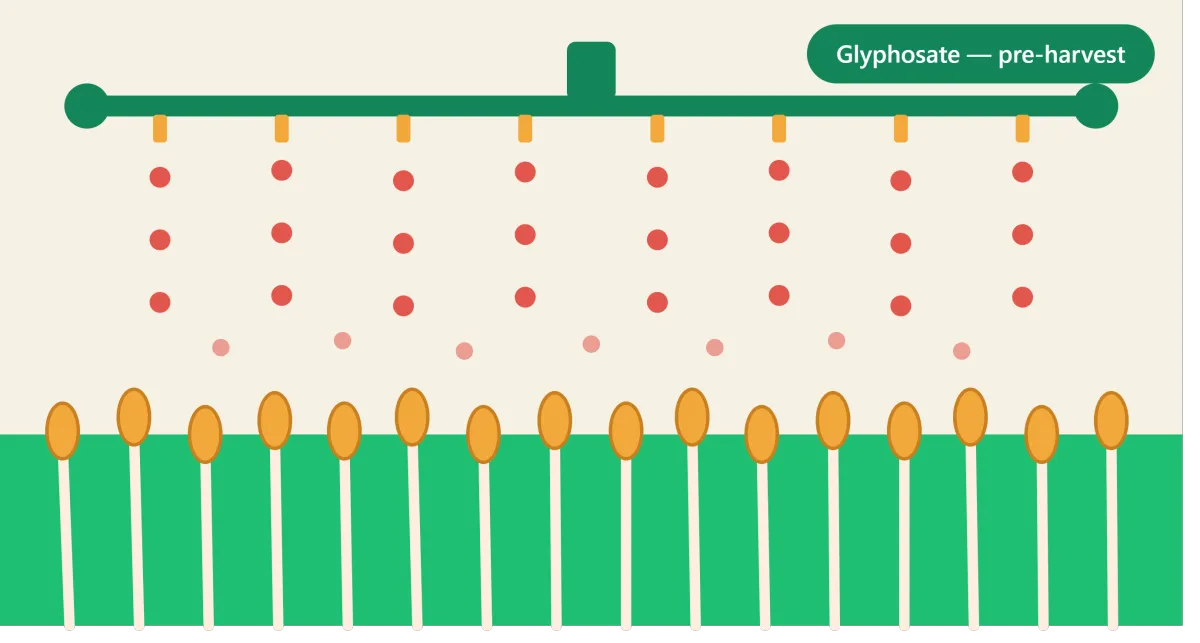
On 30 October 2025, the regulator reversed course. The limit for wheat, barley and oats stayed at 0.1mg/kg, and New Zealand went further: pre-harvest spraying of glyphosate — applying it directly to the standing crop to dry it down before harvest — is no longer permitted on these three grains when grown for human consumption. Product labels are being updated to reflect the change. Glyphosate can still be used earlier in the season, before the crop emerges, but not as a late-season desiccant.
Regulators noted that many New Zealand growers and millers had already moved away from pre-harvest glyphosate under contractual requirements from buyers, so the rule change largely formalised a shift already underway in the industry.
How This Compares to Australia
This is where it gets relevant for Australian readers. Australia's rules are meaningfully different, on both the limit and the practice itself.
The residue limit is higher. Australia's maximum residue limit for glyphosate on barley is 20mg/kg — 200 times New Zealand's new limit of 0.1mg/kg for the same grain.
Pre-harvest spraying is still legal here. Unlike New Zealand's new restriction, Australian regulations continue to permit glyphosate as a pre-harvest desiccant on wheat and barley (excluding malting barley), provided label directions and withholding periods are followed.
The regulatory logic is different, not necessarily weaker. The Australian Pesticides and Veterinary Medicines Authority (APVMA) and Food Standards Australia New Zealand (FSANZ) set limits using a risk-based approach, weighing actual dietary exposure against a safety threshold, rather than New Zealand or Europe's more precautionary posture. Both regulators maintain their approach keeps consumers well within safe exposure levels.
In practice, this means a bag of Australian-grown oats or a loaf of Australian wheat bread can legally carry meaningfully higher glyphosate residue than the equivalent New Zealand product now permits — not because Australian food is being handled less carefully, but because the two countries have drawn the line for "acceptable" in different places.
Why the Science Is Still Unsettled
Nothing about New Zealand's decision resolves the underlying scientific debate we covered in our last post: the World Health Organization's cancer research arm classifies glyphosate as a probable human carcinogen, while the APVMA, the US EPA and the European Food Safety Authority maintain that typical dietary exposure poses no meaningful cancer risk. Both positions are drawn from real evidence, and the gap between them hasn't closed.
What New Zealand's decision does show is that regulators can and do respond to public pressure and shifting industry practice, even while the science itself remains contested. Worth noting too: critics including Greenpeace NZ have pointed out that New Zealand stopped routine glyphosate testing of foods like wheat after residues were found above the legal limit back in 2015–16, and that no enforcement action has followed detected breaches since. A limit is only as meaningful as the testing and enforcement behind it — a caveat that applies here in Australia as well.
What This Means for Australian Families
Nothing has changed in Australian regulation as a result of New Zealand's decision — but it's a timely prompt to revisit the same practical steps we outlined in our glyphosate deep-dive:
Prioritise organic oats — still the single highest-impact swap, given how consistently oats test high for glyphosate residue.
Consider organic or Australian wheat products where pre-harvest spraying is a concern — bread, pasta and crackers are common exposure points.
Choose organic barley-based products where possible, particularly given Australia's higher legal residue limit for this grain.
Watch this space — if consumer pressure prompted New Zealand's regulator to act, it's reasonable to expect the same conversation to reach Australia and FSANZ eventually.
The Bottom Line
New Zealand just tightened the rules on how glyphosate can be used on the exact grains most linked to high residue levels — wheat, barley and oats — while Australia's settings for those same crops remain more permissive, both on the legal limit and on whether pre-harvest spraying is allowed at all. That doesn't mean Australian food is unsafe under current regulatory assessments, but it does mean Australian and New Zealand consumers are, right now, operating under genuinely different rules for the same staple foods. For families wanting to reduce exposure regardless of where the legal line sits, organic remains the most reliable way to opt out of pre-harvest glyphosate use altogether.

Facebook
Instagram
X
TikTok