
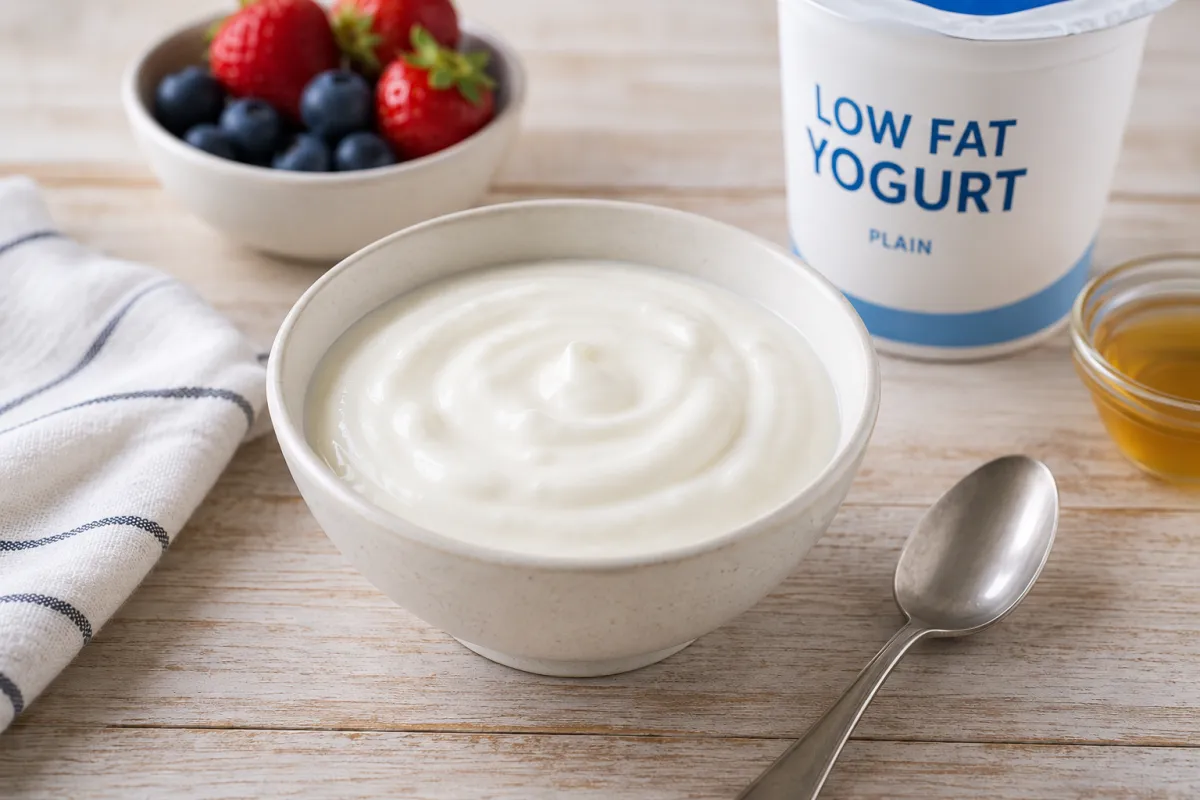
The “low fat” Option That’s Actually Worse (and What to Choose Instead)
Walk into any supermarket and you’ll see rows of products promising to be “lite,” “low-fat,” “reduced guilt,” or “healthier.” It feels like an easy win. You pick the one with the better label, toss it into your cart, and move on feeling like you’ve made the smarter choice.
But here’s the uncomfortable truth: those “low fat” options aren’t always better for your body. In fact, sometimes they’re worse.
The Problem With “Lite” Thinking
The idea behind low-fat products originally came from a well-meaning place: reduce fat, reduce calories, improve health. But food isn’t that simple.
When fat is removed from a biscuit, something important disappears:
Flavor
Texture
Satiety (that feeling of fullness)
To compensate, manufacturers often rebuild the product using a mix of:
Added sugars (to bring back taste)
Refined starches (to replace texture)
Emulsifiers and additives (to hold everything together)
Flavours and additives to improve flavour and texture
So while the fat content drops, the overall nutritional quality often doesn’t improve—and can even decline.
What You’re Really Eating
A typical “low-fat” option might look harmless on the front of the pack, but flip it over and you’ll often find:
Sugar listed among the first few ingredients
Refined wheat flour instead of whole ingredients
Vegetable or seed oils used for stability and shelf life
A long list of additives you wouldn’t use at home
This combination—high sugar + refined flour + processed fats—is a hallmark of ultra-processed foods.
And ultra-processed foods are increasingly associated with:
Blood sugar spikes and crashes
Increased cravings and overeating
Poorer metabolic health over time
Lower overall nutrient intake
So while you might be eating something labeled “lighter,” your body may actually be working harder to process it.
Why Fat Isn’t the Enemy
One of the biggest misconceptions in nutrition is that fat is inherently bad.
In reality, fat plays several important roles:
It helps you feel full and satisfied
It slows down the absorption of sugar into your bloodstream
It contributes to flavor, making food more enjoyable (and often reducing the urge to overeat)
When fat is stripped away and replaced with sugar and refined carbs, you often end up eating more, not less.
That’s why an option with moderate, natural fat content can sometimes be a better choice than a highly engineered “low-fat” version.
The Simpler Food Advantage
A “regular” biscuit, yoghurt or muesli bar, especially one made with simpler ingredients, can actually come out ahead.
Look for options that contain:
Fewer total ingredients
Ingredients you recognise (like flour, butter, oats)
Lower total sugar per serving
Minimal additives or preservatives
Even if it’s not labeled as “healthy,” this kind of biscuit is often less processed and more aligned with how food is traditionally made.
And that matters.
Because the more a food is altered, refined, and reconstructed, the further it moves away from what your body naturally handles best.
A Practical Way to Choose Better
You don’t need to memorize nutrition science to make smarter choices. A few simple habits can go a long way:
1. Ignore the Front of the Pack. Health claims like “lite” or “low-fat” are designed to catch your attention, not necessarily to tell the full story.
2. Check the First Three Ingredients. Ingredients are listed by quantity. If sugar or refined flour appears at the top, that’s a red flag.
3. Look at Total Sugar. A “low-fat” biscuit can still be high in sugar. Aim for lower sugar per serving whenever possible.
4. Count the Ingredients. As a general rule: fewer is better. Long ingredient lists often signal heavy processing.
5. Compare Options Side by Side. Using tools like Goodnessly or simply reading labels can quickly reveal which products are genuinely better choices.
The Bigger Picture
This isn’t about avoiding treats altogether. It’s about understanding what you’re actually eating and not being misled by clever marketing.
Food labels often highlight what’s been removed (like fat), but they rarely emphasise what’s been added in its place.
The Bottom Line
An option labeled “lite” might look like the healthier option but once you dig deeper, it can be packed with sugar, refined ingredients, and additives that don’t do your body any favors.
On the other hand, a simpler, less processed biscuit can often be the better choice.
Because when it comes to food, simplicity usually wins.
And yes… sometimes the “old school” option really is the better option.

Facebook
Instagram
X
TikTok