
The Race to Replace Palm Oil — What's Actually Coming to Shelves
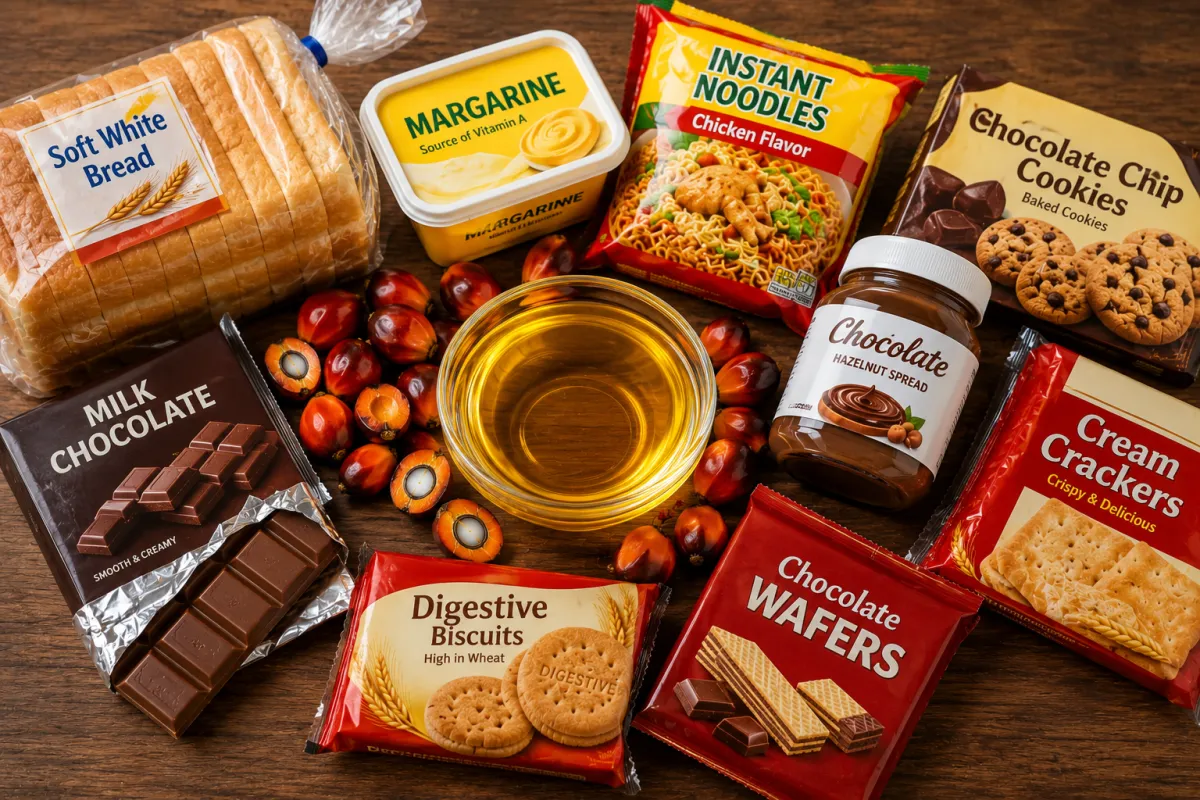
Palm oil is in an enormous share of packaged food — biscuits, chocolate, instant noodles, bread, margarine — because it's cheap, stable at room temperature, and trans-fat free. It's also one of the most environmentally contentious ingredients on the market, linked to deforestation and habitat loss in Indonesia and Malaysia, which together supply the vast majority of the world's palm oil.
For the first time, there's a genuine wave of companies trying to replace it — not with another crop-based seed oil, but with oil grown in fermentation tanks. Here's where that race actually stands.
Why Palm Oil Is Hard to Replace
Most "alternative" oils — canola, sunflower, soybean — can't directly substitute for palm oil in food manufacturing, because palm oil is semi-solid at room temperature, giving products like biscuits and margarine their texture and shelf stability. Liquid oils don't behave the same way in a factory line. That's part of why palm oil has remained so dominant despite decades of sustainability pressure: there hasn't been a like-for-like replacement.
Who's Racing to Solve It
A handful of companies are now using fermentation — essentially brewing oil using yeast or microbes, the way beer is brewed — to produce a fat that behaves like palm oil without the plantation footprint.
●Clean Food Group (UK) uses lab-grown yeast to produce what it describes as a bio-equivalent to palm oil, matching its nutritional and fatty acid profile while being neutral in taste and colour. The company acquired an R&D facility in Liverpool to scale production toward commercial volumes.
●No Palm (Netherlands/Belgium) ferments sugars from agricultural and wood industry side-streams into a palm-equivalent fat. It's running a pilot line and aims to scale to over 1,000 tonnes a year as it works toward a first commercial factory.
●Äio (Estonia) turns by-products like sawdust sugars into fats via yeast fermentation, and has already completed a one-tonne production run — a 300-fold jump from its original lab scale. It's initially targeting cosmetics, with food applications like baked goods and confectionery planned to follow.
●Queen Margaret University's Palm-Alt (Scotland) has moved from lab research to an industrial pilot setting, with UK food manufacturers reportedly in licensing discussions.
Are These Alternatives Actually Safe to Eat?
Worth being upfront about: none of them are approved for food use anywhere yet. Clean Food Group's fermented oil has only received cosmetics approval so far (UK, EU and US, September 2025) — food market entry is explicitly described as still pending in the company's own investor updates. No Palm's CEO has said he's confident the company will secure "Novel Foods" approval in the EU, based on the oil's similar fatty acid profile to palm oil, but that's an expectation, not an approval.
Before any of these can legally enter the food supply, they'll need to pass the EU's Novel Food safety assessment — a genuinely rigorous process involving toxicology review and detailed composition analysis by the European Food Safety Authority. For context, a comparable fermentation-derived ingredient (algae oil used in infant formula) took several years of EFSA review before approval, despite being a more established ingredient category. That's not a red flag for these palm oil alternatives — it's just where they are in a process that takes time regardless of how promising the early results look.
Why You Might Already Be Eating Palm Oil Without Knowing It
While we're on the topic of palm oil transparency, there's a separate, much older problem worth knowing about: in Australia, palm oil doesn't have to be labelled as palm oil at all. Food manufacturers are legally allowed to list it under the generic term "vegetable oil" or "vegetable fat" instead.
This isn't a loophole so much as a settled position — Food Standards Australia New Zealand (FSANZ) has rejected mandatory palm oil labelling three separate times (2006, 2008, and again after a full review in 2011-2016), each time on the same ground: their legal mandate covers food safety, not environmental disclosure, so they've maintained they don't have jurisdiction to require it for deforestation or habitat-loss reasons.
The result is that most Australians have no idea how common this is. A 2025 CHOICE survey found only 15% of Australians correctly knew that palm oil could be hiding under a "vegetable oil" label. The EU closed this exact gap back in 2014, requiring specific-oil labelling by law — Australia still hasn't followed more than a decade later.
A practical tell: if a label says "vegetable oil" and also declares a meaningful amount of saturated fat, that's a reasonably strong signal it's palm, palm kernel or coconut oil — other common vegetable oils like canola, sunflower and soybean are much lower in saturated fat, so that combination doesn't fit them.
How Close Is This to Your Supermarket Shelf?
Realistically, still a way off. Most of these projects are at pilot or early-commercial scale, measured in hundreds to low thousands of tonnes a year — a fraction of global palm oil production, which runs into the tens of millions of tonnes annually. Several are also targeting cosmetics or industrial applications first, with food uses arriving later as production scales and costs come down. It's unlikely any of these specific products reach Australian supermarket shelves within the next year or two, but the direction of investment suggests palm oil alternatives will move from novelty to genuine option within this decade.
What You Can Actually Do Right Now
While fermentation-derived alternatives scale up, the practical options for reducing your palm oil footprint today are the same as they've been:
1.Look for RSPO certification (Roundtable on Sustainable Palm Oil) — it's not a perfect system, but it's the most widely available signal that a product's palm oil was sourced under stricter environmental and labour standards.
2.Check for "vegetable oil" combined with a listed saturated fat content — that combination is a practical tell that it's likely palm, palm kernel or coconut oil, even when the label doesn't say so directly.
3.Use Goodnessly's eco impact scoring to compare products that contain palm oil against alternatives that don't, factoring in more than just the ingredient list.
4.Watch for "palm oil free" reformulations — as fermentation-derived fats become commercially viable, expect global brands to lead with reformulated products before smaller local brands follow.
The Bottom Line
Palm oil alternatives are moving from lab curiosity to genuine early-stage industry, with multiple companies now producing at pilot scale using fermentation rather than a new crop — though none are yet approved for food use anywhere, and the food safety assessment process ahead of them is a genuinely lengthy one. In the meantime, there's a more immediate transparency problem worth acting on: Australia still allows palm oil to be labelled simply as "vegetable oil," a gap the EU closed over a decade ago, and one most Australians don't know exists. Worth watching the fermentation race over the next few years — and worth reading labels more carefully right now.

Facebook
Instagram
X
TikTok