
What is E1100?
Alpha-amylase — a digestive enzyme your own body already makes, used in baking and brewing to break down starch.
E1100 (alpha-amylase) is an enzyme that breaks starch down into sugars — the same type of enzyme found naturally in human saliva and produced by the pancreas to help digest food. As a food additive, it's typically produced by fermentation using bacteria or fungi, then used as a processing aid in baking, brewing and starch processing. Every enzyme preparation is individually reviewed by EFSA before approval, and no safety concerns have been identified. Goodnessly rates it Safe.
Download our app to check additives in everyday foods
Read the FAQ →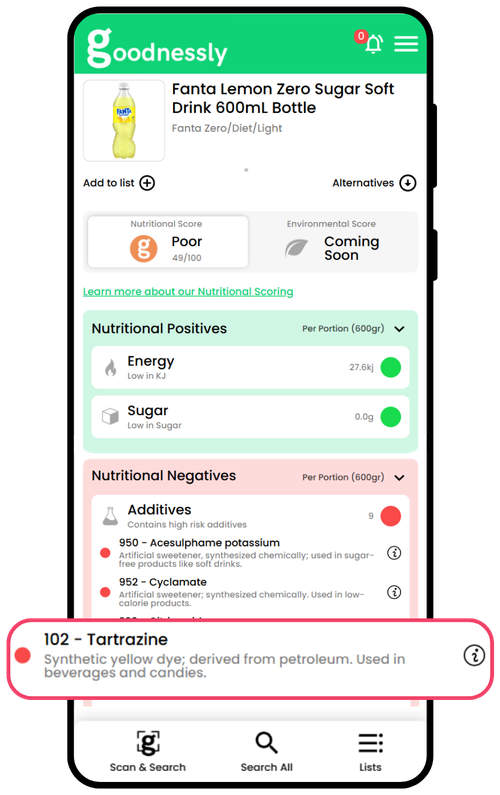
What is alpha-amylase?
Alpha-amylase is an enzyme that catalyses the breakdown of starch into simpler sugars. It's not a foreign or unusual substance to the human body — your own saliva and pancreas produce it constantly to digest the starch in the food you eat, which is part of why bread can start to taste faintly sweet the longer you chew it. As a food additive, it's produced industrially by fermenting bacteria or fungi (commonly Aspergillus or Bacillus species) that naturally produce the enzyme, then purified for use as a processing aid.
What's it used for?
- Improving dough texture and loaf volume in baking
- Breaking down starch into fermentable sugars in brewing
- Producing glucose syrups from starch
- Clarifying fruit juices
- Used in distilled alcohol production
Where you'll find 1100 on the shelf
A processing aid, so it does its job during manufacturing rather than appearing as a listed flavour or texture in the final product.
Is alpha-amylase safe? What the research says
Because alpha-amylase can be produced from many different microbial sources, EU law requires each specific enzyme preparation to be individually reviewed rather than approved as a single blanket ingredient.
| Region | Status | What this means |
|---|---|---|
| AU/NZ Australia & New Zealand (FSANZ) | Permitted | Permitted as a processing aid in food manufacturing. |
| EU European Union (EFSA) | Permitted, individually assessed | Listed as E1100. Since 2009, EU law (Regulation 1332/2008) requires every specific alpha-amylase preparation, from whichever bacterial or fungal source, to undergo its own EFSA safety evaluation before approval. Numerous individual strains have been assessed with no safety concerns identified. |
| US United States (FDA) | GRAS | Holds Generally Recognized As Safe status for use as a processing aid. |
As a processing aid, alpha-amylase does its job during manufacturing and is typically inactivated or removed before the final product reaches the shelf, which is part of why it doesn't always need to be declared on the ingredient list the way a direct additive would.
- Ongoing individual strain assessments: EFSA continues to publish new safety opinions as manufacturers submit new alpha-amylase preparations from different microbial sources. Each one reviewed so far has been found to pose no safety concern at the levels used.
This section is checked periodically rather than continuously — if you're reading this well after the date above, it's worth confirming nothing has changed before citing it.
Who this matters to
- People with a known enzyme or mould allergy, since alpha-amylase is often produced using fungal fermentation, though the purified enzyme itself is rarely allergenic
- Anyone working directly with concentrated enzyme powders (an occupational consideration for bakery and brewery workers, not a concern for consuming the finished food)
- Otherwise, no population group has a specific safety-based reason to limit E1100
Goodnessly rates E1100 Safe. It's the same class of enzyme your own body produces to digest starch, and every commercial preparation is individually reviewed by EFSA before approval.
How to spot it on a label
As a processing aid, E1100 doesn't always appear on the final label. Where it is declared, look out for:
- Alpha-amylase
- 1100 or E1100
- "Enzyme" or "processing aid" in the ingredients list
Bread, beer and glucose syrup products are the most common places it's used.
Related additives
Frequently asked questions
Is alpha-amylase found naturally in the body?
Yes — alpha-amylase is produced naturally by human saliva and the pancreas, where it helps digest the starch in the food you eat. The version used as a food additive performs the same chemical function.
Why does bread taste sweet if I chew it for a long time?
That's alpha-amylase at work in your own saliva, breaking down the starch in the bread into simpler sugars as you chew. It's a natural digestive process, not related to any added sweetener.
Is E1100 vegan?
Usually yes. Commercial alpha-amylase is typically produced by fermenting bacteria or fungi, not extracted from animals, though it's worth checking with the manufacturer if this matters to you specifically.
Does Goodnessly rate E1100 as safe, caution, or avoid?
Goodnessly rates E1100 (Alpha-Amylase) as Safe. It's the same class of enzyme the human body already produces to digest starch, and every commercial preparation must pass an individual EFSA safety review before approval in the EU.
Why doesn't E1100 always appear on ingredient labels?
As a processing aid, alpha-amylase does its job during manufacturing and is typically inactivated or removed before the food reaches the shelf, which is why it doesn't always require declaration the way a direct additive would.
Don't decode labels by hand
Scan any product with the Goodnessly app to instantly see its full additive breakdown, kept current as new research like this comes to light.
Download our app to check additives in everyday foods