
What is E330?
Citric acid — a common acidity regulator and antioxidant synergist that also occurs naturally in citrus fruit and is a normal intermediate in human metabolism.
E330 (citric acid) is one of the most widely used food acids. It adjusts tartness, helps control pH and can support antioxidant systems by binding metal ions. It occurs naturally in citrus fruit and is a normal intermediate in the body’s citric acid cycle. Commercial food-grade citric acid is usually made by fermenting carbohydrate with non-toxigenic moulds such as Aspergillus niger, a route long accepted by major regulators. JECFA assigned a group ADI of “not limited” (equivalent to “not specified”) for citric acid and its common citrate salts; the EU Scientific Committee for Food likewise set ADI “not specified”; FDA lists it as GRAS; and FSANZ permits it as additive 330, generally at GMP. Goodnessly rates it Safe.
Download our app to check additives in everyday foods
Read the FAQ →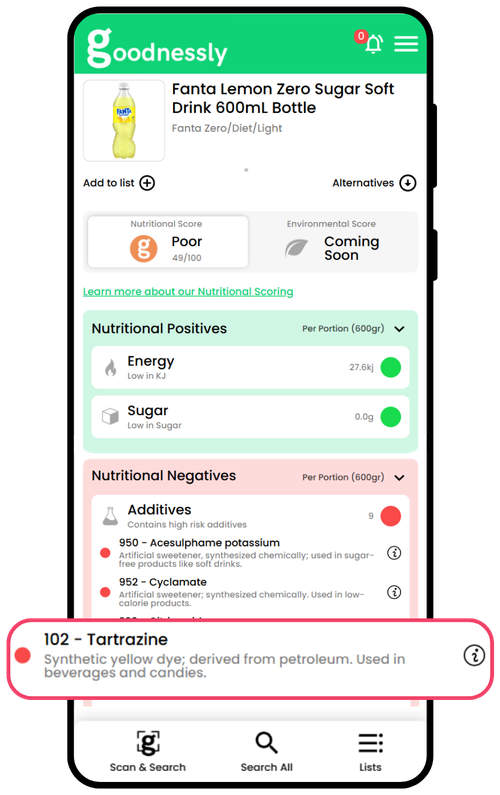
What is citric acid?
Citric acid is a weak organic tricarboxylic acid found naturally in citrus fruit, berries and many other plants. In the body it is a central intermediate of the citric acid cycle (Krebs cycle), so it is not a foreign compound to human metabolism. As a food additive it is typically produced by fermenting sugars, then purified to food-grade specifications. On labels it may appear as citric acid, 330 or E330, and it is often used alongside its sodium, potassium or calcium salts (the citrates).
What's it used for?
- Acidity regulator and sour flavour in soft drinks, cordials and confectionery
- pH control and preservative support in jams, sauces and canned fruit
- Antioxidant synergist / sequestrant that binds metal ions in fats and oils
- Processing roles in dairy, bakery and powdered drinks where a clean tartness is wanted
Where you'll find 330 on the shelf
Extremely common wherever a clean sour note or pH control is needed — from soft drinks to sauces and sweets.
Is citric acid safe? What the research says
Major food regulators treat citric acid as a very low-toxicity acidulant with a long history of use, and none of the jurisdictions below has set a numerical Acceptable Daily Intake for typical food use.
| Region | Status | What this means |
|---|---|---|
| AU/NZ Australia & New Zealand (FSANZ) | Permitted | Listed as citric acid (330) in Schedule 8. Schedule 15 permits citric acid and related citrates in many food categories, typically at GMP (good manufacturing practice). |
| EU European Union (SCF / EFSA) | Permitted, ADI not specified | Authorised as E330. The Scientific Committee for Food (1990) set a group ADI of “not specified” for citric acid and citrates. EFSA’s full re-evaluation of citric acid and citrates under Regulation (EU) No 257/2010 was still pending in recent Panel updates; authorisation remains in force. |
| US United States (FDA) | GRAS | Affirmed as Generally Recognized As Safe under 21 CFR 184.1033 for use in food with no limitations other than current good manufacturing practice. |
JECFA established a group ADI of “not limited” (now expressed as “not specified”) for citric acid and its calcium, potassium, sodium and ammonium salts — meaning a numerical milligram-per-kilogram limit was not considered necessary when the additive is used within good manufacturing practice.
- EU re-evaluation still pending: citric acid and citrates remain on EFSA’s programme for additives authorised before 2009; Panel minutes in recent years noted the assessment had not yet started amid workload delays. Prior SCF “ADI not specified” remains the reference while authorisation continues.
- No authorisation removals: AU/NZ, the EU and the US continue to permit citric acid as a food additive; FDA GRAS affirmation (21 CFR 184.1033) and FSANZ Schedule 8/15 listings are unchanged in substance.
- Related ester opinion is separate: EFSA’s 2020 opinion on E472a–f covers citric acid esters of mono- and diglycerides (and related esters), not free citric acid E330 itself.
This section is checked periodically rather than continuously — if you're reading this well after the date above, it's worth confirming nothing has changed before citing it.
Who this matters to
- People who drink a lot of acidic soft drinks or cordials and want to mind overall acid exposure for dental enamel care
- Anyone comparing naturally occurring fruit acids with the same acid added as E330 on a label
- Shoppers who prefer to know that most commercial citric acid is fermentation-derived rather than squeezed from citrus — a manufacturing detail, not a regulatory safety flag
Goodnessly rates E330 Safe. It is a normal metabolic intermediate, permitted at GMP-style use across AU/NZ, the EU and the US, and major evaluators have not considered a numerical ADI necessary for typical food use.
How to spot it on a label
Citric acid is usually declared in plain language. Look out for:
- Citric acid
- 330 or E330
- "Acidity regulator (330)" or "Acidity regulator (citric acid)"
- Related citrate salts such as sodium citrate (331), potassium citrate (332) or calcium citrate (333)
Soft drinks, confectionery, jams and sauces are among the most common places to find it.
Related additives
Frequently asked questions
Is citric acid natural or synthetic?
Both, in practice. Citric acid occurs naturally in citrus fruit and many other plants, and it is a normal intermediate in human metabolism. Most food-grade citric acid on labels is produced by fermenting carbohydrate with non-toxigenic moulds such as Aspergillus niger, then purified — a manufacturing route long accepted by FSANZ, EU authorities, FDA and JECFA.
Is citric acid considered safe to eat?
Yes, at the levels used in food. JECFA set a group ADI of "not limited" (not specified) for citric acid and its common citrate salts; the EU Scientific Committee for Food likewise used ADI "not specified"; FDA affirms citric acid as GRAS under 21 CFR 184.1033; and FSANZ permits additive 330, typically at GMP. No major regulator reviewed here has banned it as a food additive.
Can acidic drinks with citric acid affect tooth enamel?
Frequent exposure to acidic foods and drinks is associated with dental enamel erosion over time. Citric acid contributes to the acidity of many soft drinks and cordials, so people who sip acidic drinks often may want to mind overall acid exposure and dental care habits. That is about acid contact with enamel, not a unique toxicology concern with E330 as a permitted additive.
Does Goodnessly rate E330 as safe, caution, or avoid?
Goodnessly rates E330 (Citric acid) as Safe. It is a normal metabolic intermediate with ADI not specified / not limited from SCF and JECFA, GRAS status in the US, and GMP-style permission in Australia and New Zealand.
Don't decode labels by hand
Scan any product with the Goodnessly app to instantly see its full additive breakdown, kept current as new research like this comes to light.
Download our app to check additives in everyday foods
At Goodnessly we aim to educate and empower individuals to make informed choices about everyday products.
© 2024 . All rights reserved.
Facebook
Instagram
X
TikTok