
Additive 515 (E515): what is potassium sulphate?
Also labelled: Potassium sulphate · Potassium sulfate · Acidity regulator 515 · INS 515 · E515
A mineral salt used as a salt substitute and acidity regulator.
Potassium sulphate (515) is a mineral salt of potassium and sulphuric acid. It is used in small amounts as a salt substitute, acidity regulator and carrier. It is permitted in Australia, New Zealand, the EU and the US. EFSA re-evaluated it in 2019 and concluded there was no need for a numerical Acceptable Daily Intake and no safety concern at reported uses. Goodnessly rates it Risk Free.
Download our app to check additives in everyday foods
Read the FAQ →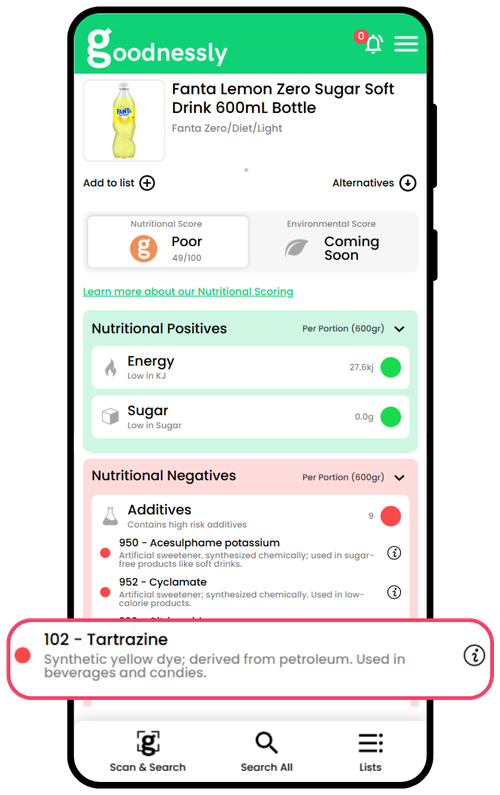
What is potassium sulphate?
Potassium sulphate is a white crystalline salt that occurs naturally in some minerals. In food it provides a salty, slightly bitter taste and helps regulate acidity. It is also a source of potassium.
What's it used for?
- Salt substitute in reduced-sodium products
- Acidity regulator in some drinks and foods
- Carrier for other additives
- Used in some brewing and yeast foods
Where you'll find 515 on the shelf
It is not a common label ingredient but turns up in some reduced-salt foods.
Is potassium sulphate safe? What the research says
Potassium and sulphate are both normal parts of the diet. EFSA's 2019 re-evaluation of the sulphate salts (E513–E517) concluded there was no need for a numerical Acceptable Daily Intake and no safety concern at reported uses and use levels.
| Region | Status | What this means |
|---|---|---|
| AU/NZ Australia & New Zealand (FSANZ) | Permitted | Listed in the Food Standards Code. Declared by name or as 515. |
| EU European Union (EFSA) | Permitted | Authorised as E515. EFSA's 2019 re-evaluation found no need for a numerical Acceptable Daily Intake and no safety concern at reported uses. |
| US United States (FDA) | Permitted | Potassium sulfate is Generally Recognised as Safe under 21 CFR 184.1643. |
People with kidney disease or on medicines that affect potassium are usually advised to watch total potassium intake, including from salt substitutes.
- EFSA 2019 re-evaluation: EFSA concluded the sulphate salts E514–E517 are of no safety concern at reported uses.
- Salt reduction: Potassium salts are used more often as manufacturers reduce sodium.
- Labelling in AU/NZ: FSANZ requires additives to be declared by class name plus name or number.
This section is checked periodically rather than continuously — if you're reading this well after the date above, it's worth confirming nothing has changed before citing it.
Who might want to limit or avoid it
- People with kidney disease or on potassium-affecting medicines (talk to your doctor)
- People using salt substitutes who want to track total potassium
- Anyone curious about reduced-salt formulations
Goodnessly rates 515 Risk Free. It is a simple mineral salt, permitted everywhere, with no safety concern found at food-use levels.
How to spot it on a label
Look out for:
- Potassium sulphate or potassium sulfate
- 515 or E515
- Acidity regulator (515)
- Mineral salt (515)
Look on reduced-salt and seasoning products.
Related additives
Frequently asked questions
What is potassium sulphate used for in food?
It is used in small amounts as a salt substitute, acidity regulator and carrier for other additives.
Is potassium sulphate safe?
It is permitted by FSANZ, the EU and the FDA. EFSA concluded in 2019 that there was no safety concern at reported uses.
Should anyone limit potassium sulphate?
People with kidney disease or on medicines that affect potassium are usually advised to watch total potassium intake, so they should check with their doctor.
How does Goodnessly rate 515?
Goodnessly rates 515 (potassium sulphate) as Risk Free. It is a simple mineral salt, permitted everywhere, with no safety concern found at food-use levels.
Don't decode labels by hand
Scan any product with the Goodnessly app to instantly see its full additive breakdown, kept current as new research like this comes to light.
Download our app to check additives in everyday foods