
Additive 556: what is calcium aluminium silicate?
Also labelled: Calcium aluminium silicate · Aluminium calcium silicate · Anti-caking agent 556 · INS 556
An aluminium-containing anti-caking agent that keeps powders free-flowing.
Calcium aluminium silicate (556) is an anti-caking agent that stops powders and salt from clumping. It is permitted in Australia and New Zealand and is GRAS in the US for table salt, but the EU stopped authorising it in 2014. Goodnessly rates it Moderate Risk.
Permitted in Australia and New Zealand (FSANZ) but no longer approved in the EU, where its authorisation ended on 31 January 2014. Note that the US allows it as GRAS in table salt at up to 2% (21 CFR 182.2122).
Download our app to check additives in everyday foods
Read the FAQ →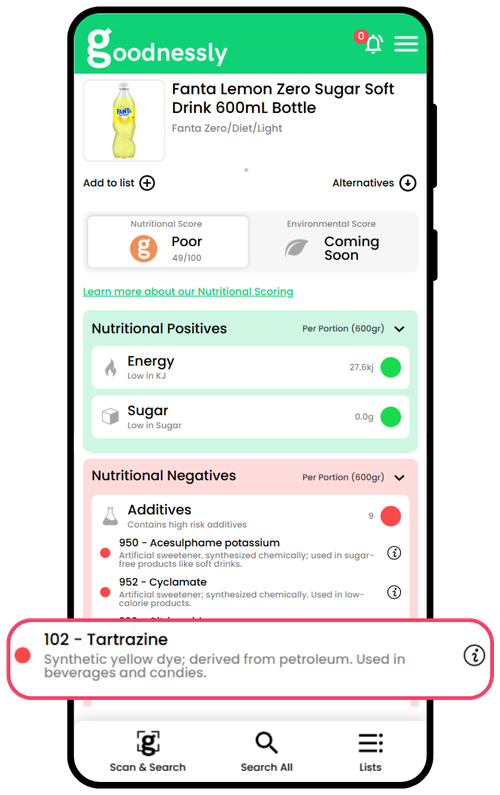
What is calcium aluminium silicate?
It is a silicate that contains calcium and aluminium. It absorbs moisture, which helps keep powders free-flowing.
What's it used for?
- Anti-caking agent in salt
- Powdered foods and mixes
- Seasonings
Where you'll find 556 on the shelf
Look for it in salt and powdered products.
Is calcium aluminium silicate safe? What the research says
The EU reviewed aluminium-containing additives because of concerns about total dietary aluminium. In 2008 EFSA set a tolerable weekly intake for aluminium of 1 mg/kg body weight. Authorisation of E556 ended in the EU in 2014.
| Region | Status | What this means |
|---|---|---|
| AU/NZ Australia & New Zealand (FSANZ) | Permitted | Permitted at GMP in processed foods (Schedule 16) and in salt. |
| EU European Union (EFSA) | No longer authorised | E556 was authorised only until 31 January 2014 under Regulation (EC) No 1333/2008 as amended. |
| US United States (FDA) | Permitted (GRAS) | GRAS in table salt at up to 2% (21 CFR 182.2122). |
Aluminium intake comes from many sources, including food, water and cookware.
- EU: Authorisation for E556 and E559 ended on 31 January 2014.
This section is checked periodically rather than continuously — if you're reading this well after the date above, it's worth confirming nothing has changed before citing it.
Who might want to limit or avoid it
- Anyone limiting dietary aluminium
- People with kidney conditions (talk to your doctor)
Goodnessly rates 556 Moderate Risk. It contains aluminium and is no longer authorised in the EU.
How to spot it on a label
Look out for:
- Calcium aluminium silicate
- Anti-caking agent (556)
Always check the ingredient list, as the same additive can be listed by name or by number.
Related additives
Frequently asked questions
Does calcium aluminium silicate contain aluminium?
Yes. It is a silicate of calcium and aluminium.
Is 556 allowed in the EU and US?
The EU stopped authorising it in 2014. The US allows it as GRAS in table salt. Australia and New Zealand permit it.
Why is aluminium in food additives a concern?
EFSA has said that some people may exceed its tolerable weekly intake for aluminium from all dietary sources combined.
How does Goodnessly rate 556?
Goodnessly rates 556 (Calcium aluminium silicate) as Moderate Risk. It contains aluminium and is no longer authorised in the EU.
Don't decode labels by hand
Scan any product with the Goodnessly app to instantly see its full additive breakdown, kept current as new research like this comes to light.
Download our app to check additives in everyday foods