What is E620?
L-Glutamic acid — the parent amino acid of the E620–E625 glutamate flavour-enhancer group (MSG and related salts).
L-Glutamic acid (E620) is a flavour enhancer and the parent acid of the glutamate salts monosodium glutamate (E621), monopotassium glutamate (E622), calcium glutamate (E623), monoammonium glutamate (E624) and magnesium glutamate (E625). It contributes the savoury "umami" taste used in seasonings, soups, sauces and many processed savoury foods. It is permitted in Australia/NZ and the EU within the glutamates group. EFSA's 2017 re-evaluation set a group ADI of 30 mg/kg body weight per day (expressed as glutamic acid) and noted that estimated exposures for some high consumers could exceed that ADI. In the US, glutamic acid is listed as GRAS under 21 CFR 182.1045 (salt substitute under GMP); MSG itself is long-standing GRAS. Goodnessly rates it Avoid.
Download our app to check additives in everyday foods
Read the FAQ →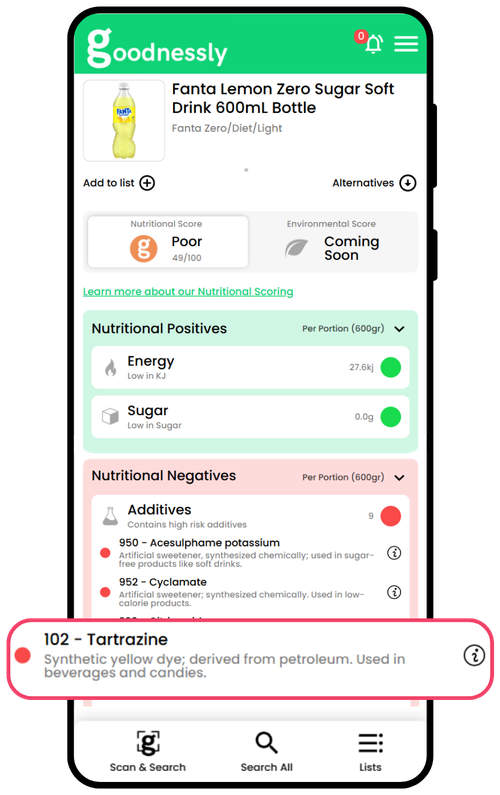
What is L-glutamic acid?
L-Glutamic acid is an amino acid that occurs naturally in many protein-rich foods. As a food additive (E620) it is manufactured for use as a flavour enhancer, often alongside or instead of its sodium salt MSG (E621). Regulators assess E620–E625 as one group. On labels you may see "L-glutamic acid", "glutamic acid", "620", "E620", or "flavour enhancer (620)".
What's it used for?
- Boosting savoury / umami taste in seasonings and stock powders
- Used in soups, broths, sauces and ready meals
- Used in some snacks, processed meats and condiments where glutamates are permitted
- Parent acid of the wider E621–E625 glutamate salt family
Where you'll find E620 on the shelf
Same neighbourhood as MSG — savoury processed foods. The free acid is less common on everyday labels than monosodium glutamate (621), but the group shares one EFSA ADI.
Is L-glutamic acid safe? What the research says
Glutamates are among the most debated flavour enhancers. EFSA keeps a numerical group ADI and has flagged that high consumers of additive glutamates may exceed it, recommending review of some EU maximum levels. FDA continues to treat glutamic acid / MSG uses as GRAS. Reports of sensitivity in a subgroup of people after high-glutamate meals are discussed in the literature as associations for susceptible individuals — not proof that glutamic acid "causes" a defined disease in the general population.
| Region | Status | What this means |
|---|---|---|
| AU/NZ Australia & New Zealand (FSANZ) | Permitted (glutamates group, GMP) | Listed with other glutamates (620–625) in the Food Standards Code as flavour enhancers, generally at GMP for permitted categories. Must be declared by name or code number when used as a food additive (for example flavour enhancer (620)). |
| EU European Union (EFSA) | Authorised; group ADI 30 mg/kg bw/day | Authorised as E620 under Regulation (EC) No 1333/2008. EFSA's 2017 re-evaluation of E620–E625 set a group ADI of 30 mg/kg bw/day expressed as glutamic acid, and noted that exposure estimates for some population groups could exceed the ADI and doses associated with adverse effects in humans, recommending review of MPLs in several categories. |
| US United States (FDA) | GRAS (21 CFR 182.1045) | Glutamic acid is listed as GRAS under 21 CFR 182.1045 when used as a salt substitute under good manufacturing practice. Monosodium glutamate is separately recognised as GRAS in longstanding FDA materials. Federal listings remain in force as of this draft (September 2026). |
Naturally occurring glutamate in tomatoes, cheese or mushrooms is not the same regulatory listing as additive E620, but chemistry overlaps — this page is about the intentionally added additive. Sensitivity reports after high-glutamate meals describe associations in susceptible people; they are not a general-population diagnosis.
- EFSA 2017 (E620–E625): group ADI 30 mg/kg bw/day as glutamic acid; exposure may exceed the ADI for some high consumers; MPL review recommended for several categories.
- FSANZ consumer MSG notes: continue to describe added glutamates as permitted flavour enhancers that must be declared when used as additives.
- FDA GRAS listings: glutamic acid 21 CFR 182.1045; MSG remains GRAS for intended uses under GMP.
This section is checked periodically rather than continuously — if you're reading this well after the date above, it's worth confirming nothing has changed before citing it.
Who might want to limit or avoid it
- People who prefer to avoid added flavour enhancers in ultra-processed savoury foods
- Anyone who notices they feel unwell after high-MSG / high-glutamate meals and has discussed that pattern with a clinician
- Parents reducing additive-heavy seasonings and ready meals for children, given EFSA's high-consumer exposure notes
Goodnessly rates E620 Avoid. L-glutamic acid remains permitted in Australia/NZ and the EU within the glutamates group, and is GRAS in the US, but EFSA's group ADI exposure concerns for high consumers and our preference to skip deliberate umami boosters place it with MSG in Avoid.
How to spot it on a label
Check savoury processed foods for:
- L-glutamic acid / glutamic acid
- 620 or E620
- Flavour enhancer (620)
- Other glutamates: 621–625
MSG (621) is the salt you will see most often — same EFSA group ADI.
Related additives
Frequently asked questions
What is L-glutamic acid (E620) made from?
It is an amino acid manufactured for use as a flavour enhancer. It is the parent acid of the glutamate salts E621–E625 (including MSG). Commercial production is typically by fermentation.
Is E620 the same as MSG?
They are in the same group. MSG is the monosodium salt (E621). Regulators assess E620–E625 together with a shared group ADI in the EU. Goodnessly rates the whole group Avoid.
Did EFSA ban glutamates?
No. EFSA set a group ADI of 30 mg/kg bw/day and recommended reviewing some maximum levels because high-consumer exposure estimates could exceed the ADI. That is not a ban.
Does Goodnessly rate E620 as safe, caution or avoid?
Goodnessly rates E620 (L-glutamic acid) as Avoid, consistent with other glutamates in our ratings.
Don't decode labels by hand
Scan any product with the Goodnessly app to instantly see its full additive breakdown, kept current as new research like this comes to light.
Download our app to check additives in everyday foods