What is E621?
Monosodium L-glutamate (MSG) — a glutamate flavour enhancer used to add savoury depth to soups, sauces, snacks and seasoning blends.
Monosodium L-glutamate (E621), usually called MSG, is the sodium salt of glutamic acid. It is added to foods for a savoury or umami taste. EFSA set a group ADI of 30 mg/kg body weight per day for added glutamates E620–E625 and noted that high-exposure groups may exceed it. FSANZ permits MSG in specified foods and the US lists it as GRAS for intended use. Goodnessly rates it Avoid as a household preference against routine flavour enhancers.
Download our app to check additives in everyday foods
Read the FAQ →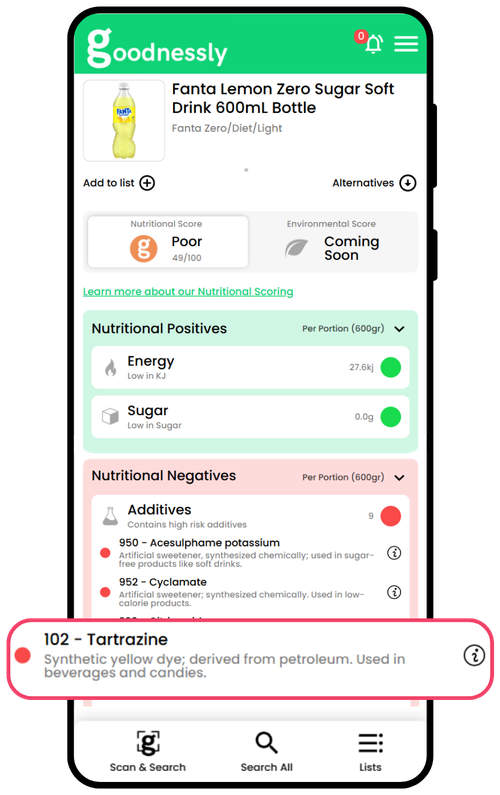
What is monosodium glutamate?
MSG is the sodium salt of glutamic acid, an amino acid that also occurs naturally in foods such as tomatoes, cheese and soy sauce. Added MSG is used as a flavour enhancer, not as a preservative. Labels may say "monosodium glutamate", "MSG", "621", "E621" or "flavour enhancer (621)".
What's it used for?
- Adding savoury / umami flavour to soups, broths and sauces
- Seasoning snack foods, savoury mixes and prepared meals
- Reducing the need for some other salt or flavour ingredients in a recipe
- Part of the glutamate group E620–E625 assessed together by EFSA
Where you'll find E621 on the shelf
MSG is most likely in savoury packaged foods where a strong umami note is wanted.
Is monosodium glutamate safe? What the research says
EFSA established a group ADI of 30 mg/kg body weight per day for added glutamates E620–E625 and recommended reviewing some maximum levels after exposure estimates exceeded the group ADI in several high-exposure scenarios. That is an exposure-management finding, not a claim that MSG is banned or that every permitted serving is unsafe. Goodnessly rates it Avoid for a lower-additive household pattern.
| Region | Status | What this means |
|---|---|---|
| AU/NZ Australia & New Zealand (FSANZ) | Permitted (specified foods; Schedule 15) | FSANZ lists monosodium L-glutamate as food additive 621. It may be used in the food categories and at the maximum permitted levels in Schedule 15, and must be declared by name or code number. FSANZ consumer guidance says added MSG should be declared in most packaged-food ingredient lists. |
| EU European Union (EFSA) | Authorised; glutamate group ADI 30 mg/kg bw/day | E621 is authorised in the EU under Regulation (EC) No 1333/2008 for specified food categories. EFSA’s 2017 re-evaluation set a group ADI of 30 mg/kg bw/day for glutamic acid and glutamates E620–E625 and identified high-exposure groups for which exposure may exceed that ADI. |
| US United States (FDA) | GRAS for intended use (21 CFR 182.1) | FDA’s 21 CFR 182.1 lists monosodium glutamate among common substances regarded as generally recognised as safe when used for the intended purpose and in accordance with good manufacturing practice. This is a regulatory status, not a recommendation to consume more. |
MSG is naturally related to glutamate, but the amount and context of added glutamate in a packaged food vary. People who report sensitivity to particular foods should discuss persistent symptoms with a qualified health professional; this page does not diagnose reactions.
- EFSA 2017: group ADI 30 mg/kg bw/day for added glutamates E620–E625; high-exposure scenarios could exceed it and maximum levels should be reviewed.
- FSANZ consumer guidance: added MSG is identified by name or code 621, with labelling applying to other added glutamates 622–625.
- FDA 21 CFR 182.1: monosodium glutamate remains an example of a substance regarded as GRAS for intended use under GMP.
This section is checked periodically rather than continuously — if you're reading this well after the date above, it's worth confirming nothing has changed before citing it.
Who might want to limit or avoid it
- People who prefer foods without added flavour enhancers
- Households wanting to reduce routine exposure to high-glutamate processed foods
- Anyone who notices a repeatable personal reaction and wants to avoid the ingredient while seeking professional advice
Goodnessly rates E621 Avoid. MSG is permitted in Australia/NZ, the EU and the US for specified uses, but the EFSA group-ADI and high-exposure findings support a cautious household preference.
How to spot it on a label
Check the ingredient list for:
- Monosodium glutamate
- MSG
- 621 or E621
- Flavour enhancer (621)
- Glutamates E620–E625
The code may appear after the class name “flavour enhancer”.
Related additives
Frequently asked questions
What is E621?
E621 is monosodium L-glutamate, commonly called MSG. It is added to foods as a savoury or umami flavour enhancer.
Does MSG have an ADI?
Yes. EFSA set a group acceptable daily intake of 30 mg/kg body weight per day for added glutamates E620–E625. That group value covers MSG as well as related glutamate salts.
Is MSG banned in Australia, the EU or the US?
No. MSG remains permitted for specified uses in Australia/NZ and the EU, and FDA lists it as generally recognised as safe for intended use under 21 CFR 182.1.
Does Goodnessly rate E621 as safe, caution or avoid?
Goodnessly rates E621 (monosodium glutamate) as Avoid.
Don't decode labels by hand
Scan any product with the Goodnessly app to instantly see its full additive breakdown, kept current as new research like this comes to light.
Download our app to check additives in everyday foods