
Additive 914 (E914): what is oxidised polyethylene wax?
Also labelled: Oxidised polyethylene wax · Oxidized polyethylene · Glazing agent 914 · INS 914 · E914
A wax coating used on the skin of some fresh fruit to reduce moisture loss and add shine.
Oxidised polyethylene wax (914) is a synthetic wax used as a surface coating on some fresh fruit. It is permitted in Australia and New Zealand, in the EU only for surface treatment of certain fruits, and in the US. EFSA re-evaluated it in 2015 and found no safety concern at the maximum reported use level. Goodnessly rates it Risk Free.
Download our app to check additives in everyday foods
Read the FAQ →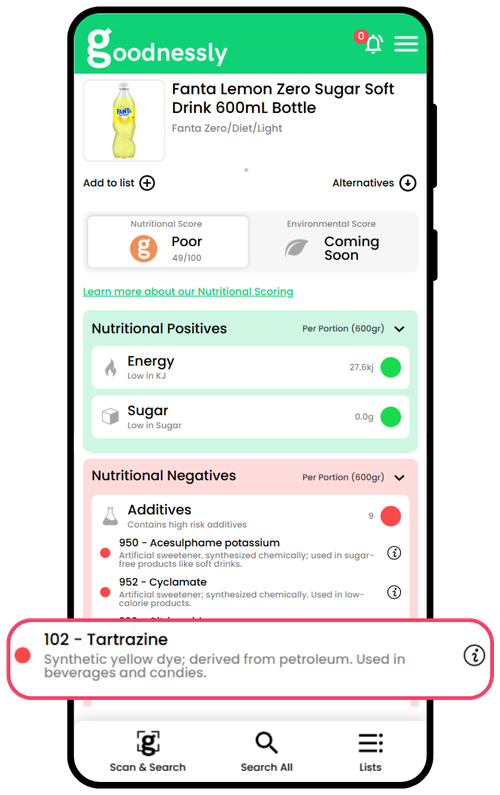
What is oxidised polyethylene wax?
Oxidised polyethylene wax is made by gently oxidising low molecular weight polyethylene. It is applied in a very thin layer to the outside of fruit, where it reduces moisture loss and gives a glossy finish. It is used on peel that is usually not eaten.
What's it used for?
- Coating on citrus fruit
- Coating on melons, mango, papaya and avocado
- Coating on pineapple
- Shine and moisture control during storage and transport
Where you'll find 914 on the shelf
It is mostly found on fresh fruit with inedible peel, often shown on signage or packaging as "waxed".
Is oxidised polyethylene safe? What the research says
Because it is applied to inedible peel, intake is very low. EFSA's 2015 re-evaluation found no safety concern at the maximum reported use level, with a large margin of safety.
| Region | Status | What this means |
|---|---|---|
| AU/NZ Australia & New Zealand (FSANZ) | Permitted | Listed in the Food Standards Code. Declared by name or as 914 where an ingredient list is required. |
| EU European Union (EFSA) | Restricted | Authorised as E914 only for surface treatment of citrus fruit, melons, papaya, mango, avocado and pineapple. EFSA's 2015 re-evaluation found no safety concern. |
| US United States (FDA) | Permitted | Oxidized polyethylene is permitted as a protective coating under 21 CFR 172.260. |
EFSA did not set an Acceptable Daily Intake in 2015, but calculated a margin of safety of about 4,400 at the maximum reported use level.
- EFSA 2015 re-evaluation: EFSA found no safety concern for E914 at the maximum reported use level.
- Restricted EU use: The EU continues to limit E914 to surface treatment of specific fruits.
- Labelling: Loose waxed fruit may not have an ingredient list, so look for "waxed" signage or packaging notes.
This section is checked periodically rather than continuously — if you're reading this well after the date above, it's worth confirming nothing has changed before citing it.
Who might want to limit or avoid it
- People who zest citrus peel and prefer unwaxed fruit
- Anyone who prefers to wash or peel coated fruit before use
- Shoppers looking for "unwaxed" options for baking
Goodnessly rates 914 Risk Free. It is used on inedible peel at very low levels, with no safety concern found by EFSA.
How to spot it on a label
Look out for:
- Oxidised polyethylene wax
- 914 or E914
- Glazing agent (914)
- "Waxed" on fruit signage or packaging
If you want to use citrus zest, look for fruit sold as unwaxed.
Related additives
Frequently asked questions
Why is wax put on fruit?
A thin wax coating reduces moisture loss, helps fruit keep during transport and storage, and gives it a glossy look.
Can you eat the wax on fruit?
Oxidised polyethylene wax is used on fruit with peel that is usually not eaten. If you plan to use the peel, for example as zest, choose unwaxed fruit.
Is oxidised polyethylene wax allowed in Europe?
Yes, but only for surface treatment of citrus fruit, melons, papaya, mango, avocado and pineapple.
How does Goodnessly rate 914?
Goodnessly rates 914 (oxidised polyethylene wax) as Risk Free. It is used on inedible peel at very low levels, with no safety concern found by EFSA.
Don't decode labels by hand
Scan any product with the Goodnessly app to instantly see its full additive breakdown, kept current as new research like this comes to light.
Download our app to check additives in everyday foods