
What is E1451?
Acetylated oxidised starch — a lighter-bodied modified starch, oxidised then acetylated to give sauces, coatings and confectionery a smooth, clear finish rather than a thick gel.
E1451 (acetylated oxidised starch) is a starch, usually from corn or tapioca, that's first oxidised (commonly with sodium hypochlorite) to shorten its chains and lighten its texture, then acetylated to improve its stability. It was reviewed alongside other modified starches in EFSA's 2017 group re-evaluation, which found no safety concern for the general population, and no numerical Acceptable Daily Intake has been set. Goodnessly rates it Caution, in line with how chemically modified starches are generally treated.
Download our app to check additives in everyday foods
Read the FAQ →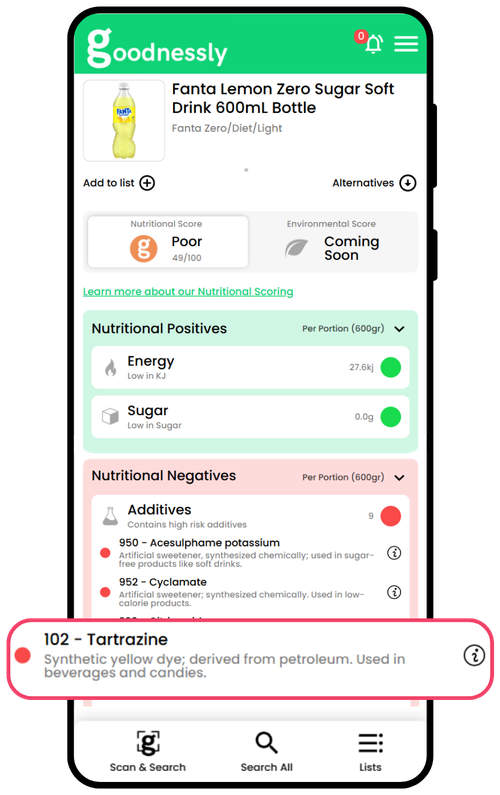
What is acetylated oxidised starch?
Acetylated oxidised starch is made from native starch, most often corn or tapioca, that's put through two separate processing steps. First it's oxidised, typically using sodium hypochlorite (similar to diluted household bleach), which breaks some of the starch's long chains into shorter ones and gives it a clearer appearance and lower, smoother viscosity than untreated starch. It's then acetylated with acetic anhydride to improve how well it holds up during storage and processing. The oxidising agent itself doesn't remain in the finished ingredient in any meaningful amount; what's left is a food starch valued for its clarity, film-forming ability and light texture.
What's it used for?
- Thickening and glazing confectionery and batters
- Improving clarity and texture in sauces and dressings
- Coating and binding agent in some processed foods
- Used in pet food and some pharmaceutical tablet coatings
Where you'll find 1451 on the shelf
Chosen wherever a light, clear texture matters more than a thick gel — think glazes, coatings and smooth sauces.
Is acetylated oxidised starch safe? What the research says
Acetylated oxidised starch was reviewed as part of the same 2017 EFSA group assessment that covered several related modified starches, and its regulatory approval has stayed stable since.
| Region | Status | What this means |
|---|---|---|
| AU/NZ Australia & New Zealand (FSANZ) | Permitted | Permitted as a modified starch (food additive code 1451) with no specific maximum level set beyond good manufacturing practice. |
| EU European Union (EFSA) | Permitted, no ADI | Listed as E1451. EFSA's 2017 group re-evaluation of related modified starches, including E1451, found no safety concern for the general population and set no numerical Acceptable Daily Intake, while flagging some data gaps for further study. |
| US United States (FDA) | GRAS | Regulated as a food starch-modified ingredient with Generally Recognized As Safe status under 21 CFR 172.892. |
Residues of the oxidising agent used in manufacturing are controlled by legal limits in the finished starch and are reported to remain well below levels of health concern, similar to the bleaching agents used in other modified starches.
- 2024 EU data call: the European Commission issued a call for updated scientific and technical data on a group of modified starches, including E1451, as part of its ongoing food additive re-evaluation programme. No change to its authorised status has followed as of publication.
- No significant regulatory changes: approval status across AU/NZ, the EU and the US has remained stable, reflecting a long and well-reviewed safety record for this starch group.
This section is checked periodically rather than continuously — if you're reading this well after the date above, it's worth confirming nothing has changed before citing it.
Who this matters to
- People with coeliac disease or a wheat allergy, if the source starch is wheat-derived, since generic "modified starch" labelling doesn't always specify the grain
- Anyone who prefers to avoid ingredients that involve a chemical oxidation step, even where residue levels are reported to be well controlled
Goodnessly rates E1451 Caution, in line with how chemically modified starches are generally treated in our directory. It's permitted across all major regulators reviewed and no safety concern has been identified for the general population, but the oxidation and acetylation processing keeps it out of our Safe category.
How to spot it on a label
E1451 is often declared under a generic name. Look out for:
- Acetylated oxidised starch
- Modified starch
- 1451 or E1451
- "Modified corn starch" or "modified tapioca starch" if the source is specified
Confectionery, glazes and smooth sauces are the most common places to find it.
Related additives
Frequently asked questions
What makes acetylated oxidised starch different from other modified starches?
It goes through two modification steps rather than one. First the starch is oxidised, typically with sodium hypochlorite, which breaks it into shorter chains and gives it a clearer, lower-viscosity texture. It's then acetylated to improve its stability. That combination makes it useful as a light-bodied thickener and film-forming coating agent, rather than a thick gel-forming one.
Does oxidised starch still contain the bleaching or oxidising agent used to make it?
No, not in any meaningful sense. The oxidising agent reacts with the starch during processing and is removed or neutralised in the finished ingredient. Any residues are controlled by legal limits and are reported to be well below levels of health concern, similar to how bleached starch (E1403) is treated.
Is acetylated oxidised starch banned or restricted anywhere?
No. It's approved for use in Australia and New Zealand, the European Union and the United States. EFSA's 2017 group re-evaluation of this modified starch family, which included E1451, found no safety concern for the general population, though it noted some data gaps and recommended further study for the group as a whole.
Does Goodnessly rate E1451 as safe, caution, or avoid?
Goodnessly rates E1451 (Acetylated Oxidised Starch) as Caution, in line with how chemically modified starches are generally treated in our directory. It's permitted and no safety concern has been identified for the general population, but the combined oxidation and acetylation processing keeps it out of our Safe category.
Don't decode labels by hand
Scan any product with the Goodnessly app to instantly see its full additive breakdown, kept current as new research like this comes to light.
Download our app to check additives in everyday foods