
What is 203?
The calcium salt of sorbic acid, used as a preservative against moulds and yeasts.
Calcium sorbate (203) is the calcium salt of sorbic acid, a preservative that slows the growth of moulds and yeasts. It is permitted in Australia and New Zealand and is GRAS in the US, but the EU withdrew it in 2018 after EFSA excluded it from the sorbate group ADI because genotoxicity data were missing. Goodnessly rates it Hazardous Risk.
Permitted in Australia and New Zealand (FSANZ) but not approved in the EU. The EU withdrew calcium sorbate (E203) in 2018. Note that it is still Generally Recognised as Safe in the US (21 CFR 182.3225).
Download our app to check additives in everyday foods
Read the FAQ →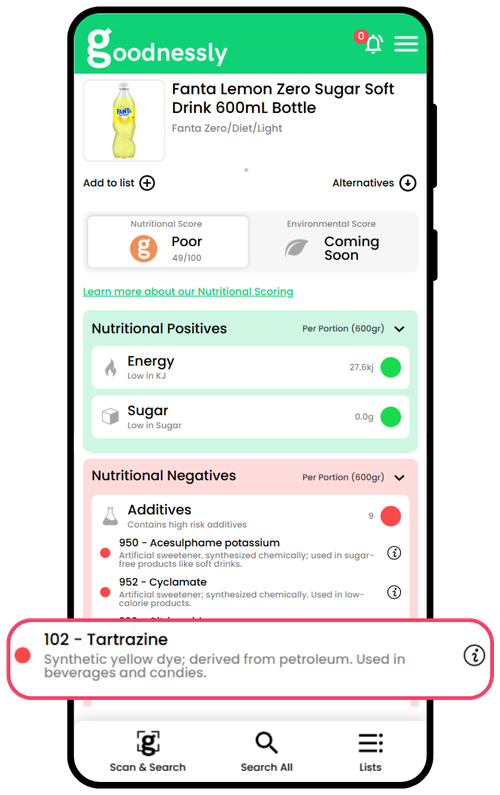
What is calcium sorbate?
Sorbates are salts of sorbic acid, a preservative first found in rowan berries and now made synthetically. Calcium sorbate works like potassium sorbate (202), but it is used far less often.
What's it used for?
- Preserving cheese and dairy products
- Baked goods and fillings
- Dips, sauces and spreads
- Beverages and fruit products
Where you'll find 203 on the shelf
It is often grouped on labels with other sorbates as "preservative (203)".
Is calcium sorbate safe? What the research says
In 2015 EFSA re-evaluated the sorbates. It excluded calcium sorbate from the group ADI because there were no genotoxicity data on calcium sorbate. Sorbic acid and potassium sorbate now have a group ADI of 11 mg/kg body weight, set in 2019. Calcium sorbate was then withdrawn from the EU list (Regulation (EU) 2018/98).
| Region | Status | What this means |
|---|---|---|
| AU/NZ Australia & New Zealand (FSANZ) | Permitted | Permitted as a preservative within the sorbates group in a range of foods under Schedule 15. |
| EU European Union (EFSA) | Not authorised | Withdrawn by Regulation (EU) 2018/98. It is excluded from the sorbates group ADI. |
| US United States (FDA) | Permitted (GRAS) | Generally Recognised as Safe under 21 CFR 182.3225 when used in line with good manufacturing practice. |
The EU decision reflected missing data, not a finding of harm.
- EFSA 2019: EFSA raised the group ADI for sorbic acid and potassium sorbate to 11 mg/kg body weight. Calcium sorbate is not included.
- EU withdrawal, 2018: Regulation (EU) 2018/98 removed E203 from the Union list.
This section is checked periodically rather than continuously — if you're reading this well after the date above, it's worth confirming nothing has changed before citing it.
Who might want to limit or avoid it
- Anyone who prefers additives with a complete EU safety assessment
- People who react to sorbates (talk to your doctor)
- Shoppers comparing local and imported products
Goodnessly rates 203 Hazardous Risk. The EU withdrew it because genotoxicity data were missing, although the US still treats it as GRAS.
How to spot it on a label
Look out for:
- Calcium sorbate
- Preservative (203)
- E203 on older imported labels
Always check the ingredient list, as the same additive can be listed by name or by number.
Related additives
Frequently asked questions
Is calcium sorbate the same as potassium sorbate?
They are both salts of sorbic acid. Potassium sorbate (202) is still authorised in the EU, but calcium sorbate was withdrawn in 2018.
Is 203 banned in the EU?
It was withdrawn from the EU list of approved additives in 2018. It is still permitted in Australia and New Zealand, and it is GRAS in the US.
Why was calcium sorbate withdrawn?
EFSA found no genotoxicity data on calcium sorbate, so it could not be included in the sorbate group ADI. The EU then removed it.
How does Goodnessly rate 203?
Goodnessly rates 203 (Calcium sorbate) as Hazardous Risk. The EU withdrew it because genotoxicity data were missing, although the US still treats it as GRAS.
Don't decode labels by hand
Scan any product with the Goodnessly app to instantly see its full additive breakdown, kept current as new research like this comes to light.
Download our app to check additives in everyday foods