
Additive 451i (E451(i)): what is sodium tripolyphosphate?
Also labelled: Sodium tripolyphosphate · Pentasodium triphosphate · STPP · Mineral salt 451 · INS 451(i) · E451(i)
A phosphate salt used to hold moisture, stabilise texture and bind minerals in processed foods.
Sodium tripolyphosphate (451i), also called pentasodium triphosphate or STPP, is a phosphate salt used as a stabiliser, emulsifying salt and sequestrant. It is permitted in Australia and New Zealand, authorised in the EU as E451(i), and generally recognised as safe (GRAS) in the US. Goodnessly rates it Hazardous Risk.
Permitted in Australia and New Zealand (FSANZ), the EU and the US. In its 2019 re-evaluation of phosphate additives, EFSA set a group ADI of 40 mg/kg body weight per day (as phosphorus) and noted that estimated total phosphorus intake may exceed it for infants, toddlers and children. EFSA also said this ADI does not apply to people with moderate to severe reduction in kidney function.
Download our app to check additives in everyday foods
Read the FAQ →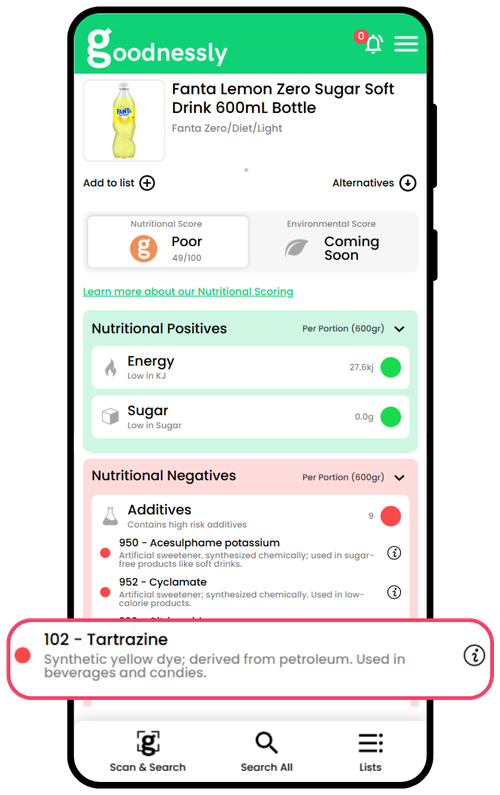
What is sodium tripolyphosphate?
It is a sodium salt of triphosphoric acid, made from phosphoric acid and a sodium source. In food it binds water and minerals, which helps processed meat and seafood stay moist and helps some processed cheeses and other foods keep a smooth, stable texture.
What's it used for?
- Helping processed meats and seafood hold moisture
- Emulsifying salt in processed cheese products
- Stabilising texture in some processed foods
- Binding minerals (sequestrant) to protect colour and flavour
Where you'll find 451i on the shelf
Look for it in processed and frozen protein products.
Is sodium tripolyphosphate safe? What the research says
Phosphates are also nutrients, so regulators assess phosphate additives together with the phosphorus naturally in food. EFSA re-evaluated phosphate additives (E 338–341, E 343, E 450–452) in 2019 and set a group ADI of 40 mg/kg body weight per day, expressed as phosphorus. EFSA estimated that additives contribute roughly 6 to 30% of average phosphorus intake, and noted that total intake may exceed the ADI for infants, toddlers and children, and for adolescents with high intakes. It found no concern for genotoxicity or cancer.
| Region | Status | What this means |
|---|---|---|
| AU/NZ Australia & New Zealand (FSANZ) | Permitted | Permitted as a food additive (INS 451) in a range of foods under Schedule 15 of the Food Standards Code. |
| EU European Union (EFSA) | Permitted | Authorised as E451(i) pentasodium triphosphate under Regulation (EC) No 1333/2008, with maximum levels set by food category. Covered by EFSA's 2019 group ADI for phosphates. |
| US United States (FDA) | GRAS | Generally recognised as safe when used in line with good manufacturing practice (21 CFR 182.1810 and 182.6810). |
EFSA's group ADI covers phosphorus from all sources, both natural and from additives.
- EFSA, June 2019: Re-evaluated phosphate additives and set, for the first time, a group ADI of 40 mg/kg body weight per day expressed as phosphorus.
- Kidney health: EFSA stated that the ADI does not apply to people with moderate to severe reduction in kidney function, based on the recognised effect of high phosphate intake on the kidney.
This section is checked periodically rather than continuously — if you're reading this well after the date above, it's worth confirming nothing has changed before citing it.
Who might want to limit or avoid it
- People with reduced kidney function, who are often advised to watch phosphorus intake
- Parents of young children, since EFSA noted children's total phosphorus intake may exceed the ADI
- Anyone cutting back on heavily processed meats and convenience foods
Goodnessly rates 451i Hazardous Risk. It is a phosphate additive, and EFSA has noted that total phosphorus intake may exceed its group ADI in some groups, especially children. High phosphate intake is also associated with effects on the kidney.
How to spot it on a label
Look out for:
- Sodium tripolyphosphate
- Pentasodium triphosphate
- STPP
- Mineral salt (451) or Stabiliser (451)
- E451
Always check the ingredient list, as the same additive can be listed by name or by number.
Related additives
Frequently asked questions
Why is sodium tripolyphosphate used in seafood and meat?
It helps these foods hold onto water, which keeps the texture moist after freezing, thawing or cooking. It also binds minerals, which helps protect colour and flavour.
Is 451i allowed in Australia, the EU and the US?
Yes. It is permitted in Australia and New Zealand, authorised in the EU as E451(i), and listed as GRAS by the FDA (21 CFR 182.1810).
Should people with kidney disease avoid phosphate additives?
EFSA has said its phosphate ADI does not apply to people with moderate to severe reduction in kidney function, because high phosphate intake is known to affect the kidney. Anyone with kidney disease should follow the advice of their doctor or dietitian.
How does Goodnessly rate 451i?
Goodnessly rates 451i (Sodium tripolyphosphate) as Hazardous Risk. It is a phosphate additive, and EFSA has noted that total phosphorus intake may exceed its group ADI in some groups, especially children. High phosphate intake is also associated with effects on the kidney.
Don't decode labels by hand
Scan any product with the Goodnessly app to instantly see its full additive breakdown, kept current as new research like this comes to light.
Download our app to check additives in everyday foods