
What is monk fruit extract?
Also labelled: Monk fruit extract · Luo han guo extract · Siraitia grosvenorii extract · Mogrosides · Sweetener (monk fruit extract)
A natural intense sweetener from the monk fruit, sweet thanks to compounds called mogrosides.
Monk fruit extract comes from luo han guo, a small gourd-family fruit from southern China. Its sweet compounds, mogrosides, are many times sweeter than sugar, so only tiny amounts are needed. FSANZ approved it as a sweetener in 2019 with an ADI “not specified”, and the US FDA has accepted GRAS notices for it. It is not an authorised sweetener additive in the EU. Goodnessly rates it Risk Free.
Permitted in Australia and New Zealand at GMP (Schedule 16) following Application A1129, gazetted January 2019. In the EU, EFSA said in 2019 that the data were insufficient to conclude on its safety as a food additive, so it isn’t on the EU additive list. Simple water decoctions of the fruit were confirmed as not novel foods in the EU in 2024.
Download our app to check additives in everyday foods
Read the FAQ →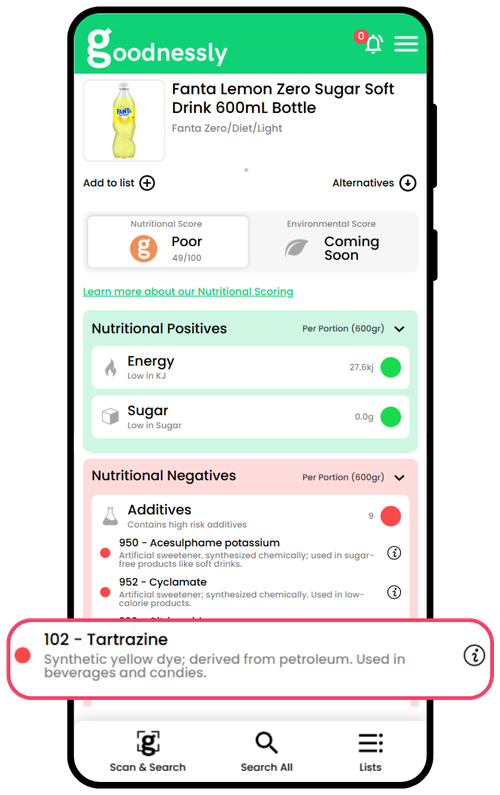
What is monk fruit extract?
Monk fruit (Siraitia grosvenorii) has a long history of use in China, often dried and brewed into drinks. To make the extract, the fruit is crushed and extracted with water, then filtered and concentrated. The main sweet compound is mogroside V. Codex hasn’t assigned it an INS number, so in Australia and New Zealand it appears on labels by name.
What's it used for?
- Sugar-free and reduced-sugar sweetening
- Tabletop sweeteners, often blended with erythritol
- Drinks and flavoured water
- Baking, as it is heat stable
Where you'll find monk fruit extract on the shelf
Look for it in sugar-free and “naturally sweetened” products.
Is monk fruit extract safe? What the research says
FSANZ’s 2018 assessment found no public health and safety concerns and set an ADI “not specified”, meaning no numerical limit is needed. EFSA took a more cautious view in 2019, noting effects on the testes in one 90-day rat study that it couldn’t rule out, and asking for longer-term data. That is a data gap rather than a finding of harm, and regulators in Australia, New Zealand and the US have accepted its use.
| Region | Status | What this means |
|---|---|---|
| AU/NZ Australia & New Zealand (FSANZ) | Permitted | Permitted as an intense sweetener at GMP (Schedule 16) since 2019. Listed by name, as it has no INS number. |
| EU European Union (EFSA) | Not authorised as an additive | Not on the EU additive list. EFSA (2019) found the data insufficient to conclude on safety. Non-selective water decoctions of the fruit are not novel foods (2024). |
| US United States (FDA) | GRAS | FDA has responded with no questions to several GRAS notices for luo han guo fruit extract, starting with GRN 301 in 2010. |
Some monk fruit sweeteners are mostly erythritol (968), so check the ingredient list if you want monk fruit on its own.
- EU, October 2024: Non-selective water decoctions of monk fruit were confirmed as not novel foods after an Article 4 consultation. Monk fruit extract as a sweetener additive still isn’t authorised in the EU.
This section is checked periodically rather than continuously — if you're reading this well after the date above, it's worth confirming nothing has changed before citing it.
Who might want to limit or avoid it
- People with a specific diagnosed sensitivity to this ingredient (talk to your doctor)
- People avoiding sugar alcohols, as many monk fruit sweeteners are blended with erythritol
Goodnessly rates monk fruit extract Risk Free. FSANZ found no safety concerns and set an ADI “not specified”. It isn’t authorised as a sweetener additive in the EU, where EFSA asked for more data.
How to spot it on a label
Look out for:
- Monk fruit extract
- Luo han guo extract
- Sweetener (monk fruit extract)
- Mogrosides
Always check the ingredient list, as the same ingredient can be listed under different names.
Related additives
Frequently asked questions
Is monk fruit extract natural?
It comes from a real fruit, Siraitia grosvenorii, and is made by extracting the fruit with water and concentrating it. It is processed, but it is not synthesised.
Is monk fruit extract allowed in the EU?
Not as a sweetener additive. EFSA said in 2019 that the data were insufficient to conclude on its safety. It is permitted in Australia and New Zealand, and the US FDA has accepted GRAS notices for it.
Why do some monk fruit sweeteners contain erythritol?
Monk fruit extract is so sweet that tiny amounts are needed, so it is often blended with a bulking ingredient like erythritol to make it measure like sugar. Check the ingredient list if you want monk fruit on its own.
How does Goodnessly rate monk fruit extract?
Goodnessly rates monk fruit extract as Risk Free. FSANZ found no public health and safety concerns and set an ADI ‘not specified’. It isn’t authorised as a sweetener additive in the EU, where EFSA asked for more data.
Don't decode labels by hand
Scan any product with the Goodnessly app to instantly see its full additive breakdown, kept current as new research like this comes to light.
Download our app to check additives in everyday foods