10 Gluten and Additive free lunchbox ideas.
Healthy lunch ideas made simple. No nasties. No stress. Just real food your family will love.
Grab Our Free E-book: 10 Easy Additive-Free Lunch Boxes.
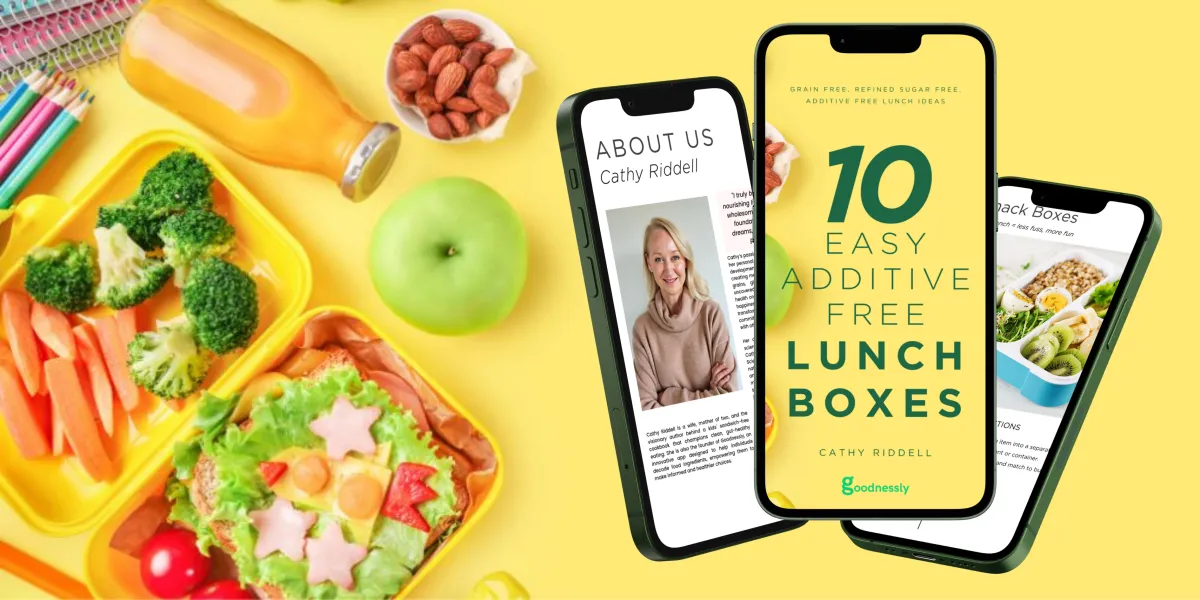
Nutritious, delicious, and quick-to-make lunchbox ideas—100% free from nasty additives and perfect for busy families.
At Goodnessly , we believe ingredients shouldn’t be a mystery—and lunchboxes shouldn’t be packed with hidden additives. That’s why we’ve created this FREE downloadable e-book with 10 simple, additive-free lunchbox ideas that are quick to prep, full of goodness, and 100% kid-approved.
HERE'S WHAT YOU WILL GET:
10 lunchbox combos your kids will actually eat
Simple, real-food ingredients you can trust
No additives, artificial flavours, or hidden nasties
Download now and pack lunch with peace of mind.
HAPPY CLIENTS

These recipes are super easy. Even for me!
— Mara
Thank you! Looking forward to adding some more variety to our lunch boxes.
— Sofia
Thanks for the free recipes. The Banana Chia Muffins are my favourite!
— Daniella
Perfect for busy families looking to add some healthy variety to their lunches
Additive-Free Snacks for Kids: Easy Ideas
Snacks are where many lunch box additives sneak in. Brightly coloured treats, flavoured yoghurts and some muesli bars can carry several numbered additives. These swaps keep things simple.
Homemade snacks (5–10 minutes)
- Fruit and cheese skewers: grapes, apple, melon and cubes of plain cheese.
- Veggie sticks and dip: carrot, cucumber and capsicum with hummus or plain Greek yoghurt mixed with herbs.
- Bliss balls: oats, dates, cocoa and coconut rolled together (use seeds instead of nuts for nut-free schools).
- Banana chia muffins: a favourite from our e-book, and they freeze well.
- Air-popped popcorn with a pinch of salt or cinnamon (for older kids).
- Plain yoghurt with berries: frozen berries thaw by morning tea and colour the yoghurt naturally.
- Homemade crackers or rice cakes with avocado, cheese or a thin spread of butter.
- Boiled egg and cherry tomatoes.
Packaged snacks: what to look for
- Short ingredient lists with foods you recognise, such as plain rice crackers, plain corn chips, unflavoured popcorn, natural yoghurt and dried fruit without added preservatives.
- Colours from plants. If a snack is coloured, look for plant-derived colours such as 163 (anthocyanins), 162 (beet red), 160c (paprika extract), 160a (carotene) or 100 (turmeric), all rated Risk Free in Goodnessly.
- Synthetic colours to check for, especially in lollies, jelly, iced biscuits, flavoured drinks and some yoghurts (see the table below).
- Preservative numbers in dried fruit and processed meats, such as sulphites (220–228) and nitrites (249–250).
Colour numbers on kids’ snack labels
In Australia and New Zealand, the Food Standards Code requires added colours in packaged foods to be listed in the ingredients by name or code number, for example “colour (129)”. That makes them easy to spot once you know the numbers.
| Number | Name | Source | Goodnessly rating |
|---|---|---|---|
| 102 | Tartrazine | Synthetic | Hazardous Risk |
| 104 | Quinoline yellow | Synthetic | Hazardous Risk |
| 110 | Sunset yellow FCF | Synthetic | Hazardous Risk |
| 122 | Azorubine (carmoisine) | Synthetic | Hazardous Risk |
| 124 | Ponceau 4R | Synthetic | Hazardous Risk |
| 129 | Allura red AC | Synthetic | Hazardous Risk |
| 133 | Brilliant blue FCF | Synthetic | Hazardous Risk |
| 120 | Cochineal / carmine | Insect-derived | Moderate Risk |
| 163 | Anthocyanins | Plant | Risk Free |
| 160c | Paprika extract | Plant | Risk Free |
Why these colours? A 2007 University of Southampton study published in The Lancet (McCann et al.) found that mixtures of six synthetic colours (102, 104, 110, 122, 124 and 129) plus the preservative sodium benzoate (211) were associated with increased hyperactive behaviour in some children aged 3 and 8–9. Since 2010, the EU has required foods containing those six colours to carry the warning “may have an adverse effect on activity and attention in children”. FSANZ reviewed the same study and did not require a warning in Australia, noting that estimated intakes of added colours here are well below acceptable daily intakes. Studies indicate effects vary between children, so many parents simply choose to limit them.
Sources: McCann D et al., The Lancet 2007;370:1560–67; EU Regulation (EC) No 1333/2008, Article 24 and Annex V; EFSA re-evaluations of food colours (2009); FSANZ, “Food colours” and the Australia New Zealand Food Standards Code, Standard 1.2.4. Goodnessly ratings are our own rating system and are not medical advice.
Additive-Free Snacks for Kids: FAQ
What are good additive-free snacks for kids?
Fresh fruit, veggie sticks with hummus, plain yoghurt with berries, cheese and crackers, boiled eggs, air-popped popcorn and homemade bliss balls or muffins. For packaged snacks, choose short ingredient lists without added colour numbers.
Which food colours should I check for in kids’ snacks?
Many parents check for the six colours from the Southampton study (102, 104, 110, 122, 124 and 129), which carry a warning label in the EU, along with 133 brilliant blue. Plant-based colours such as 163, 162 and 160c are common alternatives.
Do artificial colours cause hyperactivity?
Studies indicate that some synthetic colour mixtures are associated with increased hyperactive behaviour in some children, but they do not show this for every child. The EU requires a warning label; FSANZ did not adopt one for Australia. If you’re concerned, talk to your GP.
How do I spot additives on Australian labels?
Additives are listed in the ingredients by their purpose and name or number, for example “colour (133)” or “preservative (202)”. You can also scan the barcode with the free Goodnessly app.