Additive 216: what is propylparaben?
Also labelled: Propylparaben · Propyl p-hydroxybenzoate · Propyl-p-hydroxy-benzoate · Preservative 216 · INS 216
A paraben preservative (propyl p-hydroxybenzoate) used against moulds and yeasts.
Propylparaben (216), or propyl p-hydroxybenzoate, is a paraben preservative. It is permitted in Australia and New Zealand and GRAS in the US, but the EU withdrew it as a food additive in 2006. Goodnessly rates it Hazardous Risk.
Permitted in Australia and New Zealand (FSANZ), in preparations of food additives, but not approved in the EU, where it was withdrawn in 2006. Note that it is still GRAS in the US (21 CFR 184.1670, up to 0.1%).
Download our app to check additives in everyday foods
Read the FAQ →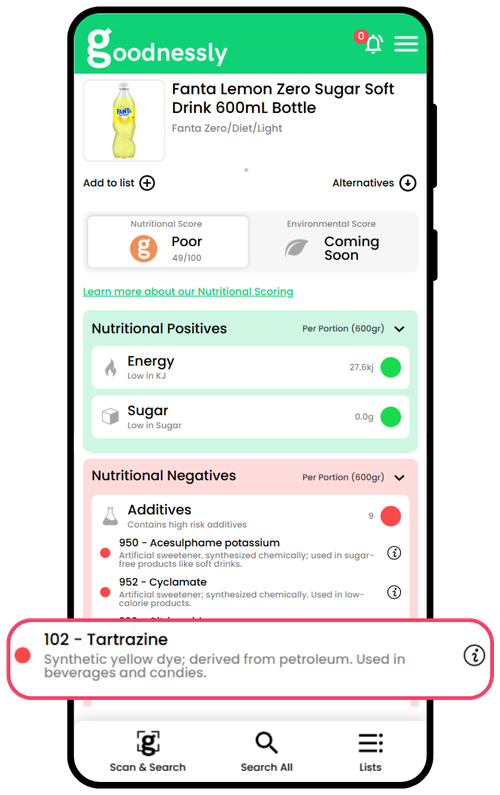
What is propylparaben?
Parabens are esters of p-hydroxybenzoic acid. They are used as preservatives in foods, medicines and cosmetics. Propylparaben is closely related to methylparaben (218).
What's it used for?
- Preserving preparations of food additives, such as colour or flavour preparations
- Carried into finished foods in small amounts through those preparations
Where you'll find propylparaben on the shelf
It is rarely seen on Australian food labels.
Is propylparaben safe? What the research says
In 2004, EFSA set a group ADI for methyl and ethyl paraben but excluded propylparaben. Studies in juvenile male rats indicated effects on reproductive parameters, and EFSA could not set an ADI. The EU then withdrew it.
| Region | Status | What this means |
|---|---|---|
| AU/NZ Australia & New Zealand (FSANZ) | Permitted | Listed in the Food Standards Code. Under Schedule 15 it is permitted in preparations of food additives (up to 2,500 mg/kg). |
| EU European Union (EFSA) | Not authorised | Withdrawn as a food additive in 2006 after EFSA (2004) could not set an ADI. |
| US United States (FDA) | Permitted (GRAS) | GRAS under 21 CFR 184.1670 at levels up to 0.1% in food. |
The US and Australia/NZ continue to permit it within set limits.
- EFSA 2004: EFSA excluded propylparaben from the paraben group ADI.
- EU 2006: The EU removed E216 from the list of authorised additives.
This section is checked periodically rather than continuously — if you're reading this well after the date above, it's worth confirming nothing has changed before citing it.
Who might want to limit or avoid it
- Pregnant people and young children, as a precaution
- Anyone avoiding parabens
- Shoppers comparing local and imported products
Goodnessly rates 216 Hazardous Risk. The EU withdrew it after EFSA could not set an ADI, although the US still treats it as GRAS.
How to spot it on a label
Look out for:
- Propylparaben
- Propyl p-hydroxybenzoate
- Preservative (216)
Always check the ingredient list, as the same ingredient can be listed under different names.
Related additives
Frequently asked questions
Are parabens in food?
A few are permitted in some countries. In Australia and New Zealand, propylparaben (216) and methylparaben (218) are permitted in preparations of food additives.
Is 216 banned in the EU?
It was withdrawn as a food additive in the EU in 2006. It is permitted in Australia, New Zealand and the US (GRAS).
Why did EFSA exclude propylparaben?
Studies in young male rats indicated effects on reproductive parameters, and EFSA could not identify a safe level, so no ADI was set.
How does Goodnessly rate 216?
Goodnessly rates 216 (Propylparaben) as Hazardous Risk. The EU withdrew it after EFSA could not set an ADI, although the US still treats it as GRAS.
Don't decode labels by hand
Scan any product with the Goodnessly app to instantly see its full additive breakdown, kept current as new research like this comes to light.
Download our app to check additives in everyday foods