
What is E432?
Polysorbate 20 (polyoxyethylene (20) sorbitan monolaurate) — a synthetic emulsifier in the E432–E436 polysorbate group.
Polysorbate 20 (E432), also labelled polyoxyethylene (20) sorbitan monolaurate, is a non-ionic emulsifier / surfactant made by ethoxylating a sorbitan ester of lauric acid. It helps mix oil and water in processed foods, drinks and some flavour systems. It is authorised in the EU with the other polysorbates; EFSA's 2015 re-evaluation set a group ADI of 25 mg/kg body weight per day for E432–E436, noting toddler high-level exposure can sit close to that ADI. In Australia/NZ it is permitted for specified categories (including some processed meat and fish uses at 500 mg/kg under Application A1137, alongside other Schedule 15 permissions). In the US it appears mainly as a flavouring adjuvant under 21 CFR 172.515 and in specified technical/food-contact emulsifier listings, rather than a standalone Part 172 "polysorbate 60/65/80"-style direct-food section. Goodnessly rates it Avoid.
Download our app to check additives in everyday foods
Read the FAQ →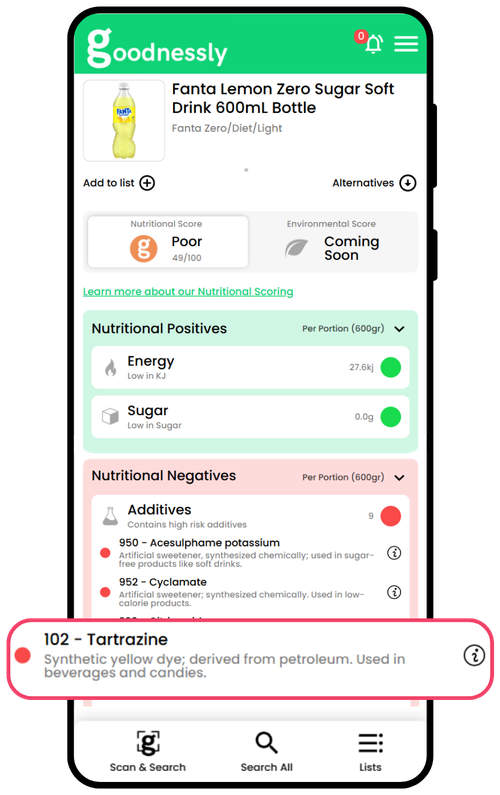
What is polysorbate 20?
Polysorbate 20 is a polyoxyethylene sorbitan ester emulsifier. The "20" refers to the approximate number of ethylene-oxide units; the fatty-acid side is mainly laurate. EFSA assesses it with polysorbates 40, 60, 65 and 80 under one group ADI. On labels you may see "polysorbate 20", "polyoxyethylene (20) sorbitan monolaurate", "432", "E432", or "emulsifier (432)".
What's it used for?
- Emulsifier / surfactant to keep oil and water phases mixed in processed foods
- Solubilising flavours and colours in some drinks and confectionery systems
- Used in selected sauces, desserts, bakery and (in AU/NZ) some processed meat/fish categories
- Part of the E432–E436 polysorbate emulsifier family
Where you'll find E432 on the shelf
Most often in ultra-processed foods that need a strong synthetic emulsifier — less common on packs than polysorbate 80 or 60, but the group Avoid rule is the same.
Is polysorbate 20 safe? What the research says
EFSA's 2015 group opinion is the main modern EU safety review for polysorbates. It raised the historical SCF group ADI (10 mg/kg) to align with JECFA's 25 mg/kg group ADI, while flagging that high toddler exposure estimates can approach the ADI and that more usage data would reduce uncertainty. Goodnessly's Avoid rating is a household preference against routine synthetic ethoxylated emulsifiers — not a claim that authorised doses are "toxic" or that regulators have banned E432.
| Region | Status | What this means |
|---|---|---|
| AU/NZ Australia & New Zealand (FSANZ) | Permitted (Schedule 15; category MPLs) | Listed as polysorbate 20 / polyoxyethylene (20) sorbitan monolaurate (432) in Schedule 8 / Schedule 15. Permissions include specified foods with maximum levels (for example 500 mg/kg in some processed meat, poultry, game and fish categories after Application A1137), plus other category entries in the live schedule. Must be declared by name or number when used as a food additive. |
| EU European Union (EFSA) | Authorised; group ADI 25 mg/kg bw/day (EFSA 2015) | Authorised as E432 under Regulation (EC) No 1333/2008 for specified food categories with maximum levels. EFSA ANS Panel (2015) set a group ADI of 25 mg/kg bw/day for polysorbates E432–E436; toddler high-level refined exposure was estimated very close to the ADI (about 24.5 mg/kg bw/day). Commission Regulation (EU) 2020/356 later extended some low-level drink uses after concluding the added exposure was negligible relative to the ADI. |
| US United States (FDA) | Listed uses (e.g. 21 CFR 172.515 adjuvant; technical listings) | Unlike polysorbate 60/65/80, polysorbate 20 does not have a dedicated standalone "direct food additive" section parallel to 21 CFR 172.836/172.838/172.840. FDA's Substances Added to Food inventory points to uses including 21 CFR 172.515 (synthetic flavoring substances and adjuvants) and specified technical / food-contact emulsifier provisions (for example 21 CFR 178.3400). Federal permissions remain in force for those listed conditions as of this draft (September 2026). |
Polysorbates are manufactured using ethylene oxide; EU specifications limit residual impurities such as ethylene oxide and 1,4-dioxane. That is a purity-control issue for manufacturers and regulators — not evidence that a correctly specified food use "causes" disease at authorised levels. People who prefer to skip ethoxylated emulsifiers can treat any 432–436 code as Avoid.
- EFSA 2015 (E432–E436): group ADI 25 mg/kg bw/day; toddler high exposure close to the ADI; more usage data requested to reduce uncertainty.
- EU 2020/356: authorised limited additional polysorbate uses in some flavoured / alcoholic drink categories at 10 mg/kg after negligible ADI impact.
- FSANZ A1137: extended AU/NZ permissions for polysorbate 20 in specified processed meat and fish categories (500 mg/kg).
This section is checked periodically rather than continuously — if you're reading this well after the date above, it's worth confirming nothing has changed before citing it.
Who might want to limit or avoid it
- People reducing ultra-processed foods that rely on synthetic emulsifiers
- Shoppers avoiding ethoxylated additives (polysorbates / polyoxyethylene esters) as a household rule
- Parents of toddlers who want extra margin below group-ADI exposure estimates
Goodnessly rates E432 Avoid. Polysorbate 20 remains permitted in Australia/NZ and the EU (and for listed US uses), but EFSA's group ADI proximity for high toddler intakes and our preference against routine ethoxylated emulsifiers keep it out of Clear.
How to spot it on a label
Check ingredient lists for:
- Polysorbate 20
- Polyoxyethylene (20) sorbitan monolaurate
- 432 or E432
- Emulsifier (432)
- Other polysorbates: 433–436
Often sits with other emulsifiers — scan the whole emulsifier line.
Related additives
Frequently asked questions
What is Polysorbate 20 (E432) made from?
It is a synthetic emulsifier made by reacting a sorbitan ester of lauric acid with ethylene oxide (about 20 ethylene-oxide units). It is not a single natural extract.
Is polysorbate 20 the same as polysorbate 80?
No. Both are polysorbates in the E432–E436 group, but E432 is the monolaurate and E433 is the monooleate. EFSA assesses them under one group ADI. Goodnessly rates both Avoid.
Did EFSA ban polysorbates?
No. EFSA set a group ADI of 25 mg/kg bw/day and noted that high toddler exposure estimates can approach that ADI. That is an exposure-management finding, not a ban.
Does Goodnessly rate E432 as safe, caution or avoid?
Goodnessly rates E432 (Polysorbate 20) as Avoid.
Don't decode labels by hand
Scan any product with the Goodnessly app to instantly see its full additive breakdown, kept current as new research like this comes to light.
Download our app to check additives in everyday foods
At Goodnessly we aim to educate and empower individuals to make informed choices about everyday products.
© 2024 . All rights reserved.
Facebook
Instagram
X
TikTok