
What is E435?
Polysorbate 60 (polyoxyethylene (20) sorbitan monostearate) — a common synthetic emulsifier in bakery, toppings and frozen desserts.
Polysorbate 60 (E435), also labelled polyoxyethylene (20) sorbitan monostearate, is a non-ionic emulsifier used to keep fats dispersed in cakes, icings, whipped toppings, ice cream and shortenings. It belongs to the same EFSA group as E432–E436. The 2015 re-evaluation set a group ADI of 25 mg/kg body weight per day, with toddler high-level exposure estimates close to that ADI. It is permitted in Australia/NZ (often at GMP with other polysorbates 433/435/436 in Schedule 16-style permissions) and authorised in the EU for specified categories. In the US it is a direct food additive under 21 CFR 172.836 with food-specific limits (for example frozen desserts, cakes, whipped toppings, shortenings). Goodnessly rates it Avoid.
Download our app to check additives in everyday foods
Read the FAQ →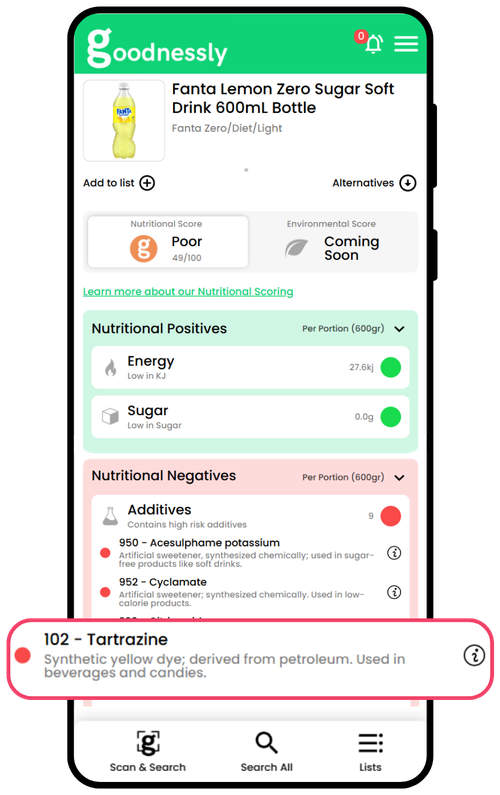
What is polysorbate 60?
Polysorbate 60 is a polyoxyethylene sorbitan ester of stearic (and related) fatty acids. The "60" is the traditional trade numbering for the monostearate ethoxylate. It is one of the polysorbates most often seen in bakery and frozen-dessert emulsifier systems. On labels you may see "polysorbate 60", "polyoxyethylene (20) sorbitan monostearate", "435", "E435", or "emulsifier (435)".
What's it used for?
- Emulsifier in cakes, cake mixes, icings and fillings
- Whipped edible-oil toppings and related foam systems
- Ice cream and other frozen desserts (often with polysorbate 65/80)
- Shortenings and edible oils where standards of identity allow
Where you'll find E435 on the shelf
Look in bakery, dessert and topping aisles — industrial recipes use it to keep fat and water phases stable.
Is polysorbate 60 safe? What the research says
Regulators permit polysorbate 60 with numerical limits rather than as an unlimited household staple. EFSA's group ADI of 25 mg/kg bw/day covers E435 with the other polysorbates; high toddler exposure was estimated close to that ADI in the refined non-brand-loyal scenario. Avoid here means Goodnessly prefers you skip ethoxylated emulsifiers when a simpler recipe exists — not that every permitted use exceeds a safety limit.
| Region | Status | What this means |
|---|---|---|
| AU/NZ Australia & New Zealand (FSANZ) | Permitted (polysorbates; often GMP) | Listed as polysorbate 60 / polyoxyethylene (20) sorbitan monostearate (435) in Schedule 8 / Schedule 15. With polysorbate 80 (433) and polysorbate 65 (436) it is among the polysorbates long permitted more broadly (including GMP-type permissions in Schedule 16 contexts) than polysorbate 20. Must be declared by name or number when used as a food additive. |
| EU European Union (EFSA) | Authorised; group ADI 25 mg/kg bw/day (EFSA 2015) | Authorised as E435 under Regulation (EC) No 1333/2008 for specified categories with maximum levels. Covered by EFSA's 2015 polysorbates group ADI of 25 mg/kg bw/day (E432–E436) and the same toddler exposure discussion. |
| US United States (FDA) | Direct food additive (21 CFR 172.836) | Polysorbate 60 may be used under 21 CFR 172.836 as an emulsifier in listed foods with product-specific limits (examples include frozen desserts alone or with polysorbate 65/80; cakes and cake mixes; whipped edible oil toppings; cake icings/fillings; shortenings and edible oils). Federal authorisation remains in force as of this draft (September 2026). |
Like other polysorbates, E435 is produced with ethylene oxide chemistry; purity specifications limit residual impurities. That manufacturing detail supports Avoid for shoppers who prefer non-ethoxylated emulsifiers, without claiming that compliant food uses are acutely poisonous.
- EFSA 2015 (E432–E436): group ADI 25 mg/kg bw/day includes E435; toddler high exposure near the ADI.
- FDA 21 CFR 172.836: continues to list polysorbate 60 for specified direct food emulsifier uses and limits.
- EU drink extension 2020/356: small additional polysorbate permissions in some drink categories; exposure impact judged negligible vs ADI.
This section is checked periodically rather than continuously — if you're reading this well after the date above, it's worth confirming nothing has changed before citing it.
Who might want to limit or avoid it
- People cutting back on ultra-processed bakery and frozen desserts
- Shoppers avoiding polysorbate / ethoxylated emulsifiers on principle
- Anyone already treating E433/E436 as Avoid who wants the same rule for E435
Goodnessly rates E435 Avoid. Polysorbate 60 remains widely permitted, but the EFSA group ADI exposure picture and our ethoxylated-emulsifier preference leave it outside Clear.
How to spot it on a label
Check bakery and dessert labels for:
- Polysorbate 60
- Polyoxyethylene (20) sorbitan monostearate
- 435 or E435
- Emulsifier (435)
- Other polysorbates: 432, 433, 436
Often combined with sorbitan esters or other polysorbates.
Related additives
Frequently asked questions
What is Polysorbate 60 (E435) made from?
It is a synthetic emulsifier made by ethoxylating a sorbitan ester of stearic (and related) fatty acids. It is manufactured, not extracted as a whole food.
Why is polysorbate 60 in ice cream and cake mix?
It helps disperse fat and stabilise texture in frozen desserts, cakes, icings and whipped toppings. Those are technological roles, not nutrition claims.
Is E435 safer than E433?
EFSA assesses polysorbates 20, 40, 60, 65 and 80 under one group ADI. Goodnessly rates the whole group Avoid rather than ranking one polysorbate as a loophole.
Does Goodnessly rate E435 as safe, caution or avoid?
Goodnessly rates E435 (Polysorbate 60) as Avoid.
Don't decode labels by hand
Scan any product with the Goodnessly app to instantly see its full additive breakdown, kept current as new research like this comes to light.
Download our app to check additives in everyday foods
At Goodnessly we aim to educate and empower individuals to make informed choices about everyday products.
© 2024 . All rights reserved.
Facebook
Instagram
X
TikTok