
Additive 636: what is maltol?
Also labelled: Maltol · Flavour enhancer 636 · INS 636 · FL 07.014
A flavour enhancer with a sweet, caramel-like aroma.
Maltol (636) is a naturally occurring compound with a sweet, caramel or cotton-candy aroma. It is used to enhance flavour. It is permitted as a food additive in Australia and New Zealand. In the EU and US it is regulated only as a flavouring, not as a food additive. Goodnessly rates it Hazardous Risk.
Permitted as a food additive in Australia and New Zealand (FSANZ) but not approved as a food additive in the EU or the US. In both, maltol is allowed only as a flavouring substance. In the US that falls under 21 CFR 172.515.
Download our app to check additives in everyday foods
Read the FAQ →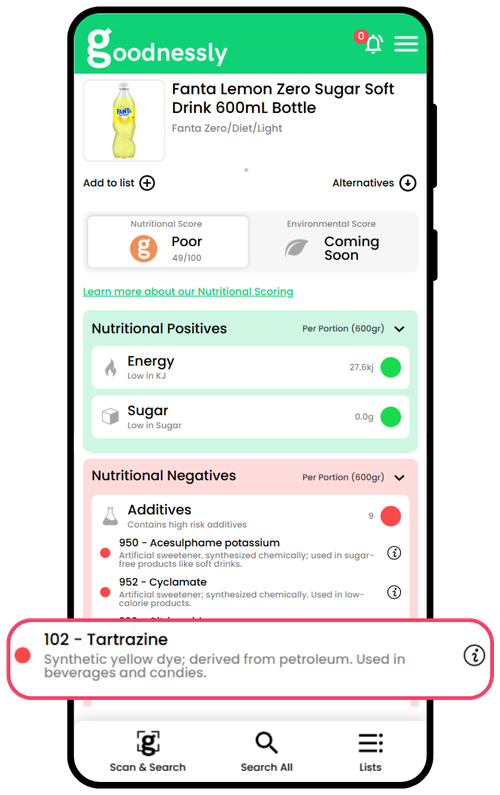
What is maltol?
Maltol occurs naturally in roasted malt, larch bark and some baked foods. Commercial maltol may be extracted or made synthetically. It makes sweet and fruity flavours seem stronger.
What's it used for?
- Enhancing sweet and fruity flavours
- Baked goods and confectionery
- Some drinks
- Some wines (limited use)
Where you'll find maltol on the shelf
It may be listed as “flavour enhancer (636)”.
Is maltol safe? What the research says
JECFA evaluated maltol as a flavouring. In 2018 it withdrew its previous ADI because the underlying data could not be verified, and concluded no safety concern at estimated intakes as a flavouring.
| Region | Status | What this means |
|---|---|---|
| AU/NZ Australia & New Zealand (FSANZ) | Permitted | Permitted under Schedule 15, including at GMP in some foods and up to 250 mg/kg in wine made from grapes other than Vitis vinifera. |
| EU European Union (EFSA) | Not authorised as additive | Not on the Union list of food additives. It is regulated as a flavouring substance. |
| US United States (FDA) | Flavouring only | Listed as a synthetic flavouring substance under 21 CFR 172.515. It is not listed as a direct food additive. |
Where maltol is allowed only as a flavouring, it would not carry an additive number on the label.
- JECFA 2018: JECFA withdrew the maltol ADI but concluded no safety concern at current intake as a flavouring.
This section is checked periodically rather than continuously — if you're reading this well after the date above, it's worth confirming nothing has changed before citing it.
Who might want to limit or avoid it
- Anyone limiting flavour enhancers
- People who prefer foods without added flavouring compounds
Goodnessly rates 636 Hazardous Risk. The EU and US treat it only as a flavouring, not a food additive, and its JECFA ADI was withdrawn in 2018.
How to spot it on a label
Look out for:
- Maltol
- Flavour enhancer (636)
Always check the ingredient list, as the same ingredient can be listed under different names.
Related additives
Frequently asked questions
Is maltol natural?
It occurs naturally in roasted malt and some baked foods, but the additive may be extracted or made synthetically.
Is 636 allowed in the EU and US?
Only as a flavouring, not as a food additive. Australia and New Zealand permit it as a food additive.
What does maltol taste like?
It has a sweet, caramel-like or cotton-candy aroma and helps sweet and fruity flavours stand out.
How does Goodnessly rate 636?
Goodnessly rates 636 (Maltol) as Hazardous Risk. The EU and US treat it only as a flavouring, not a food additive, and its JECFA ADI was withdrawn in 2018.
Don't decode labels by hand
Scan any product with the Goodnessly app to instantly see its full additive breakdown, kept current as new research like this comes to light.
Download our app to check additives in everyday foods