
What is hydrolysed vegetable protein?
Also labelled: Hydrolysed vegetable protein · HVP · Hydrolysed soy protein · Hydrolysed wheat protein · Hydrolysed corn protein · Hydrolysed plant protein
Plant protein broken down into amino acids to give a savoury, meaty taste.
Hydrolysed vegetable protein (HVP) is made by breaking down protein from soy, wheat, corn or other plants, usually with acid, into amino acids including glutamate. It adds a savoury, umami taste to soups, sauces and snacks. It is sold as a food ingredient in Australia and New Zealand, the EU and the US, but acid-hydrolysed HVP can contain a process contaminant called 3-MCPD, which regulators limit. Goodnessly rates it Hazardous Risk.
HVP isn’t a numbered additive, but the contaminant 3-MCPD, which can form during acid hydrolysis, is regulated. The EU sets a maximum of 20 µg/kg in HVP (Regulation (EU) 2023/915), and FSANZ sets 0.2 mg/kg in soy and oyster sauce (Schedule 19). IARC classifies 3-MCPD as possibly carcinogenic to humans (Group 2B).
Download our app to check additives in everyday foods
Read the FAQ →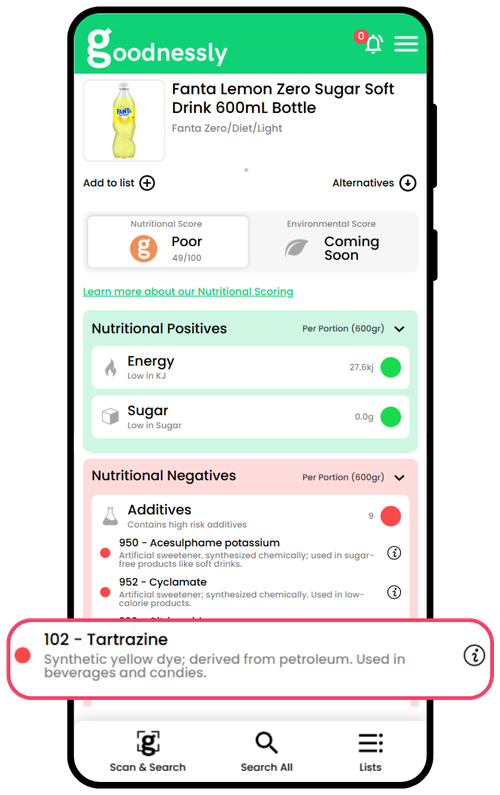
What is hydrolysed vegetable protein?
HVP is usually made by heating plant protein with hydrochloric acid and then neutralising it, although enzymes can also be used. This breaks proteins into free amino acids, including glutamic acid, which is why HVP tastes savoury. Acid hydrolysis can also form chloropropanols such as 3-MCPD, and manufacturers use process controls to keep these low.
What's it used for?
- Savoury, meaty flavour
- Boosting umami in meat-free foods
- A flavour base for stocks, gravies and seasonings
- Flavour in instant noodles and snack seasonings
Where you'll find hydrolysed vegetable protein on the shelf
Look for it in savoury, seasoned and instant foods.
Is hydrolysed vegetable protein safe? What the research says
Regulators haven’t set an intake limit for HVP itself, but they have assessed 3-MCPD. JECFA set a provisional maximum tolerable daily intake of 4 µg/kg body weight in 2016, and EFSA set a tolerable daily intake of 2 µg/kg body weight in 2018. These limits exist because high doses of 3-MCPD in animal studies were associated with kidney and male fertility effects. HVP also contributes free glutamate, and foods flavoured with it are often high in sodium.
| Region | Status | What this means |
|---|---|---|
| AU/NZ Australia & New Zealand (FSANZ) | Permitted (food ingredient) | Sold as a food ingredient, not a numbered additive. Soy or wheat sources must be declared as allergens (Standard 1.2.3). A 3-MCPD limit of 0.2 mg/kg applies to soy and oyster sauce (Schedule 19). |
| EU European Union (EFSA) | Permitted (food ingredient) | Sold as a food ingredient. Regulation (EU) 2023/915 sets a 3-MCPD maximum of 20 µg/kg for HVP (for a product with 40% dry matter). |
| US United States (FDA) | Permitted (food ingredient) | Must be named by its source, such as “hydrolyzed soy protein” (21 CFR 102.22). FDA considers “No MSG” claims misleading on foods containing hydrolysed protein. |
HVP has no E-number or INS code. The 3-MCPD limits apply to the contaminant, not to HVP as an ingredient.
- EU, 2023: Regulation (EU) 2023/915 replaced the earlier EU contaminants regulation and kept the 20 µg/kg limit for 3-MCPD in HVP and soy sauce.
- EFSA, 2018: Updated its tolerable daily intake for 3-MCPD to 2 µg/kg body weight per day.
This section is checked periodically rather than continuously — if you're reading this well after the date above, it's worth confirming nothing has changed before citing it.
Who might want to limit or avoid it
- People with soy or wheat allergy, or coeliac disease, who should check the source on the allergen statement
- People sensitive to glutamate or avoiding MSG, as HVP contains free glutamate
- People watching their sodium intake
Goodnessly rates HVP Hazardous Risk. Acid-hydrolysed HVP can carry the process contaminant 3-MCPD, which regulators limit and IARC classifies as possibly carcinogenic, and it is a hidden source of free glutamate. It is permitted as a food ingredient in Australia, the EU and the US.
How to spot it on a label
Look out for:
- Hydrolysed vegetable protein or HVP
- Hydrolysed soy protein or hydrolysed wheat protein
- Hydrolysed plant protein
- Hydrolysed corn protein
Always check the ingredient list, as the same ingredient can be listed under different names.
Related additives
Frequently asked questions
Is hydrolysed vegetable protein the same as MSG?
No, but they are related. HVP contains free glutamate, the same compound that gives MSG its savoury taste, along with other amino acids. In the US, the FDA says foods containing hydrolysed protein should not be labelled ‘No MSG’.
What is 3-MCPD and why does it matter for HVP?
3-MCPD is a contaminant that can form when protein is broken down with acid. The EU limits it to 20 µg/kg in HVP, FSANZ limits it in soy and oyster sauce, and IARC classifies it as possibly carcinogenic to humans (Group 2B).
Is HVP gluten free?
Not always. HVP made from wheat may contain gluten, and in Australia and New Zealand wheat and gluten must be declared on the label. Check the allergen statement.
How does Goodnessly rate hydrolysed vegetable protein?
Goodnessly rates hydrolysed vegetable protein as Hazardous Risk. Acid-hydrolysed HVP can carry 3-MCPD, which regulators limit, and it is a hidden source of free glutamate. It is permitted as a food ingredient in Australia, the EU and the US.
Don't decode labels by hand
Scan any product with the Goodnessly app to instantly see its full additive breakdown, kept current as new research like this comes to light.
Download our app to check additives in everyday foods